HO vs N Scale Starter Kits: The Ultimate Guide for Beginners
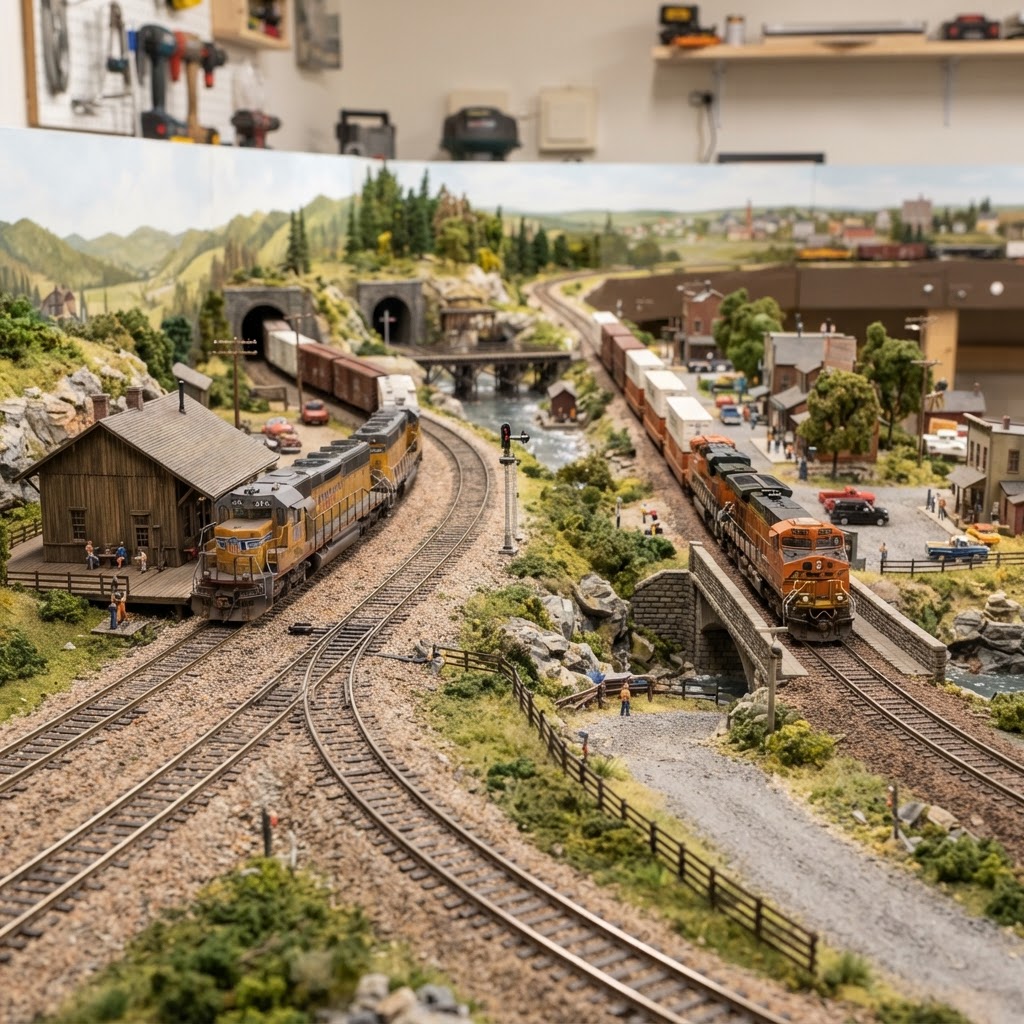
Choosing between HO vs N scale starter kits is one of the most important decisions you'll make as a new model railroader. It's the kind of choice that shapes everything from how much space your layout will require to how much detail you'll be able to achieve — and even how easy it will be to find new locomotives, rolling stock, and accessories down the road. With so many options on the market today, it's easy to feel overwhelmed before you've even laid a single piece of track.
The good news is that both HO and N scale are excellent choices for beginners. They're the two most popular model railroad scales in North America, which means robust manufacturer support, wide product availability, and thriving communities of fellow hobbyists ready to help you along the way. But popular doesn't mean identical — these two scales have meaningful differences that could make one a much better fit for your lifestyle, space, and long-term goals than the other.
In this guide, we'll break down everything you need to know about HO vs N scale starter kits: what's typically included, how the two scales compare in terms of size, detail, cost, and ease of use, and ultimately how to decide which one is right for you. Whether you're buying your first starter kit for yourself or as a gift, this article will help you make a confident, well-informed choice.
Understanding the Basics: What Are HO and N Scales?
Before diving into starter kits specifically, it helps to understand what these scale designations actually mean. Model train scales describe the ratio between the model and the real-world prototype it represents.
- HO scale runs at a ratio of 1:87, meaning a real locomotive is 87 times larger than its HO model counterpart.
- N scale runs at a ratio of 1:160, making N scale models significantly smaller.
To put that in physical terms, a standard HO scale locomotive is roughly 7–8 inches long, while the same locomotive in N scale might measure just 4–5 inches. That size difference has a cascading effect on everything from track radius to the amount of scenery you can fit in a given space.
If you want a deeper dive into scales beyond just HO and N, check out our Ultimate Beginner Guide to Model Train Scales: Choosing Your Perfect Size. It covers everything from Z scale to G scale and helps you understand where HO and N fit within the broader hobby landscape.
What's Typically Included in a Starter Kit?
Most HO and N scale starter kits are designed to get you running trains right out of the box. While the exact contents vary by brand and price point, you can generally expect the following:
HO Scale Starter Kits Usually Include:
- One locomotive (steam or diesel)
- Two to four freight or passenger cars
- An oval or figure-eight track loop
- A basic power pack (DC controller)
- Sometimes a small building or scenic accessory
N Scale Starter Kits Usually Include:
- One locomotive
- Two to three cars (slightly fewer due to size constraints)
- A compact oval track loop
- A basic DC power pack
- Occasionally a small scenic element
Popular starter kit brands for HO include Bachmann, Lionel (via their HO line), and Athearn. For N scale, Bachmann, Kato, and Graham Farish are well-regarded entry-level options. Most starter kits in either scale run on DC power, though some premium sets include DCC-ready locomotives — a feature worth looking for if you plan to upgrade your control system later. For more on that topic, our guide on DCC vs DC: The Ultimate Guide to Choosing the Best Model Train Power System is a great next read.
HO Scale Starter Kits: Pros and Cons
The Case for HO Scale
HO scale is the most popular model railroad scale in the world, and for good reason. Its size hits a sweet spot — large enough to handle with ease, detailed enough to look stunning, and small enough to fit a respectable layout in a spare bedroom or basement.
Advantages of HO scale starter kits:
- Largest product selection: More locomotive models, rolling stock, track systems, and scenery materials are made in HO than any other scale. Whether you're interested in classic steam engines (see our Top 10 Best Steam Engine Models) or modern diesels (Top 10 Best Diesel Engines for Collectors), HO has you covered.
- Easier to detail and weather: The larger size makes painting, weathering, and adding aftermarket details significantly more manageable for beginners.
- More DCC options: The HO ecosystem has the widest range of DCC decoders and sound systems. Our 5 Best DCC Systems for Home Model Railroads guide can help you plan ahead.
- Better for older eyes and less nimble fingers: Working with HO scale parts is simply easier when it comes to uncoupling cars, rerailing locomotives, and performing maintenance.
Limitations of HO Scale
- Requires more space: A minimum loop of HO track typically needs a 4×8 foot table or larger for a satisfying layout.
- Slightly higher cost per item: Individual locomotives and cars in HO tend to cost a bit more than their N scale equivalents.
N Scale Starter Kits: Pros and Cons
The Case for N Scale
N scale has exploded in popularity over the past two decades, particularly among hobbyists with limited space. At 1:160, you can pack an impressive amount of scenery, track, and operational interest into a surprisingly small footprint.
Advantages of N scale starter kits:
- Space efficiency: You can run a fully scenic layout with multiple trains, mountains, tunnels, and towns on a 2×4 foot board — something simply not possible in HO.
- Impressive visual impact: Because you can fit more geography into a smaller space, N scale layouts often look more realistic and expansive at a glance.
- Great for apartment dwellers: If you're in a smaller home or apartment, N scale is often the only practical choice for building a meaningful layout.
- Competitive pricing on starter kits: Entry-level N scale sets are often slightly less expensive upfront.
Limitations of N Scale
- Smaller parts are harder to handle: Couplers, detail parts, and track connections require more dexterity and patience. Fine tweezers and magnification tools become your best friends. Check out The Best Tools for Model Trains and our recommended products page for essentials.
- Fewer product options than HO: While N scale selection has grown enormously, it still lags behind HO in total variety, especially for niche locomotive types and accessories.
- More sensitive to track quality: Smaller wheels and finer tolerances mean N scale trains are less forgiving of dirty track or poorly aligned joints.
Head-to-Head Comparison: Key Decision Factors
Space Requirements
This is often the deciding factor for most beginners. As a general rule:
| Scale | Minimum Layout Size | Comfortable Layout Size | |-------|-------------------|------------------------| | HO | 4×4 feet | 4×8 feet or larger | | N | 2×2 feet | 2×4 to 4×4 feet |
If you have a dedicated hobby room or a large basement, HO gives you more to work with. If you're building on a bookshelf, in a small apartment, or on a folding table, N scale is the pragmatic choice.
Cost Comparison
Starter kits in both scales are similarly priced at the entry level, typically ranging from $80 to $200 for a complete beginner set. However, as you expand:
- HO track is slightly more expensive per section but more durable.
- N scale locomotives can be cheaper per unit but may require more maintenance over time.
- Scenery and structures cost roughly the same in both scales, though HO items are often more widely available at local hobby shops.
Detail and Realism
HO scale wins on sheer detail resolution. Manufacturers can pack more fine detail into a larger model, and painters/weatherers have more surface area to work with. That said, modern N scale models from manufacturers like Kato and Atlas are remarkably detailed and highly competitive. If you're interested in high-end brass models, our Ultimate Guide to the Best Brass Model Trains for Collectors covers options in both scales.
DCC Compatibility and Upgrades
Both scales are fully compatible with DCC (Digital Command Control), but HO has a slight edge in decoder availability and ease of installation. If upgrading to DCC is part of your plan, read our Best Way to Upgrade to DCC: A Beginner's Step-by-Step Guide before purchasing your starter kit — it may influence which locomotive you choose to start with.
For larger or more complex layouts eventually, you might also want to explore our Best DCC Systems for Large Scale Trains for future planning context.
Which Scale Is Right for You? A Quick Decision Guide
Still unsure? Run through these questions:
- How much space do you have? Less than 4×4 feet → Choose N scale. More than that → Either works, but HO is ideal.
- Are you buying this as a gift for a child? → HO scale is easier for younger hands and eyes.
- Do you prioritize layout scenery and visual depth? → N scale lets you create more expansive scenes in less space.
- Do you want the widest product selection? → HO scale wins hands down.
- Are you on a tight budget long-term? → Both are comparable, but N scale layouts can cost slightly less to build out over time.
For a more detailed side-by-side analysis beyond just starter kits, be sure to read our dedicated article: HO Scale vs N Scale: Which Is Better for Your Model Railroad Layout?
Frequently Asked Questions
Can I run HO and N scale trains on the same layout?
No — HO and N scale use different track gauges (the distance between rails), so they are not interchangeable. HO track has a gauge of 16.5mm, while N scale track uses a 9mm gauge. You would need to build entirely separate layouts for each scale.
Are N scale starter kits harder to set up than HO?
Slightly, yes. N scale track connections and couplers are smaller and require more careful handling. However, most modern N scale starter kits are designed for ease of assembly, and most beginners have no trouble getting their first train running within an hour.
What's the best starter kit brand for beginners?
For HO scale, Bachmann and Athearn are consistently recommended for quality and value. For N scale, Kato and Bachmann are top picks. Look for sets that include a DCC-ready locomotive so you have the option to upgrade your control system later.
Do starter kits come with everything I need to run trains?
Most starter kits include everything needed to run trains out of the box — track, power supply, locomotive, and cars. However, you'll want to invest in a few additional tools and supplies as you expand. Visit our recommended products page for a curated list of beginner essentials.
Is it expensive to expand beyond a starter kit?
Expanding is very gradual and affordable if you pace yourself. Additional track sections, locomotives, and rolling stock can be added one piece at a time. Both HO and N scale have strong secondary markets on eBay and at train shows, where you can find quality used equipment at significant discounts.
Conclusion
Choosing between HO vs N scale starter kits ultimately comes down to your personal situation — the space you have available, your budget, your physical dexterity, and the kind of railroading experience you want to create. HO scale offers the largest selection, easiest handling, and greatest detail potential, making it the go-to choice for most beginners with adequate space. N scale, meanwhile, is a powerful option for hobbyists who want to build impressive, scenic layouts in tight quarters.
There's no wrong answer here. Both scales have produced some of the most stunning model railroads ever built, and both have welcoming communities ready to support you on your journey. The best starter kit is simply the one that gets you excited to sit down and run trains.
Ready to keep learning? Explore our full library of beginner guides and deep-dive articles right here on Model Train Insider — your next great discovery is just a click away.
Affiliate Disclosure: Some links in this article are affiliate links. We may earn a commission at no extra cost to you.
Enjoying this guide?
Browse our favorite recommended products.
James Mitchell
Model Train Enthusiast & Writer
James has been building layouts and collecting trains for over 15 years. He started Model Train Insider to help newcomers navigate the hobby with practical, no-nonsense advice drawn from hands-on experience.
Stay on Track
Get beginner guides, brand reviews, and layout tips delivered to your inbox. No spam—just trains.
Free forever. Unsubscribe anytime.
Related Articles
Diesel vs Steam Locomotives: A Guide to Choosing Your Model Train
Struggling to decide between steam or diesel for your layout? Our guide compares steam and diesel model locomotives to help you make the right choice.
Read more
Best Starter Model Train Sets for Adults: A Comprehensive Guide to Your New Hobby
Discover the best starter model train sets for adults. Learn how to choose the right scale, brand, and layout to kickstart your rewarding model railroading hobby.
Read more
The Ultimate Beginner Guide to Model Railroading: Start Your Journey Today
Discover how to start your model train hobby with our ultimate beginner guide. Learn about scales, track layouts, and essential gear to build your dream railroad.
Read more