The Ultimate Beginner Guide to Model Train Scales: Choosing Your Perfect Size
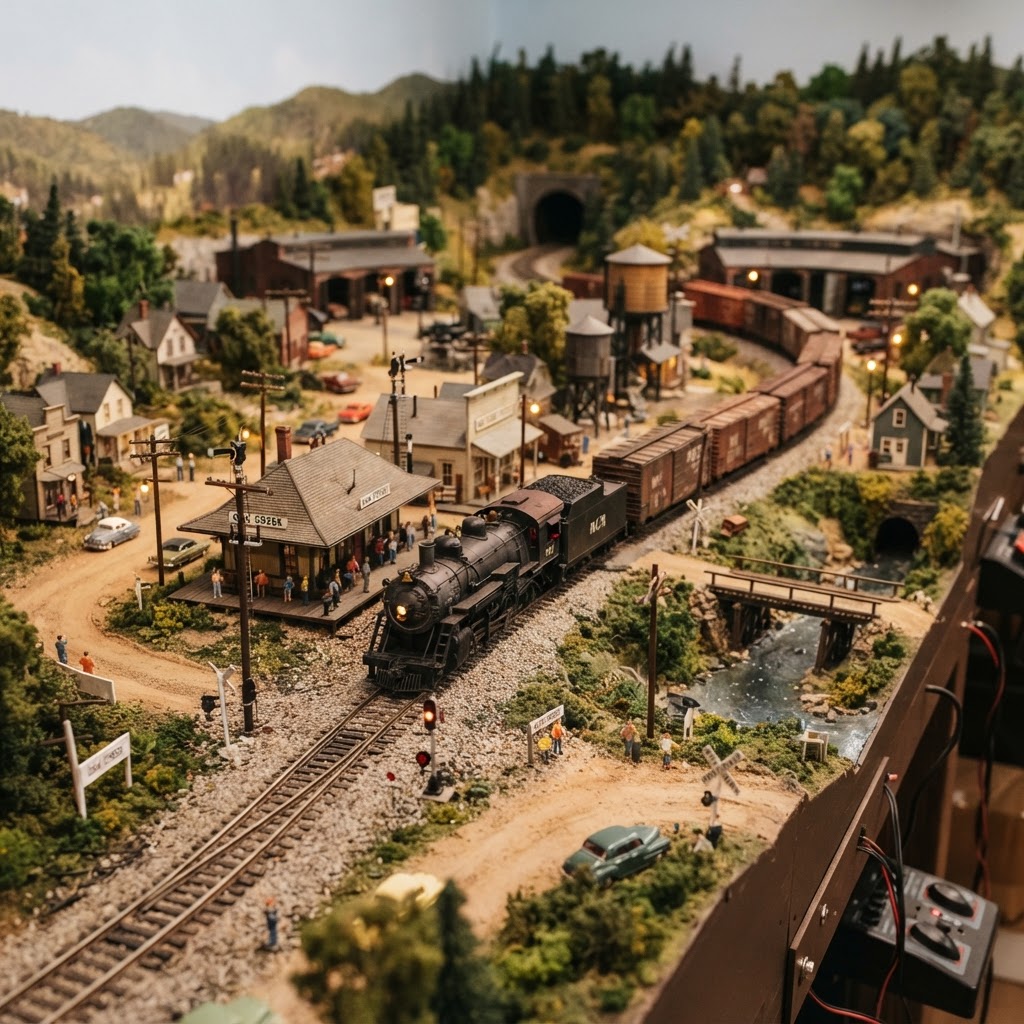
Whether you're drawn in by the nostalgia of a childhood train set or inspired by the intricate layouts you've seen at hobby shows, stepping into the world of model railroading is one of the most rewarding decisions you can make. But before you start building mountains, laying track, or wiring up locomotives, there's one foundational concept you absolutely need to understand: scale. This beginner guide to train scales will walk you through everything you need to know to make confident, informed decisions from day one.
Scale is essentially the ratio between your model train and its real-world counterpart. It determines the physical size of your locomotives, rolling stock, and scenery — and it has a massive impact on your layout's footprint, cost, and overall experience. Choosing the wrong scale for your situation can lead to frustration, wasted money, and a cramped layout that never quite comes together. Choosing the right one, on the other hand, sets the stage for a hobby you'll enjoy for decades.
In this guide, we'll break down the most popular model train scales, explain what makes each one unique, and help you figure out which scale is the best fit for your space, budget, and goals. Whether you're shopping for your very first starter set or just trying to make sense of all the numbers and letters, you're in the right place.
What Is a Model Train Scale?
Before diving into specific scales, it's worth taking a moment to understand what "scale" actually means in the context of model railroading — and how it differs from "gauge."
Scale vs. Gauge: Know the Difference
These two terms are often used interchangeably, but they refer to different measurements:
- Scale is the ratio of the model to the real thing. For example, HO scale is 1:87, meaning the model is 87 times smaller than the actual locomotive.
- Gauge refers to the distance between the rails. Standard gauge in real railroading is 4 feet 8.5 inches, and each model scale has a corresponding track gauge to match.
Understanding this distinction matters when you start mixing equipment or expanding your layout. A model labeled "HO scale" should have the correct proportions and run on HO gauge track — but that's not always the case with specialty or narrow-gauge models.
Why Scale Matters So Much
The scale you choose affects:
- Space requirements — larger scales need more room
- Level of detail — smaller scales sacrifice some fine detail
- Cost — larger scale models generally cost more
- Availability — some scales have far more product options than others
- Community support — popular scales have bigger clubs, forums, and events
Getting this decision right early on will save you considerable time and money down the road.
The Most Popular Model Train Scales Explained
There are more than a dozen recognized model train scales, but a handful dominate the hobby. Here's a thorough breakdown of the scales you're most likely to encounter.
HO Scale (1:87)
HO scale is the most popular model train scale in the world, and for good reason. At a ratio of 1:87, it strikes an excellent balance between detail, size, and affordability. HO models are large enough to feature impressive detail and DCC sound installations, yet small enough to build a meaningful layout in a spare bedroom or basement.
Best for: Beginners and experienced hobbyists alike who want the widest selection of locomotives, rolling stock, and accessories.
Typical layout space: A basic loop can fit on a 4×8 foot sheet of plywood, though more ambitious layouts benefit from larger spaces.
Pros:
- Enormous product selection from dozens of manufacturers
- Great balance of detail and affordability
- Easy to find at hobby shops and online
- Large, active community
Cons:
- More common means more competition for limited-edition models
- May feel "too big" for those with very limited space
If you're just getting started, check out our list of the 10 Best HO Scale Starter Sets for Beginners to find a set that fits your budget and goals. You can also browse our recommended products page for curated picks across all scales.
N Scale (1:160)
N scale is the second most popular scale and a favorite among hobbyists who want to model expansive scenes without needing a large room. At 1:160, N scale models are roughly half the size of HO, which means you can fit nearly twice as much scenery and track into the same footprint.
Best for: Hobbyists with limited space who still want to model complex operations, long train runs, and sweeping landscapes.
Typical layout space: A surprisingly detailed layout can be built on a 2×4 foot surface.
Pros:
- Compact size allows for more ambitious layouts in less space
- Good product selection, second only to HO
- Great for modeling long trains and large scenes
Cons:
- Smaller size makes handling and detailing more challenging
- Derailments can be more frustrating due to tight tolerances
- May require magnification for fine work
For a deeper comparison, our article HO Scale vs N Scale: Which Is Better for Your Model Railroad Layout? covers both options in detail. And if N scale sounds like the right fit, don't miss The Best Starter Kits for N Scale Beginners.
O Scale (1:48)
O scale has a rich history — it was the dominant scale for much of the 20th century, largely thanks to Lionel's iconic three-rail track system. Today, O scale remains popular among collectors and those who love large, highly detailed models.
Best for: Collectors, nostalgia-driven hobbyists, and those who want large, display-worthy models with impressive presence.
Typical layout space: Requires significant space — a basic loop may need an 8×8 foot or larger area.
Pros:
- Large size means incredible detail and ease of handling
- Strong collector market, especially for vintage Lionel and MTH models
- Three-rail systems are very beginner-friendly electrically
Cons:
- Takes up a lot of space
- Generally more expensive per locomotive and car
- Less realistic two-rail track availability compared to HO and N
G Scale (1:22.5)
G scale — sometimes called "garden scale" — is the giant of the hobby. These large, robust models are built to handle outdoor environments, making them a popular choice for garden railroads. They're also wonderful for young children due to their size and durability.
Best for: Outdoor garden railroads, families with young children, and hobbyists who want a visually striking display.
Pros:
- Extremely durable and weather-resistant (for outdoor-rated models)
- Easy to see and handle
- Impressive visual impact
Cons:
- Very expensive
- Requires significant outdoor space or a very large indoor area
- Limited product variety compared to HO and N
Z Scale (1:220)
Z scale is the smallest commercially available scale and a genuine feat of engineering. At 1:220, entire model railroads can be built inside a briefcase. Z scale is a niche choice, but it has a passionate following among those who love the challenge and the novelty.
Best for: Space-constrained hobbyists, display modelers, and collectors who appreciate miniature craftsmanship.
Pros:
- Incredibly compact
- Impressive conversation piece
- Some surprisingly detailed models available
Cons:
- Very limited product selection
- Difficult to work with, especially for those with shaky hands or poor eyesight
- Higher cost relative to detail level
S Scale and TT Scale
Two less common but notable options:
- S Scale (1:64) sits between HO and O. It was popularized by American Flyer and still has a dedicated following. Product availability is limited but growing.
- TT Scale (1:120) is gaining traction, particularly in Europe. It offers a middle ground between HO and N and has seen a surge in interest thanks to manufacturers like Hornby expanding their TT offerings.
How to Choose the Right Scale for You
With so many options, how do you actually decide? Here are the key factors to weigh as a beginner.
Consider Your Available Space
This is often the deciding factor. Measure your available layout area before falling in love with a scale. If you're working with a small apartment, Z or N scale may be your best options. If you have a full basement, O or even G scale might be feasible indoors.
Think About Your Budget
Larger scales generally mean higher costs per item. HO and N scale offer the best value for money in terms of what you get for your dollar, with fierce market competition keeping prices reasonable. Check out our 10 Best Beginner Model Train Sets for budget-friendly options across multiple scales.
Assess Your Eyesight and Dexterity
If you have difficulty with fine motor work or find small objects hard to see, smaller scales like Z and N can become frustrating. HO or larger may offer a more comfortable modeling experience.
Think About Your Long-Term Goals
Do you want to model a specific era, prototype, or region? Some scales have better coverage of certain railroads or time periods. If you're passionate about authentic steam locomotives, for example, our guide to The Best Train Brands for Authentic Steam Locomotives can help you identify which manufacturers serve your chosen scale.
Don't Overlook the Community
Joining a local model railroad club or online forum in your chosen scale can make the hobby infinitely more enjoyable. HO and N scale communities are the largest, but every scale has dedicated enthusiasts willing to help beginners.
Getting Started: Practical Next Steps
Once you've chosen your scale, here's how to move forward with confidence:
-
Start with a starter set. Most major manufacturers offer complete starter sets that include a locomotive, rolling stock, track, and a power supply. These are the most cost-effective way to get running quickly.
-
Learn about control systems. Modern model railroads use either traditional DC power or the more advanced DCC (Digital Command Control) system. Our guide to DCC vs DC Power explains the differences clearly, and if you decide to go DCC, our review of the 5 Best DCC Systems for Home Model Railroads will point you in the right direction.
-
Gather your tools. A good set of modeling tools makes every task easier and more enjoyable. See our list of 10 Best Model Train Tools Every Beginner Needs to build your toolkit.
-
Explore rolling stock and accessories. Once your layout is running, expanding your fleet is one of the great joys of the hobby. Our guides on The Best Passenger Car Brands for Model Trains and The 5 Best Model Train Brands for Serious Collectors are great resources as your collection grows.
Frequently Asked Questions
What is the most popular model train scale for beginners?
HO scale (1:87) is widely considered the best scale for beginners. It offers the largest selection of locomotives, cars, track, and accessories at reasonable prices, and it has a massive community of hobbyists ready to offer help and advice.
Can I mix different scales on the same layout?
Generally, no. Models from different scales will look out of proportion together and may run on incompatible track gauges. Stick to one scale for a cohesive, realistic layout. There are some creative exceptions, but these are best left to experienced modelers.
Is N scale hard for beginners?
N scale has a steeper learning curve than HO due to its small size, but it's absolutely manageable for beginners who are patient and comfortable working with small components. If space is your primary concern, N scale is a well-supported and rewarding choice.
How much does it cost to get started in model railroading?
A basic starter set in HO or N scale can be purchased for as little as $80–$150. A simple layout with scenery and additional rolling stock might cost $300–$500 to build out. The hobby can scale from very budget-friendly to quite expensive depending on your ambitions.
What tools do I need to start building a model railroad layout?
At minimum, you'll need a track cutter, needle-nose pliers, a screwdriver set, and a multimeter for electrical work. Our full list of 10 Best Model Train Tools Every Beginner Needs covers everything a new builder should have on hand. You can also browse our recommended products page for vetted gear.
Conclusion
Choosing your scale is the single most important decision you'll make as a new model railroader — and hopefully this guide has made that decision a whole lot clearer. Whether you go with the versatile HO scale, the space-efficient N scale, the nostalgic O scale, or something more specialized, what matters most is that you choose a scale that fits your life and inspires you to keep building.
The model railroading hobby is endlessly deep, with something new to learn and create at every stage. Take it one step at a time, start with a solid foundation, and don't be afraid to ask questions — this community loves helping newcomers find their footing.
Ready to take the next step? Explore our full library of beginner guides here on Model Train Insider and discover everything from layout planning to weathering techniques. The hobby is waiting — it's time to get on board.
Affiliate Disclosure: Some links in this article are affiliate links. We may earn a commission at no extra cost to you.
Enjoying this guide?
Browse our favorite recommended products.
James Mitchell
Model Train Enthusiast & Writer
James has been building layouts and collecting trains for over 15 years. He started Model Train Insider to help newcomers navigate the hobby with practical, no-nonsense advice drawn from hands-on experience.
Stay on Track
Get beginner guides, brand reviews, and layout tips delivered to your inbox. No spam—just trains.
Free forever. Unsubscribe anytime.
Related Articles
Diesel vs Steam Locomotives: A Guide to Choosing Your Model Train
Struggling to decide between steam or diesel for your layout? Our guide compares steam and diesel model locomotives to help you make the right choice.
Read more
Best Starter Model Train Sets for Adults: A Comprehensive Guide to Your New Hobby
Discover the best starter model train sets for adults. Learn how to choose the right scale, brand, and layout to kickstart your rewarding model railroading hobby.
Read more
The Ultimate Beginner Guide to Model Railroading: Start Your Journey Today
Discover how to start your model train hobby with our ultimate beginner guide. Learn about scales, track layouts, and essential gear to build your dream railroad.
Read more