HO Scale vs N Scale: Which Is Better for Your Model Railroad Layout?
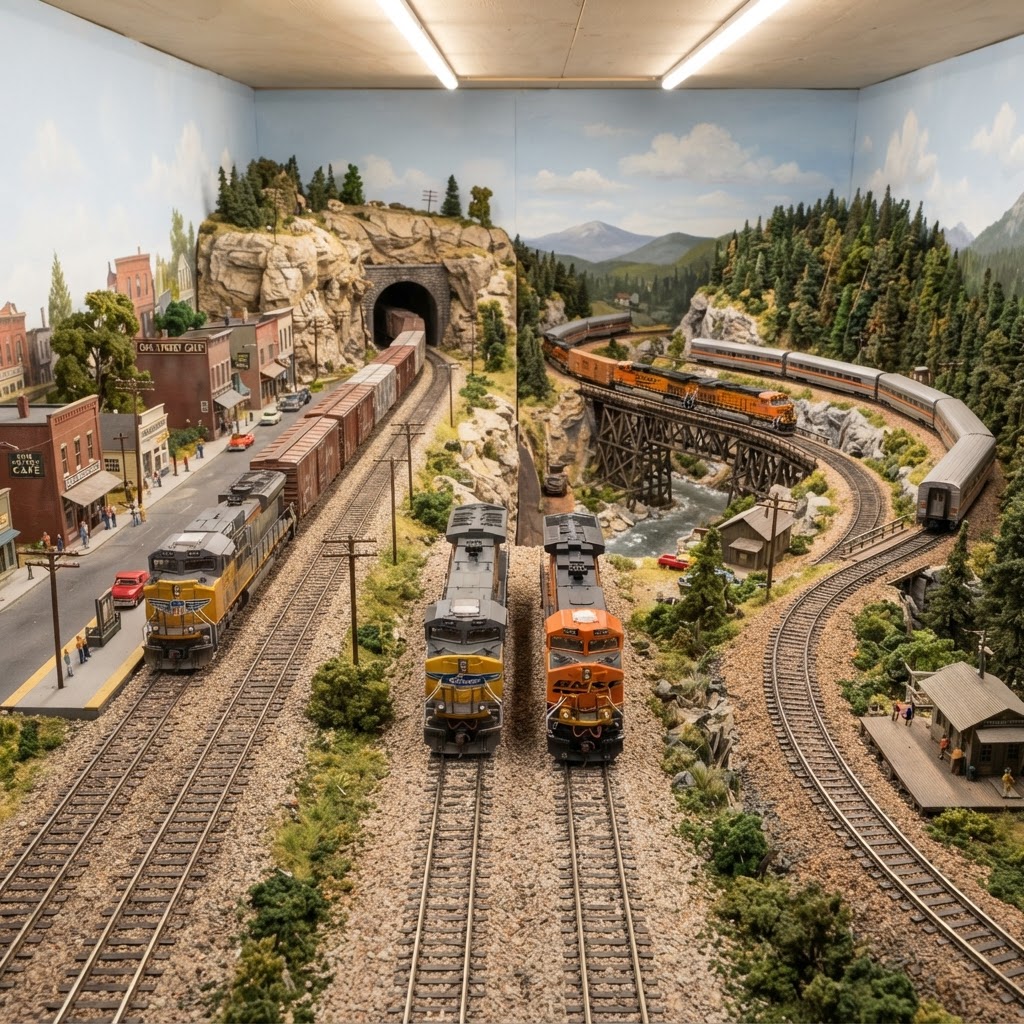
When hobbyists first dive into the world of model railroading, one of the most common questions they ask is: ho scale vs n scale which is better for my situation? It's a debate that has sparked countless conversations in hobby shops, online forums, and club meetings for decades. The honest answer is that neither scale is objectively superior — but one of them is almost certainly better suited to your space, budget, and modeling goals. Understanding the key differences between these two popular scales is the first step toward building a layout you'll love for years to come.
HO scale (1:87) and N scale (1:160) together account for the vast majority of model railroad sales worldwide. HO has long held the crown as the most popular scale, offering an enormous selection of locomotives, rolling stock, and accessories. N scale, while smaller, has carved out a devoted following among modelers who want to pack more scenery and track into a limited footprint. Both scales have genuine strengths, and both have real limitations worth considering before you invest your time and money.
In this guide, we'll break down everything you need to know — from space requirements and cost to detail quality and available products — so you can make a confident, informed decision. Whether you're setting up a layout in a spare bedroom, a basement, or on a dining room table, this comparison will help you find the scale that fits your life.
Understanding the Basics: What Do the Numbers Mean?
Before comparing the two scales head-to-head, it helps to understand what those ratios actually mean in practice.
- HO Scale (1:87): Every inch of your model represents 87 inches of the real thing. A standard 40-foot boxcar measures roughly 5.5 inches long in HO.
- N Scale (1:160): Every inch represents 160 real-world inches. That same 40-foot boxcar comes in at about 3 inches long in N scale.
The difference in size may sound modest on paper, but on a layout table, it's transformative. N scale trains are roughly half the physical size of HO scale trains, which has enormous implications for layout planning, scenery construction, and handling.
Space Requirements: The Deciding Factor for Many Modelers
For a large number of hobbyists, available space is the single most important variable in the HO vs. N scale decision.
HO Scale Space Needs
HO scale is well-suited for hobbyists who have a dedicated room, a large basement, or at least a generous section of a garage. A basic oval loop in HO scale requires a minimum radius of about 18 inches, meaning a simple oval track plan needs a table roughly 4×8 feet to run comfortably. More realistic, sweeping curves call for even more space.
That said, HO scale rewards the space investment handsomely. Check out these 10 Best HO Scale Track Plans for Your Home Layout if you're curious about what's possible — from compact switching layouts to sprawling multi-level empires.
N Scale Space Needs
N scale's biggest selling point is its compact footprint. Minimum curve radii start around 9–11 inches, meaning a workable loop can fit on a 2×4-foot shelf or a folding table. For apartment dwellers, hobbyists in smaller homes, or anyone who wants a layout that can be stored under a bed or in a closet, N scale is a revelation.
The practical implication is significant: in the same 4×8-foot space where an HO modeler might fit a single-loop oval with modest scenery, an N scale modeler can build a multi-track main line with yards, towns, mountains, and realistic sweeping curves. If you're ready to explore N scale, The Best Starter Kits for N Scale Beginners is a great place to start.
Practical Takeaway
If you have a 4×8 sheet of plywood or larger and a dedicated hobby space, HO is very manageable. If you're working with a shelf, a small table, or a shared living space, N scale gives you far more creative freedom per square foot.
Detail and Visual Quality
HO Scale Detail
HO scale's larger physical size gives manufacturers more room to add fine details — rivet lines, grab irons, brake wheels, and painted crew figures. High-end HO locomotives from brands like Athearn, Bachmann Spectrum, and Broadway Limited often feature jaw-dropping detail straight out of the box. The larger scale also makes weathering, painting, and kit-bashing significantly easier for modelers who enjoy hands-on customization.
If steam locomotives are your passion, the extra size of HO makes a real difference. Browse The Best Train Brands for Authentic Steam Locomotives to see how HO scale manufacturers lead the pack in prototype fidelity.
N Scale Detail
N scale has come an incredibly long way in the past two decades. Modern N scale locomotives from manufacturers like Kato, Atlas, and Micro-Trains feature surprisingly crisp detail, factory-applied DCC decoders, and smooth-running mechanisms that rival their HO counterparts. The detail is genuinely impressive when viewed at normal operating distance on a layout.
However, working with N scale components — installing decoders, replacing couplers, or doing fine weathering — requires steady hands, good lighting, and often a magnifying glass. If you enjoy hands-on modeling and kitbashing, the smaller size can become a genuine frustration.
Product Availability and Variety
HO Scale Selection
HO scale simply offers more of everything. More locomotive road names and eras, more rolling stock variety, more structure kits, more track systems, more scenery products. This breadth makes it easier to model specific prototype railroads, time periods, and regions. For beginners especially, this abundance of starter products is a major advantage — see our picks for the 10 Best HO Scale Starter Sets for Beginners to get a sense of what's available.
HO also dominates the used and secondary market. Swap meets, eBay, and hobby shop bargain bins are loaded with affordable HO equipment, making it easier to build a fleet on a budget.
N Scale Selection
N scale selection has grown dramatically and now covers most major American prototype railroads, European lines, and many niche road names. Major manufacturers like Kato, Atlas, and Intermountain have invested heavily in N scale product lines, and the variety available today would have seemed unimaginable to modelers twenty years ago.
That said, if you're modeling a specific short line, a narrow-gauge operation, or a highly specialized prototype, HO is more likely to have exactly what you need — either ready-to-run or as a kit.
For passenger car enthusiasts, both scales offer excellent options. The Best Passenger Car Brands for Model Trains covers top picks across multiple scales.
Cost Comparison
Neither scale has a dramatic cost advantage at the entry level — a basic starter set in either scale runs roughly $100–$200. However, costs diverge as your layout grows.
Where HO Can Cost More
- Structures and scenery materials tend to cost more in HO simply because they're physically larger.
- A fully benchwork-equipped HO layout room requires more lumber, foam, and materials than a comparable N scale setup.
Where N Scale Can Cost More
- High-quality N scale DCC decoders and sound decoders are often priced similarly to HO equivalents, despite being smaller and harder to install.
- Specialty and limited-run N scale locomotives can command significant premiums due to smaller production runs.
The Bottom Line on Budget
For beginners, cost is relatively comparable. If you're budget-conscious, focusing on HO's massive secondary market can yield significant savings. Check out our recommended products page for vetted gear across both scales, or browse our roundup of 10 Best Beginner Model Train Sets for affordable entry points.
DCC and Sound Systems
Digital Command Control (DCC) has transformed both scales, allowing modelers to run multiple trains independently, control lighting, and add realistic sound. Both HO and N scale have excellent DCC support, but there are practical differences.
HO scale's larger locomotives have more room for decoder installation, making DCC retrofits straightforward even for beginners. N scale DCC installs require more patience and precision — but most modern N scale locomotives come DCC-ready or DCC-equipped from the factory, reducing the need for aftermarket installs.
If you're new to DCC, our DCC vs DC Power: A Complete Guide breaks down everything you need to know before choosing a control system, regardless of scale.
Which Scale Is Right for You? A Quick Decision Guide
Still on the fence? Run through these questions:
Choose HO Scale if:
- You have a dedicated hobby space of 4×8 feet or larger
- You enjoy hands-on modeling, weathering, and kit-bashing
- You want the widest possible selection of ready-to-run products
- You plan to model a specific or obscure prototype railroad
- You're buying or building structures and want easier assembly
Choose N Scale if:
- Your available space is limited (apartment, shared room, or shelf layout)
- You want to model sweeping landscapes and long mainline runs in a small area
- You prefer pre-built, ready-to-run equipment with minimal customization
- You're comfortable working with small components, or willing to learn
For a deeper look at top manufacturers in both scales, The 5 Best Model Train Brands for Serious Collectors and 5 Best Beginner Model Train Brands are worth bookmarking.
Getting Started: Tools and Setup Tips
Regardless of which scale you choose, having the right tools makes layout building far more enjoyable. A good hobby knife, rail nippers, track gauges, and a reliable soldering iron are essentials for any scale. Our guide to the 10 Best Model Train Tools Every Beginner Needs covers the full toolkit, with recommendations suited to both HO and N scale work.
One underrated tip: before buying any equipment, sketch out your available space and experiment with track plan software. Free tools like SCARM or Anyrail let you test track configurations digitally before you spend a single dollar on track or benchwork. This is especially valuable for N scale modelers trying to maximize a tight space, and for HO modelers planning multi-level layouts.
Frequently Asked Questions
Is HO scale easier for beginners than N scale? Generally, yes. HO scale's larger components are easier to handle, assemble, and troubleshoot, making it a more forgiving entry point for new hobbyists. That said, N scale starter sets are designed to be beginner-friendly, and many first-time modelers do very well starting in N scale.
Can I run HO and N scale trains on the same layout? No — HO and N scale use different track gauges and scales, so they are not compatible with each other. Each scale requires its own dedicated track and power system.
Which scale holds its value better? HO scale equipment generally has a stronger secondary market due to higher volume production and larger collector base. However, limited-run N scale items from premium manufacturers can appreciate significantly over time.
Is N scale harder to maintain than HO? N scale equipment can be more fiddly to maintain due to its smaller size. Cleaning wheels, replacing couplers, and lubricating mechanisms all require more care and patience in N scale. HO maintenance is more accessible, especially for hobbyists with larger hands or less-than-perfect eyesight.
What if I want to switch scales later? Switching scales means replacing your locomotives, rolling stock, and track — a significant investment. It's worth taking time upfront to choose the right scale for your long-term goals rather than starting in one scale and migrating to another.
Conclusion
The HO scale vs. N scale debate doesn't have a universal winner — it has a winner for you, based on your space, your modeling style, and your hobby goals. HO scale delivers unmatched product variety, easier handling, and exceptional detail for those with the room to enjoy it. N scale empowers modelers with limited space to build ambitious, scenic layouts that would be impossible in larger scales.
Take stock of your available space, think honestly about how hands-on you want your modeling experience to be, and let those factors guide your choice. Whichever scale you choose, you're entering a hobby with decades of depth and a welcoming community behind it.
Ready to take the next step? Explore our full library of guides on Model Train Insider to find starter sets, track plans, tools, and expert advice for every skill level and every scale.
Affiliate Disclosure: Some links in this article are affiliate links. We may earn a commission at no extra cost to you.
Enjoying this guide?
Browse our favorite recommended products.
James Mitchell
Model Train Enthusiast & Writer
James has been building layouts and collecting trains for over 15 years. He started Model Train Insider to help newcomers navigate the hobby with practical, no-nonsense advice drawn from hands-on experience.
Stay on Track
Get beginner guides, brand reviews, and layout tips delivered to your inbox. No spam—just trains.
Free forever. Unsubscribe anytime.
Related Articles
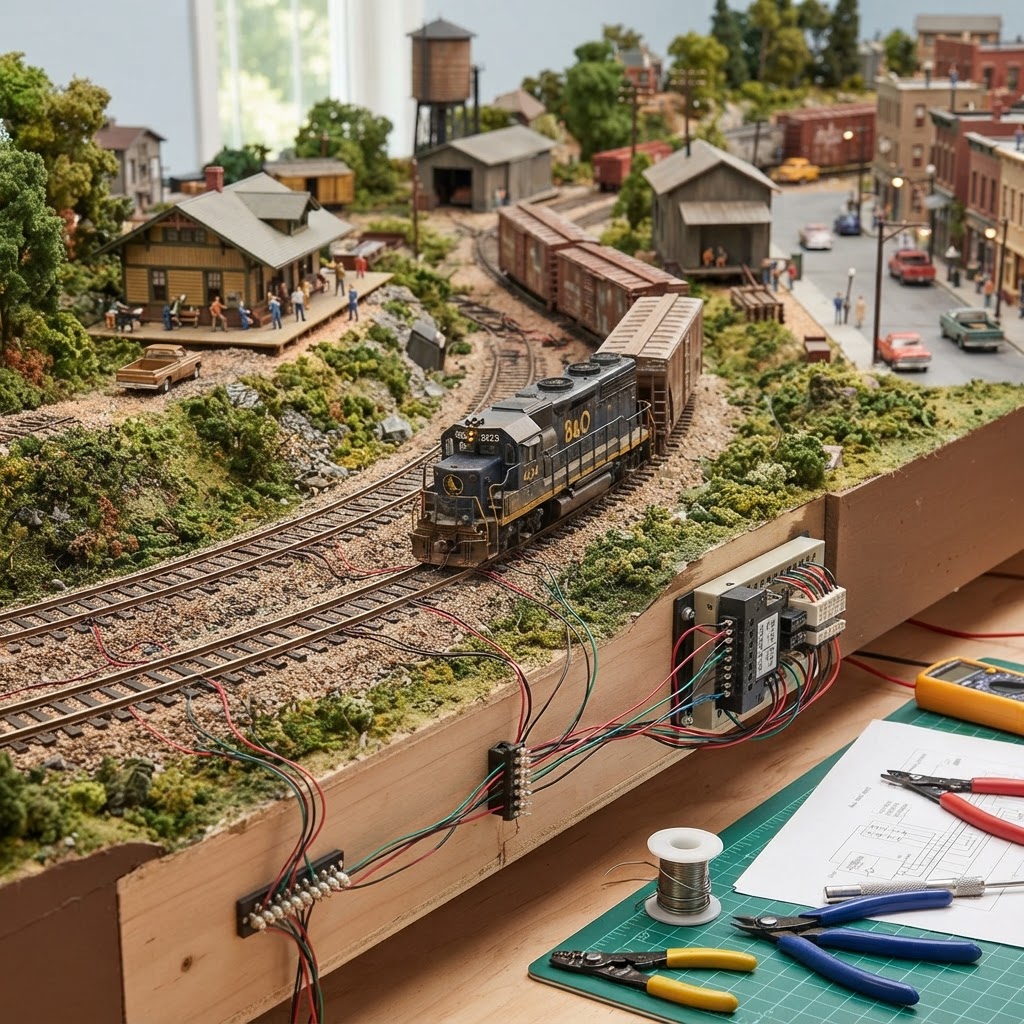
How to Wire Model Train Layouts: A Complete Step-by-Step Guide
Master the fundamentals of model railroad electronics. Learn how to wire model train layouts safely and efficiently with our comprehensive step-by-step guide.
Read more
10 Best DCC Systems for Model Railroads: A Comprehensive Buyer Guide
Looking for the best DCC systems for model railroads? Discover our top 10 expert-rated recommendations to enhance your control and layout performance today.
Read more
10 Best HO Scale Track Plans for Your Home Layout
Discover the 10 best HO scale track plans to transform your space. From compact switching layouts to grand mainlines, find the perfect design for your model train.
Read more