Diesel vs Steam Locomotives: A Guide to Choosing Your Model Train
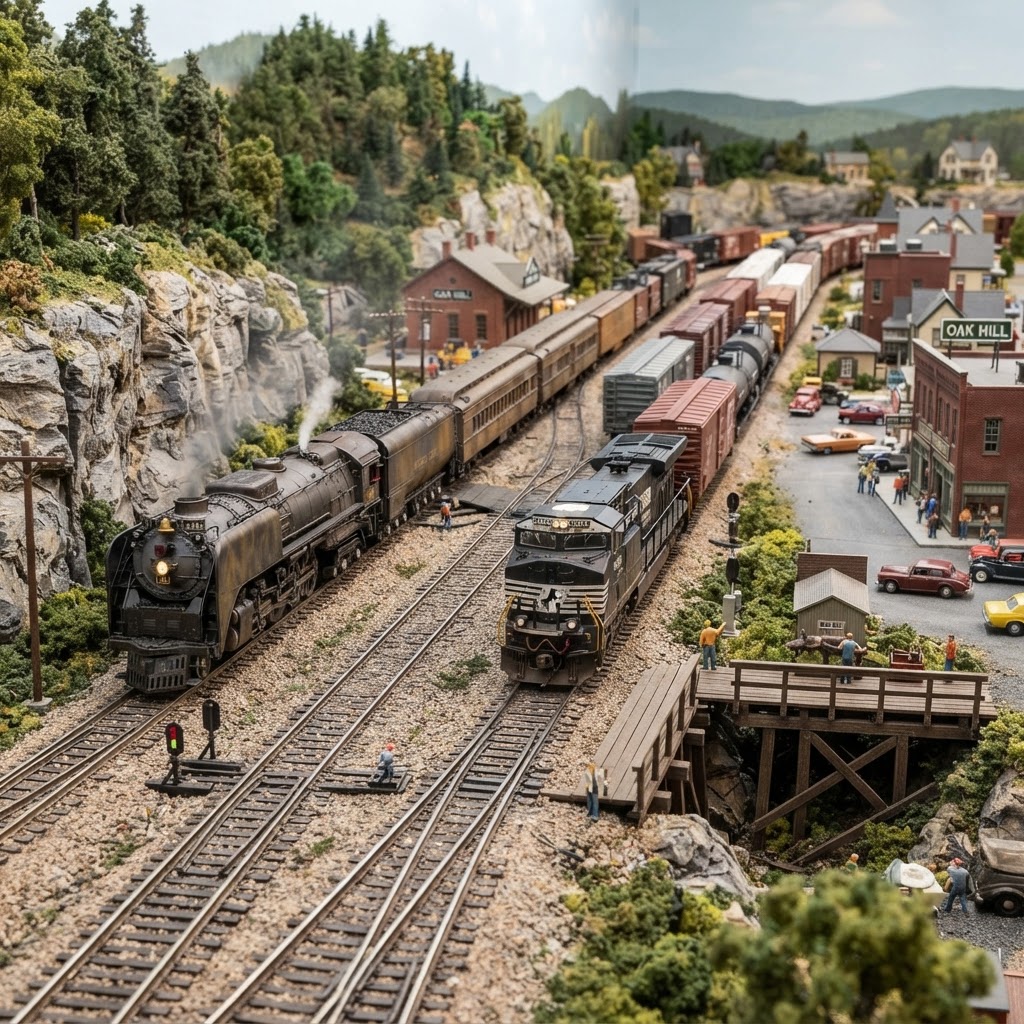
When it comes to building a model railroad layout, few decisions spark more debate than comparing diesel and steam locomotives. Both have devoted followings, rich histories, and distinct personalities that can shape the entire character of your layout. Whether you're a first-time hobbyist browsing your first starter set or a seasoned modeler expanding an established collection, understanding the differences between these two iconic machine types is essential to making a choice you'll be happy with for years to come.
Steam locomotives carry the romance of the golden age of rail — billowing smoke, rhythmic chuffing sounds, and ornate mechanical detail that tells a story of industrial craftsmanship. Diesel locomotives, by contrast, represent the modern era of efficiency, clean lines, and raw power. In the world of model railroading, both types are available in an extraordinary range of scales, brands, and price points, making the choice more nuanced than it might first appear.
This guide is designed to help you cut through the noise. We'll walk through the key differences between diesel and steam models, look at the practical considerations for your layout, and give you the actionable advice you need to make the right call. If you're brand new to the hobby, you may also want to check out The Ultimate Beginner Guide to Model Railroading: Start Your Journey Today before diving in.
A Brief History: Why Both Types Still Matter
The Steam Era
Steam locomotives dominated railroading from the early 1800s through the mid-20th century. Their complex valve gear, boilers, and driving rods made them engineering marvels of their time. In model form, steam engines capture this complexity beautifully — manufacturers like Bachmann, Athearn, and Broadway Limited have spent decades perfecting highly detailed steam models that appeal to history buffs and serious collectors alike.
Modeling a steam-era layout typically means recreating scenes from roughly the 1860s through the 1950s — small-town depots, water towers, coaling stations, and sprawling yards filled with passenger cars and freight hoppers. It's a world unto itself.
The Diesel Revolution
By the 1950s, diesel locomotives had largely replaced steam on American mainlines. Their advantages were clear: lower operating costs, easier maintenance, and greater reliability. In model railroading, diesels quickly became a staple because of their reliable traction, smooth operation, and suitability for longer, heavier trains.
Modern diesel models from manufacturers like Kato, Atlas, and Walthers Mainline reflect the real-world variety of EMD and GE locomotives that still haul freight across North America today. If your layout is set in a contemporary or transition-era context, diesel is often the natural choice.
Key Differences Between Diesel and Steam Locomotive Models
Mechanical Complexity and Detail
One of the most visible differences when comparing diesel and steam locomotives is the level of external mechanical detail. Steam models are laden with intricate parts — boiler fittings, smoke deflectors, valve gear, and cab details that reward close inspection. High-end steam models from manufacturers like Broadway Limited Imports (BLI) can be breathtaking in their accuracy.
Diesel models, while sometimes simpler in external detail, make up for it with cab interiors, hood vents, and accurate road-specific paint schemes. The appeal is clean, purposeful design rather than mechanical complexity.
Sound and DCC Performance
Sound-equipped models have transformed both steam and diesel categories. Steam locomotives with DCC sound reproduce the chuff of pistons, the hiss of steam releases, and the haunting wail of a steam whistle. Diesel sound decoders replicate engine prime movers, dynamic brakes, and air horns.
If you're planning to run DCC sound, check out our 10 Best DCC Systems for Model Railroads: A Comprehensive Buyer Guide for a full breakdown of systems that bring out the best in both locomotive types. Choosing the right system matters — steam sound in particular benefits from decoders that can sync chuff sounds with actual wheel rotation.
Running Characteristics
Steam locomotives typically have more driving wheels and complex wheel arrangements (think 4-8-4 or 2-8-2 configurations), which means they can be more sensitive to track quality and curve radius. Many steam models require broader curves to run smoothly, which is a critical layout planning consideration.
Diesel locomotives, with their more standardized truck configurations, tend to handle tighter curves with greater ease. This makes them particularly well-suited for smaller layouts or beginner setups. If you're just starting out, a diesel might give you fewer headaches as you dial in your track and wiring.
Price Range and Availability
Both steam and diesel models span a wide price range. Entry-level steam sets from Bachmann can be found for under $100, while top-tier brass steam imports can run into the thousands. The same range exists for diesels, though highly detailed diesel models from Kato or Atlas tend to be more consistently priced in the mid-range.
For beginners deciding between locomotive types, browsing our Best Starter Model Train Sets for Adults: A Comprehensive Guide to Your New Hobby can help you identify sets that include a quality locomotive, track, and power supply in one package — available in both steam and diesel options.
Choosing the Right Locomotive for Your Layout
Consider Your Era and Theme
The single most important factor when choosing between steam and diesel is the historical era and geographic setting of your layout. Ask yourself:
- What time period am I modeling? Pre-1950s almost demands steam. Post-1960s suits diesel. The transition era (late 1940s–late 1950s) lets you run both.
- What region am I modeling? Some railroads held on to steam longer than others. Research your prototype railroad for authenticity.
- What's the visual atmosphere I want? Steam creates drama; diesel creates realism.
Think About Your Layout Size and Track Plan
As mentioned, steam locomotives often require larger minimum curve radii. If your layout is in a small space — a 4x8 shelf layout, for example — many steam engines simply won't navigate the curves without derailing. Diesels, particularly shorter road switchers like the GP7 or SW1500, handle tight curves comfortably.
Your scale also plays a role here. HO scale steam engines generally need 18-inch radius curves at minimum, while N scale offers more flexibility. For a deeper look at how scale affects your choices, see our guide on HO vs N Scale Starter Kits: The Ultimate Guide for Beginners.
Operating Style and Switching
If you enjoy switching operations — moving cars around yards, spotting industries, and building trains — road switcher diesels are almost universally preferred. They're maneuverable, visually appropriate for industrial settings, and widely available. Steam switchers exist but are less common and less flexible.
If you prefer point-to-point mainline running or passenger excursions, steam locomotives shine. A beautifully detailed Pacific or Hudson pulling a string of passenger cars around a scenic layout is one of the great pleasures of the hobby.
Power Systems: DC vs DCC Considerations
Both steam and diesel models are available in DC and DCC configurations, though the experience differs significantly. DCC unlocks the full potential of sound-equipped models and allows you to run multiple locomotives independently on the same track.
If you're considering upgrading or setting up a new DCC system, our guide on DCC vs DC: The Ultimate Guide to Choosing the Best Model Train Power System lays out everything you need to know. For those watching their budget, Best DCC Controller for Budget: Top Picks for Every Model Railroader offers solid options without breaking the bank.
Proper power supply selection also matters. Under-powered setups can cause steam locomotives — which often draw more current due to their motorized valve gear animations — to stall or run inconsistently. Visit our Best Power Supplies for Model Trains: Top 2024 Reviews and Buying Guide for recommendations suited to both locomotive types.
For wiring tips that apply to any locomotive type, How to Wire Model Train Layouts: A Complete Step-by-Step Guide is an excellent resource to bookmark.
Maintenance and Long-Term Care
Steam Locomotive Maintenance
Steam models require more regular attention. The many moving parts — rods, cranks, valve gear — need periodic lubrication and inspection. Wheel pickups on steam engines can accumulate dirt more quickly due to the larger number of axles. Keeping your track clean is especially important.
Higher-end steam models may also include smoke units, which require smoke fluid and occasional wick replacement. It's a small effort that pays off with spectacular visual effect.
Diesel Locomotive Maintenance
Diesels are generally lower-maintenance. With fewer moving external parts and a simpler drive mechanism, they're more forgiving of occasional track grime and infrequent cleaning. This makes diesels an attractive choice for hobbyists who want great performance without intensive upkeep.
For tools and maintenance supplies, browse our recommended products page for curated options.
Can You Run Both Steam and Diesel?
Absolutely — and many modelers do. The transition era layout (roughly 1947–1960) is enormously popular precisely because it allows hobbyists to operate both steam and diesel locomotives side by side, reflecting the real historical moment when one era was giving way to another. It's the best of both worlds.
Even outside the transition era, some modelers run excursion or heritage steam on otherwise modern diesel layouts, which is perfectly prototypical — railroads like Union Pacific and Norfolk Southern have done exactly that in real life.
If you're planning a DCC upgrade to handle multiple locomotive types simultaneously, The Best Way to Upgrade to DCC: A Beginner's Step-by-Step Guide will walk you through the process step by step.
Frequently Asked Questions
Is steam or diesel better for beginners?
For most beginners, diesel locomotives are the more practical starting point. They handle tighter curves, require less maintenance, and tend to have more consistent running quality in entry-level price ranges. That said, many starter sets include steam locomotives and work perfectly well for new hobbyists. It really depends on the era and theme you want to model.
Do steam locomotives require special track?
Not special track, but they do typically require larger minimum curve radii than diesels. Always check the manufacturer's recommended minimum radius before purchasing a steam locomotive. Larger steam engines like 4-8-4s or 2-10-2s may need 22 inches or more in HO scale.
Can I run steam and diesel on the same DCC system?
Yes. DCC systems handle both locomotive types equally well, since the control signal is the same regardless of locomotive type. The difference lies in the sound decoder — steam decoders are programmed differently than diesel decoders, but both work on the same DCC system. See our 10 Best DCC Systems for Model Railroads for compatible options.
Which type holds its value better as a collectible?
High-quality brass steam imports have historically been strong collectibles, often appreciating significantly over time. However, limited-run diesel models from quality manufacturers like Kato or Athearn Genesis can also hold value well. For pure collecting value, researching specific road names and limited production runs matters more than the steam-versus-diesel distinction.
What scale is best for steam locomotives?
Steam locomotives look spectacular in larger scales like HO and O, where their mechanical detail can be fully appreciated. G scale (large scale) steam models are also stunning for garden railways. N scale steam is impressive for its size but doesn't showcase the same level of detail. For large scale DCC options, see our Best DCC Systems for Large Scale Trains: A Comprehensive Guide.
Conclusion
Comparing diesel and steam locomotives ultimately comes down to personal vision. Steam delivers romance, historical richness, and visual drama. Diesel offers practicality, modern realism, and ease of operation. Neither is objectively better — both are deeply rewarding in the right context.
The best advice is to start with the era and theme that excites you most, choose a scale and layout size that fits your space, and then select the locomotive type that feels right for that world. You can always expand your roster over time — and many modelers eventually find room for both.
Ready to take the next step? Explore more of our in-depth guides on Model Train Insider to deepen your knowledge, refine your layout plans, and get the most out of this incredibly rewarding hobby.
Affiliate Disclosure: Some links in this article are affiliate links. We may earn a commission at no extra cost to you.
Enjoying this guide?
Browse our favorite recommended products.
James Mitchell
Model Train Enthusiast & Writer
James has been building layouts and collecting trains for over 15 years. He started Model Train Insider to help newcomers navigate the hobby with practical, no-nonsense advice drawn from hands-on experience.
Stay on Track
Get beginner guides, brand reviews, and layout tips delivered to your inbox. No spam—just trains.
Free forever. Unsubscribe anytime.
Related Articles
Best Starter Model Train Sets for Adults: A Comprehensive Guide to Your New Hobby
Discover the best starter model train sets for adults. Learn how to choose the right scale, brand, and layout to kickstart your rewarding model railroading hobby.
Read more
The Ultimate Beginner Guide to Model Railroading: Start Your Journey Today
Discover how to start your model train hobby with our ultimate beginner guide. Learn about scales, track layouts, and essential gear to build your dream railroad.
Read more
HO vs N Scale Starter Kits: The Ultimate Guide for Beginners
Choosing your first model train set? Compare HO vs N scale starter kits to find the perfect size, space, and detail for your new hobby layout.
Read more