The Best Tools for Model Trains: A Pro Guide for Every Railroader
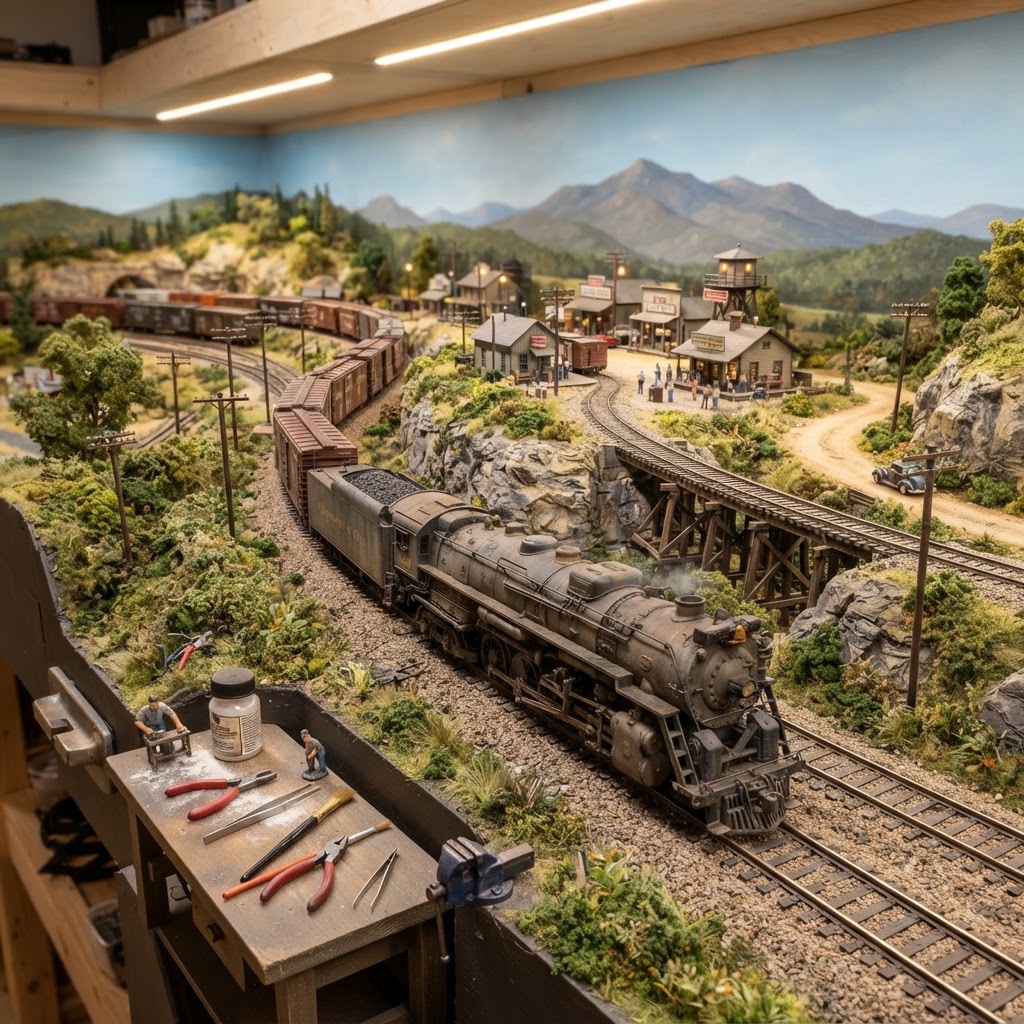
Whether you're just getting started or you've been building layouts for decades, having the best tools for model trains can make the difference between a frustrating experience and a deeply satisfying hobby. The right toolkit lets you work with precision, tackle complex builds with confidence, and achieve professional-looking results on your layout. Without proper tools, even the most experienced modeler can struggle with tasks that should be straightforward — from laying clean track to painting fine details on rolling stock.
Model railroading spans a huge range of tasks: cutting, sanding, soldering, painting, wiring, and landscaping, to name just a few. Each discipline benefits from its own set of specialized tools, and building up your collection over time is part of the journey. If you're new to the hobby, you might want to start with our 10 Best Beginner Model Train Sets for Starting Your Hobby Today before diving deep into tooling up — but once you're ready to start building your own layouts, this guide is for you.
In this article, we'll walk you through the essential tools every model railroader should own, organized by category so you can build your toolkit systematically. We've also included tips on what to look for when buying, and we've linked to our recommended products page wherever it's helpful. Let's get into it.
Track and Layout Tools
Rail Nippers and Track Cutters
One of the most fundamental tasks in model railroading is cutting track to fit your layout. Standard wire cutters will damage rail ends and leave burrs that cause derailments. A proper rail nipper or track cutter is engineered to slice cleanly through metal rail without deformation.
Look for flush-cut nippers designed for the scale you're working in. HO scale modelers will need tools that handle slightly larger rail profiles than N scale builders. If you're unsure which scale suits your space and budget, check out our HO Scale vs N Scale: Which Is Better for Your Model Railroad Layout? guide before investing in scale-specific tools.
What to look for:
- Hardened steel blades rated for brass or nickel-silver rail
- Flush-cut design to minimize cleanup filing
- Comfortable grip for repeated cuts
Track Gauges
A track gauge is a simple but indispensable tool. It ensures your rails are laid at the exact correct spacing throughout your layout, which directly affects how smoothly your trains run. Even small deviations in gauge can cause wheel climb and derailments.
Most manufacturers offer gauges specific to each scale. Keep one on your workbench and use it every time you spike or glue down track. It takes seconds to check and can save hours of troubleshooting later.
Foam Cutters and Hotwire Tools
If you're building up terrain on your layout using foam board — which most modern builders do — a hotwire foam cutter is a game-changer. These tools use a heated wire to slice through foam cleanly and precisely, without the crumbling mess you get from utility knives.
Tabletop bow-style foam cutters are ideal for large, flat cuts, while handheld pen-style foam cutters give you the control needed for shaping hills, valleys, and rock faces. A quality hotwire cutter is one of the best investments you can make in your layout's scenery work.
Hand Tools Every Modeler Needs
Tweezers and Fine-Point Pliers
Working at small scales demands fine motor control that human fingers simply can't deliver on their own. A set of precision tweezers — both straight and angled — is essential for placing small details like figures, signs, couplers, and grab irons.
Similarly, needle-nose pliers and round-nose pliers help you bend wire, manipulate couplers, and handle delicate metal parts without slipping. Invest in a quality set with smooth, non-serrated jaws to avoid scratching painted surfaces.
Hobby Knives and Scalpels
A quality hobby knife — the X-Acto style is the industry standard — is one of the most versatile tools on your bench. Use it for cutting decals, trimming plastic kits, scribing panel lines, and dozens of other fine tasks. Always keep a fresh supply of blades; a dull blade requires more pressure and leads to slips and injuries.
For heavier cutting tasks like slicing styrene sheet, a snap-off utility knife with a fresh blade is safer and more effective than a small hobby knife.
Files and Sanding Tools
After cutting parts, you'll almost always need to clean up edges. A set of needle files in various profiles (flat, round, half-round, triangular) lets you get into tight spaces and refine shapes accurately. For larger areas, sanding sticks in multiple grits — from 120 up to 400 or 600 — smooth plastic and resin cleanly.
Don't underestimate sanding. Clean, smooth joins between parts dramatically improve the final appearance of your builds, whether you're assembling a scratch-built structure or cleaning up a resin detail part.
Electrical and Wiring Tools
Soldering Iron and Accessories
Good wiring is the backbone of any reliable model railroad layout, and soldering is an unavoidable part of the process. A quality temperature-controlled soldering iron — not a cheap fixed-wattage pencil iron — gives you precise heat control to make clean joints without damaging nearby plastic or wire insulation.
For model railroading, a 25–40 watt adjustable iron with a fine chisel or conical tip is ideal. Pair it with rosin-core solder rated for electronics, a brass wire tip cleaner, and a helping-hands tool to hold wires in place while you work.
If you're running a Digital Command Control system, clean soldered connections are even more critical. For more on DCC setups, see our 5 Best DCC Systems for Home Model Railroads: Expert Reviews and Comparisons.
Wire Strippers and Crimping Tools
A quality wire stripper sized for light-gauge wire (22–28 AWG is common in model railroad wiring) makes clean, consistent strip cuts without nicking the conductor. Nicked wires break at the joint over time, causing intermittent electrical faults that are maddening to diagnose.
A crimping tool paired with proper butt connectors or quick disconnects can also speed up wiring in areas where you might need to disassemble the layout later — under removable modules, for example.
Multimeter
A digital multimeter is one of those tools you won't use every day, but when you need it, nothing else will do. Use it to check continuity, measure voltage at various points on the layout, and track down short circuits. It's inexpensive insurance against hours of troubleshooting frustration.
Painting and Finishing Tools
Airbrush and Compressor
For serious modelers, an airbrush elevates finish quality beyond what's achievable with rattle cans or hand brushing. Airbrushing allows you to apply thin, even coats of paint, blend colors for realistic weathering, and work at a scale appropriate to your models.
A dual-action gravity-feed airbrush paired with a small diaphragm or piston compressor gives you excellent control. There's a learning curve, but the results are worth the investment. If you're painting fine locomotives — especially brass models — an airbrush is practically essential. Learn more about high-end models in The Ultimate Guide to the Best Brass Model Trains for Collectors.
Paintbrushes
Even with an airbrush, you'll still need a selection of quality paintbrushes for detail work, applying washes, and touching up. Invest in a few good sable or synthetic brushes in sizes 0, 00, and 000. Cheap brushes shed bristles and hold their shape poorly — frustrating when you're trying to paint window frames on an N scale locomotive.
Decal Setting Solutions
Applying decals cleanly is an art. Products like Micro Sol and Micro Set help decals conform to curved surfaces and eliminate silvering — that hazy ring around the decal that ruins otherwise clean lettering. Apply Micro Set before placing the decal, and Micro Sol after, to soften the decal film so it settles tightly into surface detail.
Scenery and Landscaping Tools
Scenic Applicators and Glue Syringes
Laying ground cover, static grass, and ballast requires precise application of both materials and adhesives. Glue syringes or pipettes let you apply diluted white glue exactly where you want it without flooding surrounding areas. Static grass applicators use a mild electrical charge to make synthetic grass fibers stand upright, creating a far more realistic effect than simply sprinkling the material down.
Static Grass Applicator
If you want your layout scenery to look truly alive, a static grass applicator is one of the best tool investments you can make. These devices electrostatically charge synthetic grass fibers so they stand on end like real grass, rather than lying flat. The effect is remarkably convincing, especially at N and HO scales.
For more on building an N scale layout from scratch, our The Best Starter Kits for N Scale Beginners: A Comprehensive Guide is a great companion resource.
Workbench Essentials
Cutting Mat
A self-healing cutting mat protects your workbench surface and gives you a stable, non-slip cutting surface. Most come printed with grid lines and measurements — useful for squaring up parts and measuring cuts without reaching for a ruler constantly.
Magnification Tools
Working at small scales is hard on the eyes. A magnifying headset or a benchtop magnifier with integrated lighting lets you see fine detail clearly and reduces eye strain during long modeling sessions. Once you try working under magnification, you'll wonder how you managed without it.
Parts Organizer Trays
Tiny parts have a way of disappearing into carpet forever. Compartmentalized parts trays — the kind with adjustable dividers — keep small screws, grab irons, couplers, and details sorted and accessible. This sounds mundane, but it genuinely improves your workflow and reduces frustration.
For a well-organized overview of essential beginner tools, also see our dedicated resource: 10 Best Model Train Tools Every Beginner Needs for Their Layout. And when you're ready to expand your collection of tools and supplies, browse our recommended products page for curated picks.
Frequently Asked Questions
What are the most essential tools for a beginner model railroader?
For beginners, the most important tools are a good hobby knife, flush-cut rail nippers, a track gauge, precision tweezers, needle-nose pliers, a basic soldering iron, and a cutting mat. These cover the most common tasks you'll encounter building your first layout. See our 10 Best Beginner Model Train Sets for Starting Your Hobby Today for advice on where to start before tooling up.
Do I need an airbrush for model railroading?
You don't need one as a beginner, but an airbrush is worth investing in as you advance. Spray cans and hand-brushing work for basic painting, but an airbrush gives you much better control for weathering and fine detail work on locomotives and rolling stock.
What's the best soldering iron for model railroad wiring?
A temperature-controlled station in the 25–40 watt range is ideal. Brands like Hakko and Weller are popular among modelers for their reliability and precise temperature control. Avoid cheap fixed-wattage irons, which can overheat and damage plastic ties or decoder wiring.
How do I keep small parts from getting lost on the workbench?
Use compartmentalized parts organizer trays to sort and store small components. A magnetic parts dish is also useful for keeping metal screws and bits in one place. Work over a light-colored mat so dropped parts are easier to spot.
Do tool needs change based on model train scale?
Yes, to a degree. Smaller scales like N and Z require finer tweezers, smaller drill bits, and more precise cutting tools. Larger scales like G or O allow for more forgiving tolerances. If you're choosing your scale, our The Ultimate Beginner Guide to Model Train Scales: Choosing Your Perfect Size will help you decide.
Conclusion
Building a quality toolkit is one of the most rewarding investments you can make as a model railroader. The best tools for model trains don't have to be expensive — start with the essentials, buy quality where it matters (soldering irons, cutters, brushes), and add specialized tools as your projects demand them. Over time, your workbench will reflect your experience and the unique demands of your layout.
Whether you're laying track for the first time or adding intricate scenery details to a long-running project, the right tools make the work more enjoyable and the results more impressive. Ready to keep learning? Explore our full library of guides — from HO scale starter sets to authentic steam locomotive brands — and take your model railroad to the next level.
Affiliate Disclosure: Some links in this article are affiliate links. We may earn a commission at no extra cost to you.
Enjoying this guide?
Browse our favorite recommended products.
James Mitchell
Model Train Enthusiast & Writer
James has been building layouts and collecting trains for over 15 years. He started Model Train Insider to help newcomers navigate the hobby with practical, no-nonsense advice drawn from hands-on experience.
Stay on Track
Get beginner guides, brand reviews, and layout tips delivered to your inbox. No spam—just trains.
Free forever. Unsubscribe anytime.
Related Articles
Best Power Supplies for Model Trains: Top 2024 Reviews and Buying Guide
Discover the best power supplies for model trains. Our expert guide reviews top-rated transformers and power packs to ensure smooth performance on your layout.
Read more
Best DCC Controller for Budget: Top Picks for Every Model Railroader
Looking for the best DCC controller for your budget? Discover our top picks to control your model trains without overspending. Upgrade your layout today.
Read more
5 Best DCC Systems for Home Model Railroads: Expert Reviews and Comparisons
Looking for the best DCC system for home layouts? We evaluate the top 5 digital command control systems to help you choose the perfect match for your train room.
Read more