Best Starter Model Train Sets For Beginners 2024: A Buyer's Guide
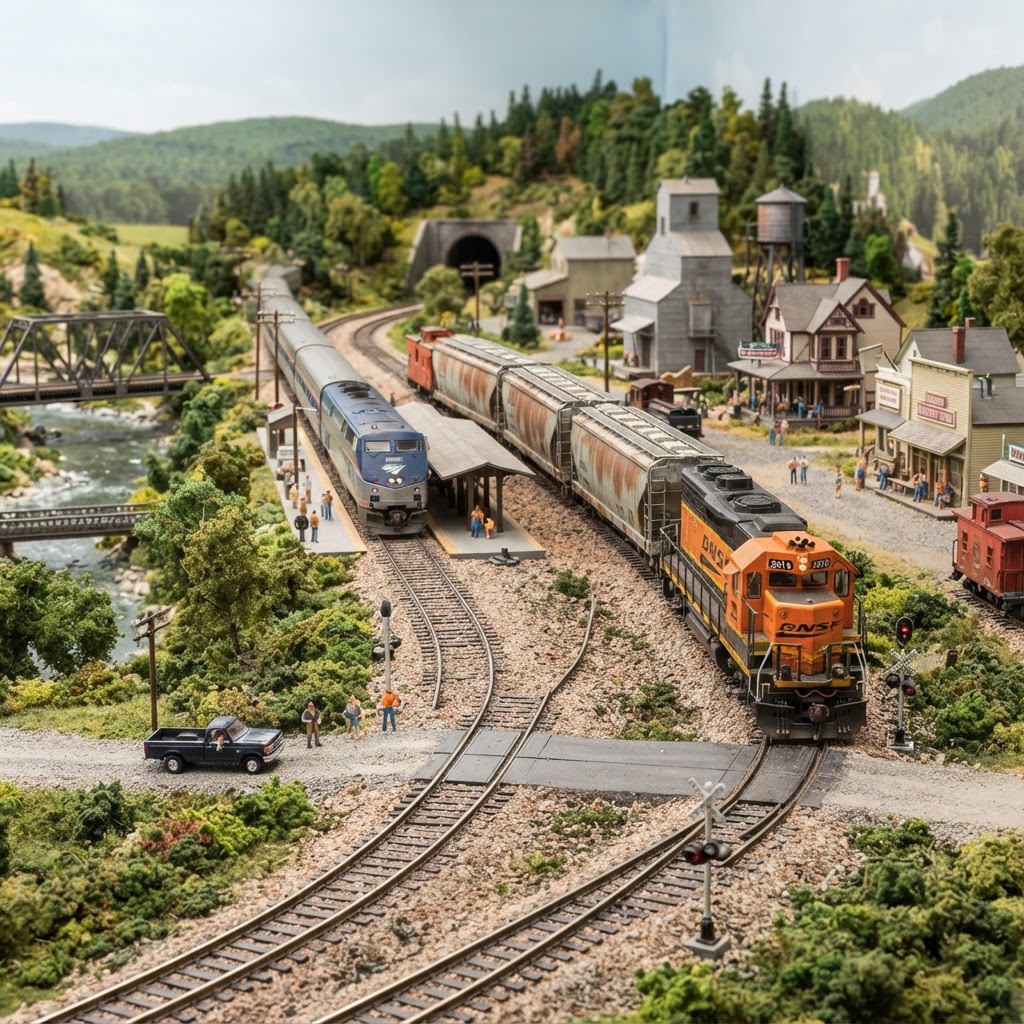
Whether you're buying your first train set as a gift or finally diving into a hobby you've admired for years, finding the best starter train sets 2024 has never been more exciting — or more overwhelming. The market is packed with options across multiple scales, brands, and price points, and without the right guidance, it's easy to spend money on a set that doesn't match your space, budget, or long-term goals. That's exactly why we put together this comprehensive guide.
Model railroading is one of the most rewarding hobbies you can pick up. It combines creativity, engineering, history, and hands-on building into a single pastime that can grow with you for decades. But every great layout starts with a single decision: choosing your first train set. Get it right, and you'll be building, running, and expanding for years. Get it wrong, and you might end up with a dusty box in the garage after six months.
In this guide, we'll break down everything beginners need to know before making a purchase — from understanding scales and gauges to evaluating the best brands on the market right now. We'll highlight our top picks, explain what makes each one great for newcomers, and give you practical advice to help you get your first train running with confidence.
What to Look for in a Beginner Train Set
Before jumping into specific products, it's worth understanding the key factors that separate a great starter set from a frustrating one. Not all train sets are created equal, and a few simple considerations can save you a lot of headaches.
Scale and Gauge: Finding the Right Fit
Scale refers to the size of the model relative to the real thing, while gauge refers to the distance between the rails. These two concepts often get confused, but both matter when choosing your first set.
The most popular scales for beginners are:
- HO Scale (1:87) – The most widely used scale in North America. HO offers a massive selection of locomotives, rolling stock, and accessories, making it the easiest scale to find parts and expand over time. If you're not sure where to start, HO is almost always the safe bet. Check out our guide to The Best HO Scale Track Options: A Guide to Building a Reliable Layout for more on building out your HO layout.
- N Scale (1:160) – Smaller than HO, N scale is perfect for hobbyists with limited space. You can build an impressive layout in a relatively small area. We have a dedicated guide on The Best N Scale Starter Sets For 2024: A Complete Buyer Guide if this scale appeals to you.
- O Scale (1:48) – Larger and more visually impressive, O scale is the scale of classic Lionel trains. It requires more space but offers excellent detail and durability. Great for display and for younger operators.
- G Scale (1:22.5) – The largest common scale, often used for outdoor garden railroads. Durable and easy to handle, but expensive and space-hungry.
For most beginners, HO or N scale offers the best balance of affordability, availability, and space requirements.
What Should Come in the Box?
A good starter set should be genuinely complete out of the box. Look for sets that include:
- A locomotive (steam or diesel)
- Several freight or passenger cars
- Enough track to form a complete oval
- A power pack or controller
- Easy-to-follow instructions
Avoid sets that require significant additional purchases just to get running. You can always expand later — but on day one, you want to unbox it, set it up, and watch it run.
DC vs. DCC: Which Control System Is Right for Beginners?
This is one of the most common questions new hobbyists ask. Traditional DC (Direct Current) control is simpler and more affordable — you turn a dial, the train goes. DCC (Digital Command Control) allows you to independently control multiple locomotives on the same track, program sound effects, and manage lighting — all digitally.
For absolute beginners, a basic DC set is perfectly fine to start with. However, if you think you might want to grow your layout quickly and enjoy more realistic operations, it's worth considering DCC from the start. Read our detailed breakdown in DCC vs DC For Beginners: Choosing The Best Control System For Your Layout to help make this decision.
Our Top Picks: Best Starter Train Sets in 2024
Here are our recommended starter sets across different scales and budgets. Each of these has been selected for ease of setup, overall value, expandability, and beginner-friendliness.
1. Bachmann Trains HO Scale Thunder Chief Set
Best Overall HO Starter Set
Bachmann is one of the most trusted names in entry-level model railroading, and the Thunder Chief set exemplifies why. This HO scale set includes a powerful diesel locomotive, four freight cars, an oval of E-Z Track (Bachmann's snap-together roadbed track), and a power pack controller. Everything clicks together without tools, and the trains run smoothly right out of the box.
What makes this set especially appealing for beginners is Bachmann's E-Z Track system, which has the roadbed built into the track sections. This eliminates the need to separately purchase and attach roadbed, simplifying your first setup considerably. The locomotive is DCC-ready, meaning you can upgrade to digital control later without replacing the engine.
Price Range: $80–$120
Scale: HO (1:87)
Best For: First-time buyers who want a reliable, expandable setup
2. Lionel Pennsylvania Flyer LionChief Set
Best O Scale Starter Set
If you want something visually impressive and incredibly easy to operate — especially for families with younger enthusiasts — the Lionel Pennsylvania Flyer is hard to beat. This O gauge set features Lionel's LionChief system, which includes Bluetooth control via a free smartphone app. You can control speed, direction, and even locomotive sounds right from your phone.
The set includes a steam locomotive with realistic sounds, passenger cars, and Lionel's FasTrack system, which snaps together cleanly and looks great on any surface. It's not the most expandable set in terms of ecosystem compatibility, but within the Lionel universe, your options are enormous. If you're torn between Lionel and other O gauge brands, our article on Lionel vs MTH: Choosing The Perfect O Gauge Brand For Your Collection offers a thorough comparison.
Price Range: $150–$220
Scale: O Gauge
Best For: Families, display enthusiasts, and fans of classic American railroading
3. Kato N Scale Starter Set
Best N Scale Starter Set
Kato is legendary in the model railroading world for the quality of its track and the smoothness of its locomotives. Their N scale starter sets typically include a diesel or steam locomotive, a handful of freight cars, and Kato's Unitrack — widely considered the best snap-together track system on the market.
Kato sets are a step up in quality from budget brands, and you'll notice it immediately in how smoothly the trains run. If you're leaning toward N scale because of space constraints, this is the set to start with. For more on N scale options, don't miss The Best N Scale Starter Sets For 2024: A Complete Buyer Guide.
Price Range: $100–$160
Scale: N (1:160)
Best For: Space-limited hobbyists who don't want to compromise on quality
4. Bachmann Trains DCC-Equipped HO Starter Set
Best Budget DCC Starter Set
For beginners who want to jump straight into digital control without spending a fortune, Bachmann offers DCC-equipped starter sets at a surprisingly accessible price point. These sets include a DCC-equipped locomotive, rolling stock, track, and a basic DCC controller — everything you need to experience digital operations on day one.
The DCC experience allows you to start learning decoder programming and multi-train operations early, which will serve you well as your layout grows. For a deeper dive into getting started with DCC, check out our guide to Best Starter DCC Sets: A Beginner's Guide to Digital Command Control.
Price Range: $100–$150
Scale: HO (1:87)
Best For: Tech-savvy beginners who want to grow into advanced operations
Setting Up Your First Layout: Practical Tips for Beginners
Buying the set is just the beginning. Here's how to set yourself up for success once it arrives.
Start Simple, Then Expand
Resist the urge to build a massive, complex layout right away. Start with the oval that comes in your set, get comfortable with basic operations, and gradually add track, switches, and scenery. This approach keeps frustration low and enjoyment high.
Invest in the Right Tools Early
Having the right tools makes a significant difference in your model railroading experience. A good rail joiner tool, track cleaner, and a basic screwdriver set will serve you well from day one. Browse our recommended products page for beginner-friendly tools, and check out 10 Best Beginner Model Railroad Tools Every Hobbyist Needs for a complete rundown.
Keep Your Track Clean
Dirty track is the number one cause of poor locomotive performance. Invest in a track cleaning car or use a simple track cleaning fluid and cloth regularly. Clean track equals smooth running — it's that simple.
Understand Your Control System
Whether you're running DC or DCC, take time to understand how your controller works before troubleshooting problems. Many issues that beginners blame on faulty equipment are actually control system misunderstandings. Our guide on DCC vs DC Locomotives: The Ultimate Guide for Beginners is a great resource for sorting this out.
Frequently Asked Questions
What is the best train scale for a beginner?
For most beginners, HO scale is the best starting point. It offers the widest selection of locomotives, cars, and accessories at affordable prices, and there's an enormous community of HO modelers to learn from. If space is a serious concern, N scale is an excellent alternative. Both scales are well-supported by major manufacturers.
How much should I spend on my first model train set?
A solid beginner set typically costs between $80 and $200. Sets below $50 are often cheaply made and may discourage you from continuing the hobby. Sets in the $100–$150 range from reputable brands like Bachmann, Kato, or Lionel offer the best value for newcomers.
Can I run DCC locomotives on a DC track?
In most cases, yes — DCC-equipped locomotives can be run on DC track in analog mode, though they won't use their digital features. However, running DC locomotives on a DCC system can damage the motor. For a full explanation, read our DC vs DCC Control Systems: A Comprehensive Guide for Model Railroaders.
What's the difference between ready-to-run and kit sets?
Ready-to-run (RTR) sets come fully assembled — you just connect the track and run. Kit sets require assembly, which takes more time and skill but often results in more detailed models. Beginners should almost always start with ready-to-run sets.
Is model railroading an expensive hobby?
It can be, but it doesn't have to be. Starting with a quality beginner set in the $100–$150 range and expanding gradually is a very manageable approach. Many hobbyists also find great deals on used equipment through local clubs, swap meets, and online marketplaces. The hobby scales to your budget over time.
Conclusion
Choosing from the best starter train sets in 2024 is your first step into one of the most deeply satisfying hobbies out there. Whether you go with a smooth-running HO Bachmann set, an impressive Lionel O gauge display, or a compact Kato N scale setup, the most important thing is getting started. Every legendary layout began with a single loop of track on a kitchen table.
As your confidence and collection grow, there's so much more to explore — steam locomotives, DCC systems, weathering techniques, scratch-built scenery, and beyond. We have guides on all of it. If you're ready to dig deeper, explore the rest of our Beginner Guides and see where this incredible hobby takes you.
Happy modeling — and may your trains always run on time.
Affiliate Disclosure: Some links in this article are affiliate links. We may earn a commission at no extra cost to you.
Enjoying this guide?
Browse our favorite recommended products.
James Mitchell
Model Train Enthusiast & Writer
James has been building layouts and collecting trains for over 15 years. He started Model Train Insider to help newcomers navigate the hobby with practical, no-nonsense advice drawn from hands-on experience.
Stay on Track
Get beginner guides, brand reviews, and layout tips delivered to your inbox. No spam—just trains.
Free forever. Unsubscribe anytime.
Related Articles
Best Model Train Starter Sets of 2024: Top Picks for New Hobbyists
Looking for the best train starter sets? Discover our expert guide to the top model railroad kits for beginners to start their journey into the hobby today.
Read more
5 Best Starter DCC Controllers for New Model Railroad Hobbyists
Looking for the best starter DCC controller? We evaluate the top 5 entry-level systems to help you easily control your model train layout with precision.
Read more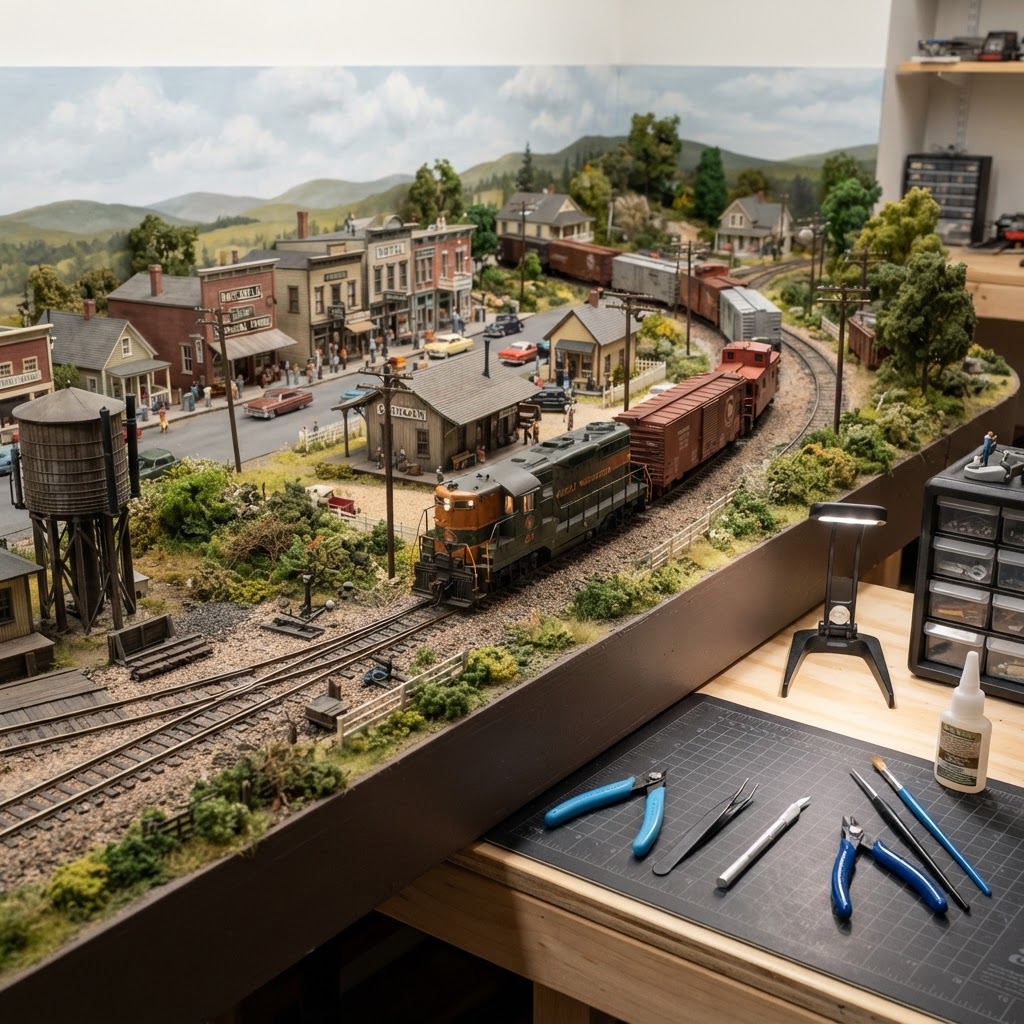
10 Essential Tools for Model Railroading: The Ultimate Starter Toolkit
Building a layout? Discover the 10 best tools for model railroading that every beginner needs to achieve professional results and precise detailing.
Read more