Top 7 Best Steam Locomotives For Serious Collectors
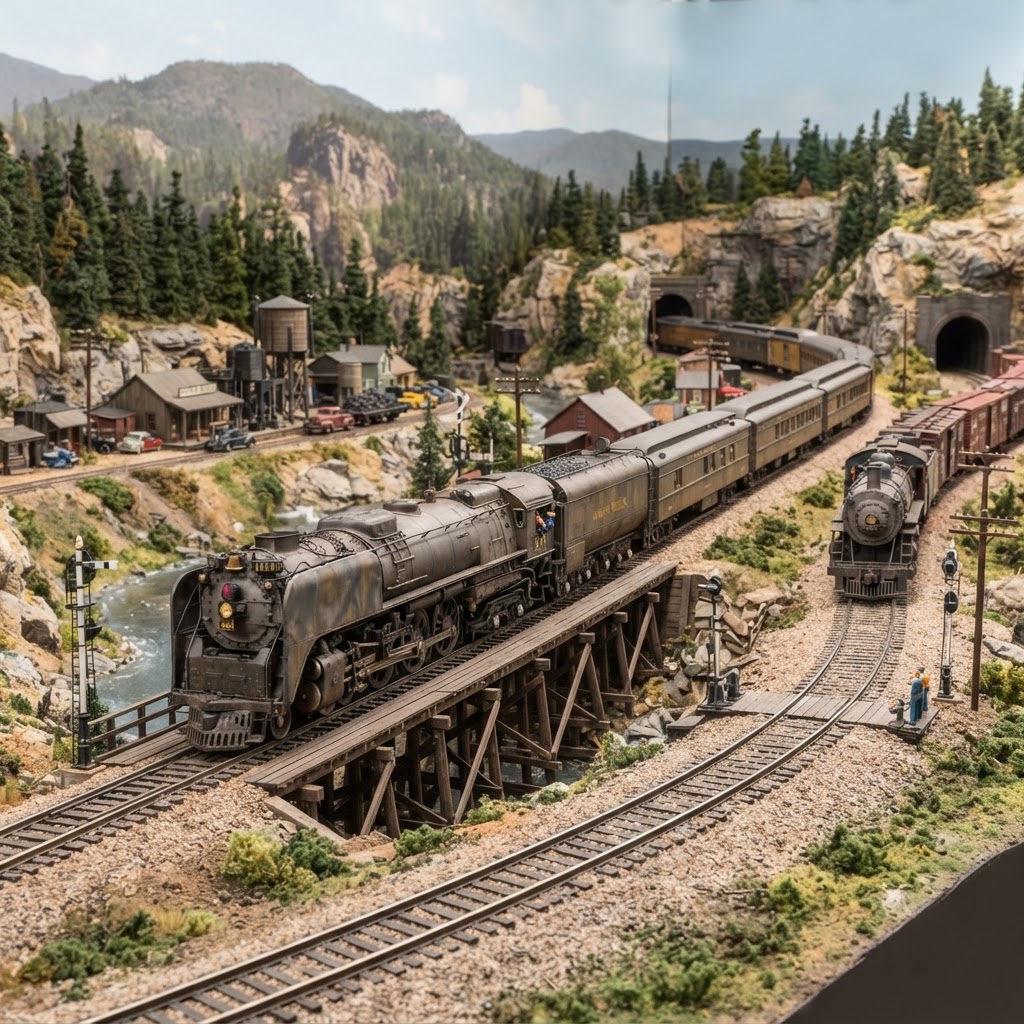
For serious hobbyists and dedicated enthusiasts, finding the best steam locomotives for collectors is both an art and a science. Steam engines carry a romance that diesel and electric locomotives simply cannot replicate — the churning pistons, the billowing smoke, the raw mechanical drama of a bygone era. Whether you're just beginning to build a display collection or you're a seasoned curator hunting down rare limited-edition runs, the world of collectible steam locomotives offers something for every level of passion and budget.
Steam locomotive models have long been the crown jewel of model railroading. From the iconic American 4-4-0 wheel arrangements that defined the frontier era to the mighty articulated steamers that hauled freight across mountain passes, manufacturers have spent decades perfecting scale models that honor these mechanical giants. The collector's market for these models is robust, competitive, and endlessly fascinating — with values ranging from a modest $50 entry-level piece to several thousand dollars for a museum-quality, hand-crafted masterpiece.
In this guide, we'll walk you through everything you need to know to make smart, satisfying purchases. We'll cover the major scales, the most respected manufacturers, what features separate a casual model from a true collector's piece, and how to protect and grow your investment over time. Let's dive into the world of the best steam locomotives for collectors.
Why Steam Locomotives Dominate the Collector Market
There's a reason steam engines consistently outperform diesel and electric models in terms of collector demand and secondary market value. Steam locomotives represent the dawn of the railroad age — a time when iron and fire changed civilization. For collectors, owning a beautifully detailed model of a Union Pacific Big Boy or a Pennsylvania Railroad K4 Pacific is a way of connecting with that transformative history.
Beyond nostalgia, steam locomotives are mechanically complex subjects that give manufacturers room to showcase their finest craftsmanship. The intricate valve gear, the detailed boiler backheads, the individually applied handrails and grab irons — all of these details give high-end steam models a visual richness that's hard to match. Collectors who appreciate fine craftsmanship find steam locomotives an endlessly rewarding subject.
The Investment Side of Steam Collecting
It's worth acknowledging that collecting model trains can be more than just a hobby — it can be a meaningful financial pursuit. Limited production runs, manufacturer discontinuations, and historical significance all influence resale value. Models from manufacturers like Brass Pacific or Key Imports, produced in small quantities with hand-applied detail, frequently appreciate over time. Understanding the market before you buy is part of becoming a sophisticated collector.
Choosing the Right Scale for Your Collection
Before evaluating specific locomotives, you need to settle on scale. Your choice of scale will define which manufacturers are available to you, how much display space you need, and what your per-model investment will look like.
HO Scale: The Collector's Workhorse
At 1:87 ratio, HO scale is by far the most popular among serious collectors. The scale is large enough to support extraordinary detail — you can clearly see individual rivets, valve gear components, and cab interiors — while remaining compact enough to build a meaningful collection without needing a warehouse. Manufacturers like Athearn Genesis, Bachmann Spectrum, and Broadway Limited Imports produce HO steam locomotives that are widely considered among the best in the hobby.
If you're building a layout alongside your collection, check out The Best HO Scale Track Options: A Guide to Building a Reliable Layout to ensure your track infrastructure is worthy of your prized locomotives.
N Scale: Big History in a Small Package
For collectors with limited display space, N scale (1:160) offers a surprisingly rich selection of steam locomotives. The detail-per-dollar ratio has improved dramatically in recent years, and manufacturers like Kato and Bachmann produce N scale steam engines that rival their larger HO counterparts in terms of paint quality and mechanical precision. For a deeper look at N scale options, our article Bachmann vs Kato: The Ultimate Guide to N Scale Reliability provides an excellent starting point.
If you're newer to the hobby and considering N scale, The Best N Scale Starter Sets For 2024: A Complete Buyer Guide is worth a read before you invest in individual collector pieces.
O Scale and Large Scale: The Display Collection Standard
O scale (1:48) and Large Scale models are the natural choice for collectors who prioritize display impact over layout versatility. The sheer physical presence of an O scale steam locomotive — especially a brass import — commands attention in any room. Lionel and MTH have historically dominated this space, producing highly detailed steam locomotives with exceptional sound systems. For a thorough comparison of these two giants, see our guide on Lionel vs MTH: Choosing the Best O Scale System for Your Layout.
Still deciding which scale suits you best? Our comparison article HO Scale vs N Scale: A Comprehensive Guide to Choosing the Perfect Model Train Size covers the key trade-offs in depth.
The Top Manufacturers for Collectible Steam Locomotives
Not all model trains are created equal. When you're building a serious collection, brand matters enormously. Here are the manufacturers consistently recognized for producing the best steam locomotives for collectors.
Broadway Limited Imports (BLI)
Broadway Limited Imports has carved out a reputation as a producer of highly detailed, sound-equipped steam locomotives across HO and N scales. Their Paragon Series locomotives feature industry-leading DCC sound with smoke effects, individually applied detail parts, and prototype-accurate paint schemes. BLI regularly produces models of legendary steamers like the NYC Niagara, PRR T1, and Union Pacific FEF series, making them a cornerstone of any serious HO collection.
Athearn Genesis
Athearn's Genesis line represents one of the finest mass-market steam offerings available. Their models feature all-wheel drive, detailed cabs, and often include factory-installed DCC with sound. The Genesis series is particularly well-regarded for its USRA Light Mikado and USRA Heavy Mountain models, which run as smoothly as they look.
Brass Imports: The Pinnacle of the Hobby
For collectors who want the absolute best, imported brass locomotives represent the apex of the craft. Produced in small runs by manufacturers working primarily in South Korea and Japan — through importers like Precision Craft Models, Key Imports, Sunset Models, and Pacific Fast Mail — brass steam locomotives feature hand-soldered construction, museum-quality paint, and details that production plastic models simply cannot match.
The trade-off is price. A quality brass steam locomotive can run anywhere from $500 to well over $3,000. However, these models routinely hold or increase their value, making them attractive to collectors who think of their hobby as a long-term investment. Buying brass requires patience — most runs sell out quickly and move to the secondary market — but the rewards are extraordinary.
Bachmann Spectrum
Bachmann's Spectrum line punches well above its weight class. For collectors on a more modest budget, Spectrum locomotives offer impressive detail, reliable mechanisms, and a broad range of prototype subjects including classic 4-6-2 Pacifics, 2-8-0 Consolidations, and the beloved 2-6-6-2 articulated mallet. They're an excellent entry point into serious steam collecting.
Key Features That Define a Collector-Grade Steam Locomotive
Knowing what to look for separates informed buyers from impulsive ones. When evaluating any steam model for your collection, consider these critical factors.
Prototype Accuracy
The best collector models are faithful recreations of specific real-world prototypes. Look for manufacturers who reference original railroad blueprints and historical photographs. Pay attention to boiler proportions, cab window placement, tender style, and road number accuracy. A model that correctly represents a specific locomotive from a specific railroad in a specific era is far more valuable than a generic representation.
Decoder and Sound Quality
Modern collector-grade steam locomotives should be DCC-ready at minimum, and ideally equipped with factory-installed sound. The audio quality of a properly programmed steam engine — with authentic exhaust chuffs synchronized to wheel rotation, steam release sounds, and a working whistle — dramatically elevates the experience of running and displaying these models.
If you're newer to DCC, our articles on DC vs DCC Control Systems: A Comprehensive Guide for Model Railroaders and DCC vs DC Locomotives: The Ultimate Guide for Beginners will help you get up to speed quickly. For those just starting their digital journey, Best Starter DCC Sets: A Beginner's Guide to Digital Command Control is also an invaluable resource.
Paint and Lettering Quality
On a collector-grade model, paint should be smooth, even, and precisely masked. Lettering should be sharp, correctly sized, and properly placed. Look closely at striping, numbering, and road name logos — these details reveal the manufacturer's commitment to quality.
Drive Mechanism and Running Quality
Even display-only collectors should care about drive quality. A smooth, quiet mechanism indicates quality engineering throughout the entire model. Look for all-wheel drive, flywheel-equipped motors, and metal wheel sets on collector-grade pieces.
Practical Tips for Building and Protecting Your Collection
Owning great models is only half the equation. Here's how to collect smartly and protect your investment.
Buy from Reputable Sources
Purchase from established hobby shops, reputable online dealers, and verified sellers on platforms like eBay. Be cautious with private sales — ask for provenance, original boxes, and all documentation. Original packaging significantly affects resale value.
Store and Display Properly
UV light, humidity, and dust are the enemies of a model collection. Display cases with UV-filtering glass, climate-controlled storage, and regular gentle dusting will preserve your models for decades. Keep original boxes — they're part of the collectible equation.
Use the Right Tools
Handling and maintaining your locomotives requires appropriate tools. Our guide to the 10 Best Beginner Model Railroad Tools Every Hobbyist Needs covers the essentials, from track cleaning tools to precision screwdrivers. You can also browse our recommended products page for curated tool and accessory suggestions.
Track the Market
Join collector forums, attend train shows, and subscribe to industry publications like Mainline Modeler and Railroad Model Craftsman. Understanding what's selling, what's increasing in value, and what upcoming production runs are announced helps you make smarter buying decisions.
Know Your Scale Before Expanding
If you haven't yet committed to a scale and are just beginning your collecting journey, What Is the Best Beginner Train Scale? A Complete Guide to Starting Your Hobby is essential reading before you make your first significant purchase.
Frequently Asked Questions
What makes a steam locomotive model "collectible" versus just a toy?
Collector-grade steam locomotive models are distinguished by their prototype accuracy, detail quality, limited production runs, and the reputation of their manufacturer. Models featuring hand-applied parts, brass construction, factory-installed DCC sound, and authentic paint schemes are generally considered collectible. Standard toy trains prioritize durability and low cost over historical accuracy.
Are brass steam locomotives worth the high price?
For serious collectors, yes. Brass locomotives are produced in small quantities, feature construction quality unmatched by plastic models, and frequently appreciate in value over time. If you're building a collection with long-term investment in mind, strategically adding brass pieces — especially discontinued or hard-to-find runs — is a sound strategy.
Which scale is best for displaying steam locomotives without running them?
O scale is widely considered the best choice for pure display collecting. The larger size makes detail more visible, and manufacturers like Lionel and MTH have produced some of the most visually stunning steam models in this scale. That said, HO scale brass imports are also extremely popular among display-focused collectors due to their extraordinary detail and smaller footprint.
How should I clean and maintain a collectible steam locomotive?
For cleaning, use a soft, lint-free cloth and avoid solvents near painted surfaces. Track-cleaning cars and track cleaning fluid help maintain electrical contact for running models. For lubrication, apply very small amounts of manufacturer-recommended oil only to designated points — over-lubrication can damage mechanisms and attract dust. For new hobbyists, our recommended products page lists the cleaning and maintenance tools we trust most.
Should I run my collectible steam locomotives or keep them on display?
This is a personal decision that depends on your collecting philosophy. Running your locomotives can reveal mechanical issues while the warranty is still valid, and many collectors argue that these models were designed to be operated. However, running does introduce wear. Many serious collectors keep high-value brass models on display and run their production plastic models on layouts. A reasonable middle ground is to run models occasionally on clean track in a controlled environment.
Conclusion
Building a collection of the best steam locomotives for collectors is one of the most rewarding pursuits in the model railroad hobby. From the affordable accessibility of Bachmann Spectrum and Athearn Genesis to the rarefied craftsmanship of hand-built brass imports, there is a world of extraordinary models waiting to be discovered, acquired, and treasured. The key is to collect with intention — know your scale, understand the manufacturers, prioritize prototype accuracy and build quality, and take care of your investment.
The steam era may be over on the real railroads, but in our hobby, it lives on in beautifully crafted miniature form. Whether you're chasing a specific railroad's roster, documenting a particular era of American steam history, or simply building a visually stunning display, the journey is deeply satisfying.
We invite you to explore more guides here on Model Train Insider to deepen your knowledge and refine your hobby. From control systems to scale comparisons to layout building, we have resources for every stage of the journey — and we're here to help you make the most of every mile of track.
Affiliate Disclosure: Some links in this article are affiliate links. We may earn a commission at no extra cost to you.
Enjoying this guide?
Browse our favorite recommended products.
James Mitchell
Model Train Enthusiast & Writer
James has been building layouts and collecting trains for over 15 years. He started Model Train Insider to help newcomers navigate the hobby with practical, no-nonsense advice drawn from hands-on experience.
Stay on Track
Get beginner guides, brand reviews, and layout tips delivered to your inbox. No spam—just trains.
Free forever. Unsubscribe anytime.
Related Articles
Top 10 Best N Scale Locomotives for Compact Layouts in 2024
Discover the best N scale locos perfect for small layouts. We review high-performance, reliable models that offer exceptional detail for your compact railroad.
Read more
10 Best Model Train Sets For Serious Adult Hobbyists In 2024
Discover the best model train sets for adults. Our expert guide reviews high-end, detailed scale trains perfect for serious collectors and hobbyists.
Read more
Top 10 Best N Scale Diesel Locomotives to Elevate Your Model Fleet
Looking to upgrade your model railroad? Discover the 10 best N scale diesel locomotives known for superior detail, smooth performance, and reliability.
Read more