DCC vs DC For Beginners: Choosing The Best Control System For Your Layout
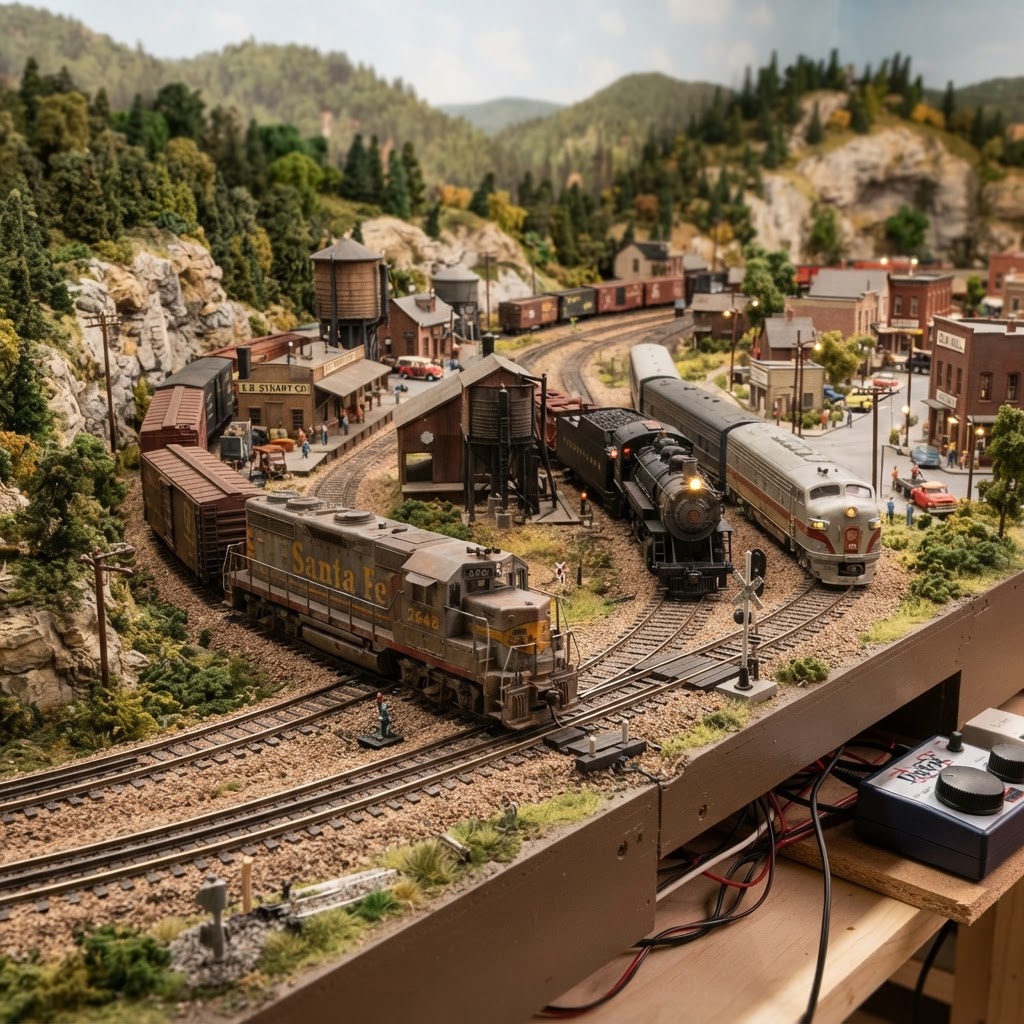
If you're just getting started in the world of model railroading, one of the first — and most important — decisions you'll face is choosing between DCC vs DC for beginner layouts. It might seem like a small technical detail, but this choice will shape everything from the locomotives you buy to how you operate your trains and expand your layout over time. Getting it right from the start can save you a lot of frustration, wasted money, and rework down the road.
Both systems have real merit, and neither is universally "better" for every hobbyist. DC (Direct Current) has powered model railroads for decades and remains a reliable, cost-effective option for those who want simplicity. DCC (Digital Command Control), on the other hand, has transformed the hobby with its ability to independently control multiple trains on the same track, add realistic sound effects, and fine-tune locomotive performance with remarkable precision. The challenge for beginners is understanding what these differences actually mean in practice.
In this guide, we'll break down everything you need to know about DCC vs DC for beginners — how each system works, what each one costs, which scenarios favor one over the other, and how to make the decision that fits your goals, space, and budget. Whether you're dreaming of a simple oval layout on a folding table or an elaborate multi-train basement empire, this article will help you make a confident, informed choice.
What Is DC Model Train Control?
DC stands for Direct Current, and it's the traditional method of powering model trains. The concept is straightforward: a power pack sends electrical current through the rails, and the locomotive picks up that current through its wheels. You control the speed of the train by adjusting the voltage, and you reverse direction by reversing the polarity of the current.
How DC Works in Practice
On a DC layout, the throttle on your power pack directly controls everything running on that section of track. Increase the voltage, the train speeds up. Decrease it, the train slows down. It's intuitive, simple, and requires very little technical knowledge to get running. For a single train on a basic layout, DC works beautifully.
The main limitation of DC becomes apparent when you want to run more than one train. To do so independently, you need to divide your track into electrically isolated sections called "blocks," each controlled by its own power pack or switch panel. This block wiring system can work well, but it adds significant complexity to your layout's construction and operation.
Pros and Cons of DC
Pros:
- Lower upfront cost for a basic setup
- Simple to understand and operate
- Large selection of affordable DC locomotives available
- Compatible with older and vintage equipment
Cons:
- Controlling multiple trains requires complex block wiring
- No onboard sound or lighting control from the track
- All locomotives in the same block move simultaneously
- Upgrading later can be costly if you've invested heavily in DC-only equipment
What Is DCC Model Train Control?
DCC stands for Digital Command Control, and it represents the modern standard for model railroading. Instead of controlling trains by adjusting voltage, a DCC system sends a constant digital signal through the rails. Each locomotive is fitted with a small circuit board called a decoder, which receives commands addressed specifically to that locomotive.
How DCC Works in Practice
Because every locomotive has its own unique address, you can run multiple trains independently on the same unblocked track — all from a single command station. You press a button or turn a knob on your handheld controller, and only the locomotive you've addressed responds. Other trains keep doing whatever they were doing. This fundamental difference changes the entire experience of running a layout.
Modern DCC decoders also support a wide range of features through a system of Configuration Variables (CVs). You can adjust acceleration rates, braking momentum, motor compensation, lighting effects, and — on sound-equipped locomotives — diesel prime movers, steam chuffing, whistles, bells, and crew radio chatter. For hobbyists who value realism and control, this is a game-changer.
For a deeper dive into how the two systems compare technically, check out our DC vs DCC Control Systems: A Comprehensive Guide for Model Railroaders.
Pros and Cons of DCC
Pros:
- Run multiple trains independently on the same track
- Realistic sound and lighting effects on DCC-equipped locomotives
- No complex block wiring needed for basic operations
- Highly expandable and customizable
- Strong industry support and growing product ecosystem
Cons:
- Higher upfront cost for the command station and decoders
- Steeper learning curve for programming
- Older DC-only locomotives require decoder installation to run properly
- Some entry-level DCC systems have limited features
Cost Comparison: DCC vs DC for Beginners
Budget is often the deciding factor for new hobbyists, so let's look at what each system actually costs to get started.
Starting Out With DC
A basic DC starter set — which typically includes a locomotive, a few cars, an oval of track, and a power pack — can be found for as little as $50 to $150. This makes DC extremely accessible for hobbyists on a tight budget or those who simply want to see if they enjoy the hobby before committing further. If you stick to a single train and a modest layout, DC can remain affordable indefinitely.
Starting Out With DCC
A beginner DCC setup requires a command station (sometimes called a DCC system or base unit), a throttle, and DCC-equipped locomotives. Entry-level DCC starter systems from brands like Bachmann, MRC, or NCE typically start around $100 to $200. DCC-equipped locomotives cost more than their DC counterparts — often $30 to $100 more per locomotive, depending on the features.
However, if you plan to run multiple trains or want sound effects from day one, that premium quickly pays for itself in avoided complexity. If you're ready to invest in a quality starter system, our guide to the Best Starter DCC Sets: A Beginner's Guide to Digital Command Control is an excellent next step.
Which System Is Right for You?
Choosing between DCC and DC really comes down to four key factors: your goals, your budget, the scale you're working in, and how much operational complexity you're comfortable with.
Consider Your Layout Goals
If you're planning a small, simple layout with one train and a relaxing, low-tech experience, DC is a perfectly reasonable choice. Many experienced modelers actually prefer the simplicity of DC for small switching layouts or diorama-style scenes where operational complexity isn't the point.
If you want to re-create a busy railroad mainline with multiple trains operating simultaneously — freight locals, passenger expresses, and yard switchers all moving independently — DCC is almost essential. Trying to achieve the same result with DC block wiring is possible, but it's significantly more work and harder to maintain.
Consider Your Scale
Scale matters when choosing a control system. In HO scale, which is the most popular scale in the hobby, both DC and DCC are fully supported with huge product selections. If you're working in N scale, where space is at a premium and layouts often feature more complex track plans, DCC becomes even more valuable. Take a look at The Best N Scale Starter Sets For 2024: A Complete Buyer Guide to see how DCC fits into N scale options.
For HO scale modelers, understanding your track options is also part of the equation — check out The Best HO Scale Track Options: A Guide to Building a Reliable Layout for guidance on building a solid foundation regardless of which control system you choose.
If you're considering O scale systems like Lionel or MTH, the control landscape is a bit different — read our Lionel vs MTH: Choosing the Best O Scale System for Your Layout guide for more on that topic.
Consider Your Locomotives
Whether you're running steam or diesel, modern or vintage, your locomotive roster influences your decision. Most newer locomotives, especially in HO and N scale, are sold DCC-ready (meaning they have a socket for easy decoder installation) or DCC-equipped (meaning they already have a decoder installed). Running these on DC is possible, but you lose access to their advanced features.
For steam locomotive enthusiasts in particular, DCC sound decoders produce astonishingly realistic exhaust chuffs synchronized to the drivers, whistles, and brake squeals. If that kind of detail matters to you, be sure to browse our Top 7 Best Steam Locomotives For Serious Collectors and consider DCC seriously. You can also learn more about how locomotives behave differently under each system in our DCC vs DC Locomotives: The Ultimate Guide for Beginners.
Making the Transition: Can You Switch Later?
One common worry among beginners is being "locked in" to one system. The good news is that transitioning from DC to DCC is entirely possible, though it does involve some cost and effort.
If you start with DC and later want to move to DCC, you'll need to purchase a DCC command station and install decoders in your existing locomotives (or replace them with DCC-equipped models). Your track wiring generally doesn't need to change unless you've wired complex block control systems. Many modelers successfully make this switch, though it's worth thinking ahead to avoid unnecessary expense.
Starting with DCC and running it in DC mode is also technically possible with some systems, but it defeats much of the purpose. If you're fairly confident you'll want DCC features eventually, starting there from the beginning is usually the smarter financial move.
Essential Tools for Either System
Whichever control system you choose, having the right tools from the start will make your layout-building experience much smoother. A basic set of hobby tools — track gauges, rail nippers, soldering equipment, and a multimeter for troubleshooting electrical issues — is valuable for both DC and DCC layouts. Browse our recommended products page for curated gear suggestions, and check out 10 Best Beginner Model Railroad Tools Every Hobbyist Needs for a full breakdown.
Frequently Asked Questions
Is DCC better than DC for beginners?
Not necessarily — it depends on your goals. DC is simpler and cheaper to start with, making it ideal if you want a single-train layout without complexity. DCC offers more features and scalability, making it the better choice if you plan to run multiple trains or want realistic sound effects from the start. For most beginners who see themselves growing in the hobby, DCC is the more future-proof investment.
Can I run a DC locomotive on a DCC layout?
Yes, with some caveats. Many DCC systems can supply DC power for running older DC locomotives, but you typically cannot run a non-decoder-equipped DC locomotive alongside DCC locomotives on the same track simultaneously. For the best experience, you'll want to install decoders in your locomotives.
What scale is best for a beginner using DCC?
HO scale is the most popular choice for beginners using DCC because of its wide selection of DCC-ready locomotives, decoders, and accessories. N scale is also an excellent option, especially for those with limited space. For a detailed comparison of the two most popular scales, read our HO Scale vs N Scale: A Comprehensive Guide to Choosing the Perfect Model Train Size.
How much does a basic DCC starter system cost?
A beginner DCC system can range from about $100 to $250 for the command station and throttle. DCC-equipped locomotives typically cost between $80 and $200 for entry-level models in HO or N scale. While the upfront cost is higher than DC, the added functionality and long-term flexibility often make it worthwhile for hobbyists planning to expand.
Do I need to rewire my layout if I switch from DC to DCC?
In most cases, no. Basic DCC layouts don't require the complex block wiring that DC multi-train layouts do. If you've already wired your DC layout with block sections, you may actually be able to simplify that wiring when you transition to DCC. You will, however, need to install decoders in any DC-only locomotives you want to continue running.
Conclusion
Choosing between DCC vs DC for your beginner layout is one of the most consequential early decisions in the hobby — but it doesn't have to be a stressful one. If you want simplicity and low cost for a single-train setup, DC is a perfectly solid choice. If you're eager to grow your layout, run multiple trains independently, and experience the full depth of modern model railroading, DCC is the smarter long-term investment for most beginners.
The most important thing is to get started, learn, and enjoy the journey. Model railroading is a richly rewarding hobby with a welcoming community and endless room to grow. Explore more of our beginner guides right here on Model Train Insider — from choosing your scale to finding the right N scale brand — and build your knowledge one step at a time.
Affiliate Disclosure: Some links in this article are affiliate links. We may earn a commission at no extra cost to you.
Enjoying this guide?
Browse our favorite recommended products.
James Mitchell
Model Train Enthusiast & Writer
James has been building layouts and collecting trains for over 15 years. He started Model Train Insider to help newcomers navigate the hobby with practical, no-nonsense advice drawn from hands-on experience.
Stay on Track
Get beginner guides, brand reviews, and layout tips delivered to your inbox. No spam—just trains.
Free forever. Unsubscribe anytime.
Related Articles
10 Best Model Train Tools Every Beginner Needs for Their Layout
Discover the 10 best model train tools essential for building and maintaining your layout. From precision cutters to adhesives, get your workbench ready today.
Read more
10 Best Beginner Model Train Sets for Starting Your Hobby Today
Looking for the best beginner model train sets? Explore our expert-reviewed list to find the perfect starter kit to begin your model railroading journey.
Read more
The Best Starter Kits for N Scale Beginners: A Comprehensive Guide
Looking for the best starter kit for N scale? Explore our expert recommendations to help you kickstart your model railroad journey with confidence and ease.
Read more