The Best HO Scale Track Options: A Guide to Building a Reliable Layout
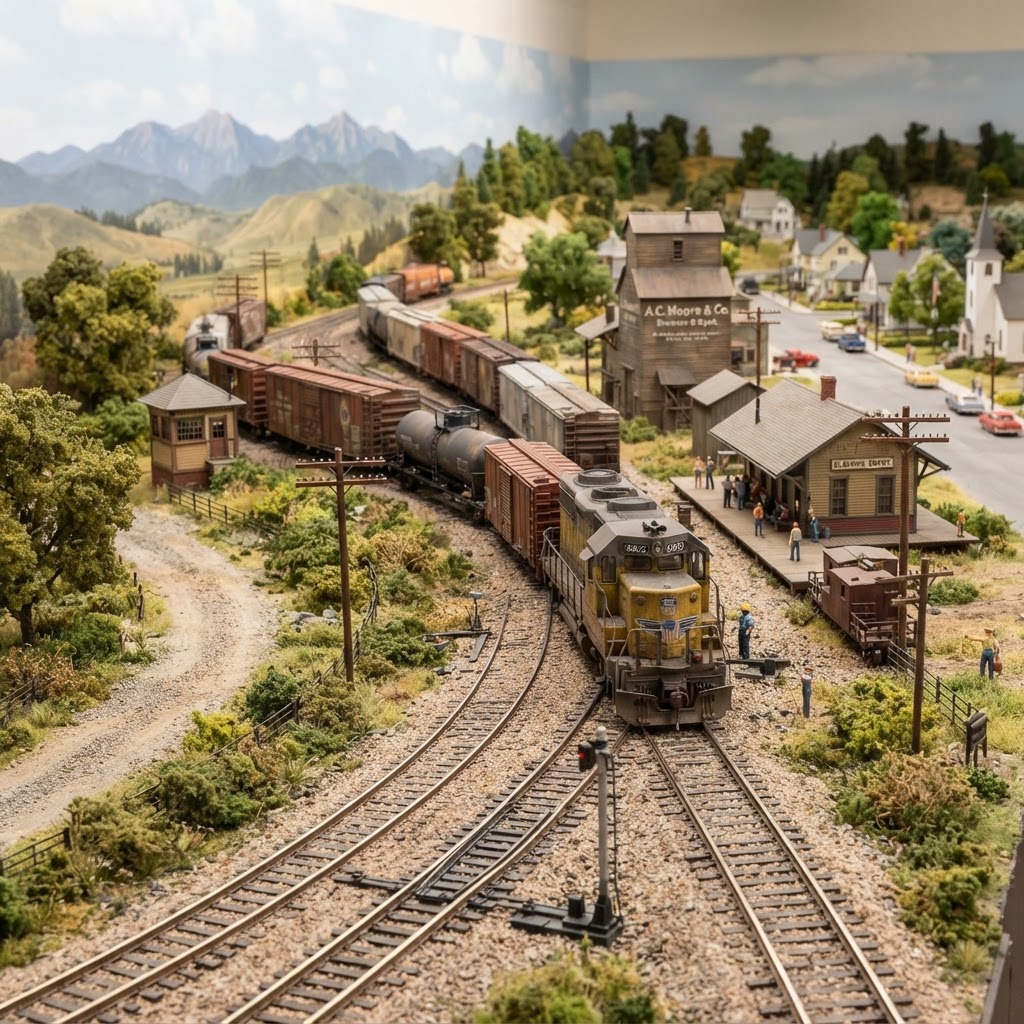
Choosing the best HO scale track for your layout is one of the most important decisions you'll make as a model railroader. Whether you're just getting started or you're a seasoned hobbyist looking to upgrade an existing layout, the track you choose will directly affect how your trains run, how realistic your layout looks, and how much time you spend troubleshooting derailments and electrical gremlins. With so many manufacturers, rail profiles, and track systems on the market today, it's easy to feel overwhelmed before you ever lay a single piece of roadbed.
HO scale remains the most popular model railroad scale in North America — and for good reason. It strikes the perfect balance between detail, affordability, and layout size, making it accessible to hobbyists of all experience levels. If you're still deciding whether HO is the right scale for you, check out our in-depth comparison in HO Scale vs N Scale: A Comprehensive Guide to Choosing the Perfect Model Train Size or our broader overview at What Is the Best Beginner Train Scale? A Complete Guide to Starting Your Hobby. But if you've already committed to HO, then this guide is for you.
In this article, we'll walk you through everything you need to know to select the best HO scale track for your specific needs — from understanding rail code and material types to comparing the top brands and laying track like a pro. Let's get started.
What Makes HO Scale Track Different?
Before diving into specific products and brands, it helps to understand the key variables that differentiate one HO scale track system from another. Not all track is created equal, and the differences between products can have a significant impact on your overall modeling experience.
Rail Code: What Does It Mean?
"Code" refers to the height of the rail in thousandths of an inch. In HO scale, you'll commonly encounter three rail codes:
- Code 100 – The tallest and most common rail height, especially in older and beginner track systems. It's more forgiving with older locomotive wheel flanges and is easy to find at hobby shops.
- Code 83 – A more realistic rail height that looks more proportionate to real-world track. It's become the standard for modelers who prioritize visual accuracy.
- Code 70 – Used to represent lighter-duty branch lines, industrial spurs, and narrow-gauge applications. Less common but very realistic in the right context.
If you're building your first layout, Code 83 is an excellent choice that balances realism with compatibility. Code 100 works well for beginners because most budget starter locomotives run on it without issue.
Track Material: Nickel Silver vs. Brass
The two most common rail materials in HO scale are nickel silver and brass. Nickel silver is the clear winner for most modelers — it resists oxidation far better than brass, which means less cleaning and more reliable electrical conductivity over time. Brass track is cheaper but requires more frequent maintenance to keep trains running smoothly. Unless you're on an extremely tight budget, stick with nickel silver rail.
Flex Track vs. Sectional Track
Another major decision is whether to use flex track or sectional track:
- Sectional track comes in fixed-length pieces with pre-formed curves and straights. It's ideal for beginners because it snaps together easily and requires no special cutting tools.
- Flex track comes in longer, bendable lengths that you can shape to any radius. It creates smoother curves and more natural-looking layouts but requires a bit more skill and the right model railroad tools to cut and install properly.
Many experienced modelers use a combination of both — sectional track for yards and staging areas, and flex track for the main line.
Top HO Scale Track Brands Compared
Now let's look at the leading manufacturers. Each has its own strengths, and the best choice for you will depend on your budget, experience level, and layout goals.
1. Atlas HO Scale Track
Atlas is one of the most respected names in the hobby, and their HO track systems are a mainstay of the industry. Their Code 83 nickel silver flex track is considered by many to be the gold standard for realistic-looking HO layouts. Atlas also produces a full line of sectional track, including their popular True-Track system, which comes with integrated roadbed — a great option for beginners who want to get up and running quickly.
Best for: Intermediate to advanced modelers who want a reliable, realistic track system with wide availability.
Highlights:
- Excellent Code 83 flex track selection
- True-Track roadbed integrated system for quick setup
- Wide range of turnout (switch) options
- Easy to find at local hobby shops and online retailers
2. Bachmann EZ-Track
Bachmann's EZ-Track system is one of the most beginner-friendly HO scale track options on the market. It features integrated grey plastic roadbed with a snap-together design that makes assembly fast and frustration-free. If you've looked at our guide to the 10 Best HO Scale Starter Sets for Beginners, you've likely already seen Bachmann sets that include EZ-Track — it's included with many of their starter packages.
EZ-Track is Code 100, which may not be the most realistic profile, but it's extremely forgiving with a wide variety of locomotives and rolling stock. It's also very affordable, making it perfect for kids and first-time hobbyists.
Best for: Beginners, family layouts, and temporary or portable setups.
Highlights:
- Snap-together integrated roadbed design
- Very affordable
- Compatible with most HO scale equipment
- Broad availability
3. Kato Unitrack (HO Scale)
Kato's Unitrack system is widely praised for its outstanding engineering and consistent electrical performance. Originally developed for N scale (see our Bachmann vs Kato: The Ultimate Guide to N Scale Reliability article for more on that), Kato has brought the same precision to their HO offerings. The track features a built-in roadbed with a ballasted appearance and snaps together with satisfying precision and reliability.
Kato Unitrack uses Code 83 rail and is particularly popular among modelers who want a cleaner-looking layout without the hassle of gluing down separate ballast and roadbed. It's slightly more expensive than Bachmann EZ-Track but delivers noticeably better performance and aesthetics.
Best for: Modelers who want a clean, realistic appearance with snap-together convenience.
Highlights:
- Code 83 nickel silver rail
- Excellent electrical connectivity
- Realistic ballasted roadbed appearance
- Modular and expandable
4. Peco HO Scale Track
Peco is a British manufacturer with a stellar reputation among serious modelers worldwide. Their Streamline line of HO track is available in Code 100 and Code 83, with both rigid and flexible versions. Peco's turnouts (known as "points" in British nomenclature) are particularly well-regarded for their smooth operation and reliability.
One of Peco's standout features is their Electrofrog turnout design, which provides power through the frog of the switch — dramatically improving performance with short-wheelbase locomotives. For DCC modelers, this is a major advantage. Speaking of DCC, if you're planning a digital layout, don't miss our guide on 10 Best DCC Control Systems For Model Train Beginners: A 2024 Guide.
Best for: Serious modelers who prioritize turnout quality and operational reliability.
Highlights:
- Superior turnout engineering
- Available in multiple codes
- Electrofrog and Insulfrog turnout options
- Excellent long-term durability
5. Walthers Shinohara Track
Walthers distributes Shinohara track, a Japanese-made product that has long been popular among North American modelers. Available in Code 83 and Code 70, Shinohara track is known for excellent craftsmanship and a wide variety of turnout configurations — including curved turnouts that are difficult to find elsewhere.
Best for: Advanced modelers looking for unusual track geometry and premium build quality.
Highlights:
- Code 83 and Code 70 options
- Wide variety of turnout configurations
- High-quality construction
- Ideal for complex, prototype-inspired layouts
How to Choose the Right Track for Your Layout
With so many solid options available, here's a practical framework for narrowing down your choice:
Consider Your Experience Level
If you're new to the hobby, start with a system that's forgiving and easy to assemble — Bachmann EZ-Track or Kato Unitrack are both excellent entry points. You can always expand or transition to flex track as your skills grow. For a complete starting point, browse our recommended products page for curated beginner-friendly track bundles.
Plan Your Layout Before You Buy
Nothing is more frustrating than buying a pile of track only to discover you don't have enough curves or the right turnout configurations. Sketch out your layout design first, even if it's just a rough diagram on paper. Many free software tools like AnyRail or SCARM can help you plan digitally before spending a dime.
Match Your Track to Your DCC Goals
If you're planning to run DCC, turnout choice becomes critical. Peco Electrofrog turnouts and Atlas turnouts with DCC-friendly wiring are popular choices. Check out our guide on Kato vs Bachmann DCC: Which Control System Is Right For Your Layout? for more on pairing your track with the right control system.
Don't Mix Systems Unnecessarily
While many HO track systems are physically compatible at a basic level, mixing brands can cause inconsistencies in rail height, roadbed thickness, and electrical performance. Wherever possible, stick to one primary system for your main line to ensure smooth, reliable operation.
Invest in the Right Tools
Installing track — especially flex track — requires proper tools. Cutters, rail joiners, a good soldering iron, and track gauges will make the job much easier and more accurate. Our guide to 10 Best Beginner Model Railroad Tools Every Hobbyist Needs has everything you need to build a solid tool kit.
Tips for Laying HO Scale Track Like a Pro
Even the best HO scale track won't perform well if it's laid poorly. Here are some quick tips to get the most out of whichever system you choose:
- Use a track gauge regularly as you lay track to ensure consistent spacing and prevent derailments.
- Solder rail joiners on the main line for better electrical conductivity, especially on longer runs.
- Allow for expansion gaps in warm environments — track can expand slightly with heat and buckle if gaps are too tight.
- Keep your track clean using a track cleaning car or a lint-free cloth with isopropyl alcohol. Dirty track is the number one cause of poor electrical performance.
- Secure your track with small nails or track spikes on foam or cork roadbed before ballasting for a professional finish.
Frequently Asked Questions
What is the most popular HO scale track brand?
Atlas and Bachmann are the two most widely used HO scale track brands in North America. Atlas is favored by intermediate and advanced modelers for its realistic Code 83 flex track and quality turnouts, while Bachmann EZ-Track is extremely popular with beginners for its ease of use and affordability.
Is Code 83 or Code 100 better for HO scale?
Code 83 is generally considered more realistic because the rail height is more proportionate to actual prototype track. However, Code 100 is more compatible with older locomotives that have deeper wheel flanges. For most new layouts, Code 83 is the recommended choice, but Code 100 is perfectly acceptable for beginner and family-oriented setups.
Can I mix different HO scale track brands?
In many cases, yes — most HO track systems share the same basic rail spacing (16.5mm), so they can be physically joined with rail joiners. However, differences in rail height (code) and roadbed thickness can cause bumps or alignment issues at transition points. Using rail code transition joiners can help smooth these areas when mixing systems is unavoidable.
What track system is best for DCC layouts?
For DCC layouts, Peco Electrofrog turnouts and Atlas code 83 track are both excellent choices. The key is ensuring your turnouts provide reliable power routing and that your track wiring is clean and properly gapped. Our 10 Best DCC Control Systems For Model Train Beginners guide covers the control side in detail.
Should beginners use flex track or sectional track?
Most beginners are better served starting with sectional track — it's easier to lay, requires no cutting, and helps you learn the basics of track planning without added complexity. Once you're comfortable with the hobby and ready to tackle a more permanent layout, flex track offers greater flexibility (pun intended) in creating smooth, natural-looking curves and custom configurations.
Conclusion
Finding the best HO scale track for your layout doesn't have to be a daunting task. By understanding the key differences between rail codes, materials, and track systems — and by matching your choice to your experience level, layout goals, and DCC plans — you can build a foundation that delivers years of reliable, enjoyable operation. Whether you go with the beginner-friendly Bachmann EZ-Track, the precision of Kato Unitrack, the realism of Atlas Code 83 flex track, or the operational excellence of Peco turnouts, you'll be in good hands with any of the brands featured in this guide.
Ready to keep exploring? Check out our full collection of layout guides and product reviews right here on Model Train Insider. If you're new to the hobby, our Top 5 Model Railroad Brands for Beginners is a great next read, and don't forget to browse our recommended products page for hand-picked gear to get your layout off to a great start.
Happy modeling — and may your trains always run on time!
Affiliate Disclosure: Some links in this article are affiliate links. We may earn a commission at no extra cost to you.
Enjoying this guide?
Browse our favorite recommended products.
James Mitchell
Model Train Enthusiast & Writer
James has been building layouts and collecting trains for over 15 years. He started Model Train Insider to help newcomers navigate the hobby with practical, no-nonsense advice drawn from hands-on experience.
Stay on Track
Get beginner guides, brand reviews, and layout tips delivered to your inbox. No spam—just trains.
Free forever. Unsubscribe anytime.
Related Articles
Kato Unitrack vs. Bachmann E-Z Track: The Ultimate Comparison for Modelers
Deciding between Kato Unitrack and Bachmann E-Z Track? We compare reliability, ease of use, and realism to help you choose the best track for your layout.
Read more
HO Scale vs N Scale: A Comprehensive Guide to Choosing the Perfect Model Train Size
Struggling to choose between HO and N scale? Our in-depth comparison covers space requirements, detail levels, and pros and cons to help you decide.
Read more