Lionel vs MTH: Choosing The Perfect O Gauge Brand For Your Collection
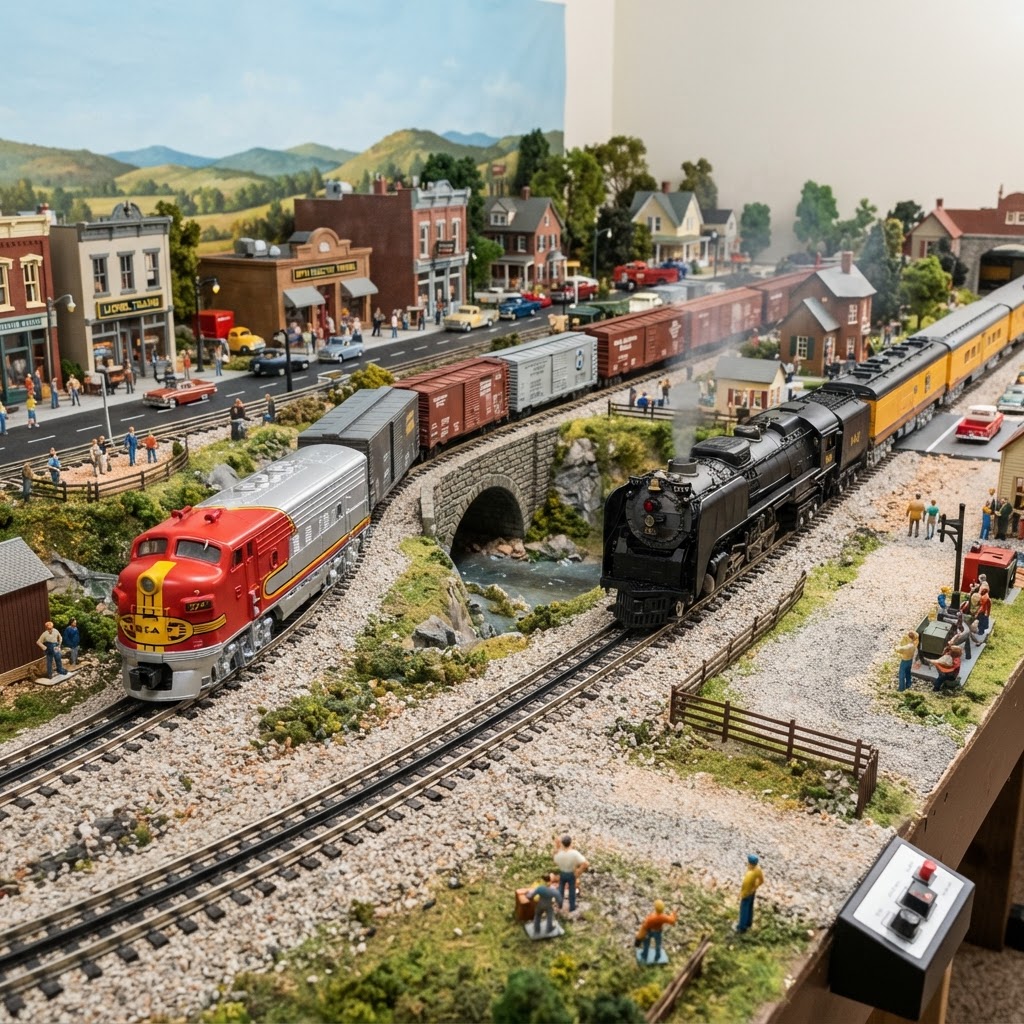
When it comes to O gauge model railroading, few debates generate more passion than Lionel vs MTH for O gauge. These two titans of the hobby have shaped the landscape of American model trains for decades, and choosing between them is one of the most important decisions a hobbyist can make. Whether you're a seasoned collector adding to an existing layout or a newcomer just finding your footing, understanding the key differences between these two manufacturers can save you time, money, and a fair amount of frustration.
Both Lionel and MTH (Mike's Train House) have earned loyal followings, and for good reason. Each brand brings something unique to the table — distinct technologies, pricing philosophies, sound systems, and communities that can make your hobby experience richer or more complicated depending on how you approach it. The conversation around these two brands isn't just about which one looks better on the track; it's about compatibility, long-term investment, and what kind of railroader you want to be.
In this guide, we'll break down the most important factors — from electronics and control systems to pricing and collectability — to help you make a confident, informed choice. By the end, you'll have a clear picture of which brand aligns best with your goals, budget, and vision for your O gauge layout.
A Brief History: Lionel and MTH in Context
Lionel's Century-Long Legacy
Lionel has been synonymous with American toy trains since 1900. Founded by Joshua Lionel Cowen, the brand became a cultural institution, appearing under Christmas trees across the country for generations. That heritage isn't just nostalgic — it has real-world implications for collectors. Lionel's long production history means there's an enormous secondary market, a vast library of locomotives and rolling stock, and a deeply embedded community of enthusiasts.
In modern times, Lionel has evolved dramatically. Their current lineup features sophisticated electronics, high-quality die-cast components, and proprietary control systems like TMCC (TrainMaster Command Control) and the more advanced Legacy system. These tools allow for nuanced speed control, realistic sounds, and remote operation that would have been unimaginable to the hobby's early pioneers.
MTH's Rise to Prominence
MTH Electric Trains was founded by Mike Wolf in 1980, originally as a parts supplier for Lionel enthusiasts before growing into a full-scale manufacturer. MTH quickly earned respect for pushing the boundaries of realism and electronics in O gauge trains. Their DCS (Digital Command System) and Proto-Sound 3.0 technology became benchmarks for sound quality and operational control in the hobby.
MTH also produced highly detailed, accurately scaled locomotives and rolling stock, often focusing on prototypes that Lionel overlooked. For hobbyists who cared deeply about prototype fidelity and sound quality, MTH became the brand of choice. However, in 2022, MTH announced it would cease production of new products, which has significantly altered the landscape of the Lionel vs MTH conversation — but hasn't diminished MTH's value or relevance.
Control Systems: TMCC/Legacy vs DCS
This is arguably the most critical area of comparison for any serious O gauge operator. Your choice of control system will affect how you run trains, what accessories you can use, and how future-proof your layout will be.
Lionel's TMCC and Legacy
Lionel's Legacy system is an evolution of TMCC and remains one of the most refined command control platforms in the hobby. Legacy uses radio-frequency signals to communicate with locomotives, allowing for smooth acceleration curves, independent control of multiple trains, and an impressive library of sounds. The Legacy CAB-2 remote is intuitive and feature-rich, making it a favorite among both experienced operators and relative newcomers.
One of Legacy's greatest strengths is its integration with accessories — Lionel has built a robust ecosystem of command-controlled switches, signals, and accessories that can all be managed from the same remote. If building a fully automated, interactive layout is your goal, Lionel's ecosystem is hard to beat.
For those interested in exploring how command control systems compare more broadly, our guide on DCC vs DC For Beginners: Choosing The Best Control System For Your Layout provides a solid foundation, and our DC vs DCC Control Systems: A Comprehensive Guide for Model Railroaders dives even deeper into the subject.
MTH's DCS
MTH's DCS (Digital Command System) was widely praised for its ease of use and the depth of control it offered over locomotive behavior. The DCS remote allowed operators to adjust individual sound levels, control smoke output, manage lighting effects, and execute a range of operational commands with precision.
Proto-Sound 3.0, MTH's flagship sound system, was considered by many hobbyists to be the best in the business — featuring synchronized chuffing, authentic whistle recordings, and ambient cab sounds that added an incredible layer of realism. Some operators still prefer MTH's sound quality over anything Lionel offers, and used MTH locomotives remain highly sought after for this reason.
That said, since MTH is no longer producing new products, future support and firmware updates for DCS are uncertain. This is an important consideration if you're planning a long-term layout.
Sound Quality: A Defining Difference
If you ask most experienced O gauge operators which brand sounds better, you'll get a passionate debate. MTH's Proto-Sound 3.0 system consistently earned high marks for:
- Accurate, prototype-specific sound recordings
- Synchronized steam chuffs tied to actual wheel rotation
- Cab ambient sounds and radio chatter
- Exceptionally clear audio from high-quality speakers
Lionel's Legacy sound system has improved significantly in recent years and is genuinely excellent. However, the general consensus in many hobby forums is that MTH had a slight edge in pure audio fidelity, particularly for steam locomotives. If you're building a collection focused on steam power, check out our Top 7 Best Steam Locomotives For Serious Collectors for more guidance on finding the best-sounding models.
Build Quality and Detail
Lionel's Construction Standards
Modern Lionel locomotives feature die-cast metal boilers, detailed cabs, and impressive paint work. Their Legacy and Vision Line products in particular represent the pinnacle of the brand's craftsmanship, with hand-applied details, fine lettering, and prototypically accurate proportions. Lionel's build quality has improved enormously since the early 2000s, and their premium offerings are genuinely impressive pieces.
MTH's Attention to Prototype Fidelity
MTH built a reputation for extraordinary prototype accuracy. Their engineering team researched real locomotives in detail, and many MTH models are considered among the most accurate O gauge representations of their prototypes ever produced. Die-cast construction, multi-color painting, and fine rivet detail were hallmarks of their Premier line.
Both brands are capable of producing stunning models, but collectors who prioritize strict historical accuracy often gave MTH a slight edge — particularly for specific road names or rare prototype locomotives that Lionel never chose to model.
Pricing and Value
Entry-Level Options
Both brands have historically offered entry-level, mid-range, and premium product tiers. Lionel's Lionel Ready-To-Run sets offer accessible starting points for new hobbyists, while their Lionchief system — which allows Bluetooth control via smartphone — is an affordable gateway into command control without the full Legacy investment.
MTH's RailKing line served a similar purpose, offering solid O27-compatible models at more approachable price points. On the secondary market, RailKing locomotives can be found at very reasonable prices, making them excellent starter options for budget-conscious hobbyists.
Premium and Collector Tiers
At the high end, both brands commanded premium prices. Lionel's Vision Line and MTH's Premier line can run anywhere from $300 to over $1,000 for a single locomotive. The value proposition here depends heavily on your priorities — Legacy integration for Lionel buyers, or Proto-Sound fidelity and prototype accuracy for MTH collectors.
Browse our recommended products page for a curated selection of models and accessories suited to different budgets and experience levels.
Track Compatibility
One practical concern for any hobbyist is track compatibility. Both Lionel and MTH are designed around O gauge track, meaning they can physically run on the same rails. Lionel's FasTrack system is proprietary but widely popular for its clean appearance and reliable electrical connections. MTH's RealTrax is a competing system with a similar philosophy — realistic roadbed, easy assembly, and consistent performance.
Both FasTrack and RealTrax are incompatible with each other without adapters, so if you're combining locomotives from both brands on one layout, you'll need to choose one track system or invest in transition pieces. Traditional tubular O gauge track, the classic option that predates both systems, works with virtually all O gauge equipment regardless of brand.
For hobbyists also exploring other scales, our guides on The Best HO Scale Track Options: A Guide to Building a Reliable Layout and The Best N Scale Starter Sets For 2024: A Complete Buyer Guide cover track considerations in those scales.
The MTH Discontinuation Factor
The elephant in the room for anyone researching Lionel vs MTH for O gauge today is MTH's exit from manufacturing. Since MTH ceased new production, the hobby community has had to adapt. Here's what this means practically:
- Used MTH locomotives are widely available on eBay, Facebook Marketplace, and hobby shops, often at reduced prices
- Repair and support for DCS electronics may become harder to source over time
- No new road names or models will be added to the MTH catalog
- Community support for DCS remains active, with many experienced hobbyists sharing knowledge online
For operators who love MTH's sound and detail, buying used is still a smart strategy. For those building a forward-looking layout with ongoing expansion in mind, Lionel's active production and ecosystem support make it the more sustainable long-term choice.
For a deeper dive into how both systems fit into a complete layout strategy, check out our dedicated article: Lionel vs MTH: Choosing the Best O Scale System for Your Layout.
Which Brand Is Right for You?
Choose Lionel If:
- You want ongoing manufacturer support and access to new products
- Legacy system integration and a unified ecosystem are priorities
- You're a beginner who wants accessible entry points like LionChief
- You value community resources and local hobby shop availability
- Long-term layout expansion and accessory compatibility matter to you
Choose MTH If:
- You're hunting for outstanding sound quality, particularly on steam models
- You're a collector focused on prototype accuracy and secondary market value
- You're comfortable buying used and maintaining older electronics
- Budget value is a priority — used MTH can offer incredible quality per dollar
- You already own DCS equipment and want to expand an existing collection
Frequently Asked Questions
Is Lionel or MTH better for beginners?
For most beginners, Lionel is the better starting point today. Their LionChief system offers Bluetooth smartphone control at an entry-level price, and new products are still actively produced and sold at major hobby retailers. MTH products are available used and can be excellent values, but the lack of new production and potential long-term support limitations make Lionel a safer first choice.
Can Lionel and MTH trains run on the same track?
Yes — both brands use standard O gauge track dimensions and can physically share the same layout. However, their command control systems are not cross-compatible. Running both brands on one layout typically requires using conventional (non-command) mode or purchasing additional control hardware. Traditional tubular track works best for mixed-brand layouts.
Is MTH out of business?
MTH announced the cessation of new product manufacturing in 2022. The company is no longer producing new locomotives or accessories. However, existing MTH products remain in circulation through hobby shops, online marketplaces, and private sellers. The brand's legacy and existing products continue to be widely used and collected.
Which brand has better sound quality?
Most experienced hobbyists give MTH the edge in sound quality, particularly for steam locomotives, due to Proto-Sound 3.0's synchronized chuffing and high-quality audio recordings. However, Lionel's Legacy sound system is excellent and has improved significantly. For diesel locomotives, the gap is narrower. Ultimately, sound preference is subjective — listening to demos at a hobby show or watching YouTube comparisons is recommended.
Are MTH trains still worth buying?
Absolutely, especially for collectors and experienced hobbyists. Used MTH trains — particularly Premier line steam locomotives — offer exceptional detail, sound quality, and prototype accuracy. They're often available at attractive prices on the secondary market. The key consideration is long-term electronics support, so it's wise to focus on models in known working condition and learn basic DCS troubleshooting skills.
Conclusion
The Lionel vs MTH for O gauge debate doesn't have a single right answer — it depends entirely on your goals, budget, and the kind of experience you want to create. Lionel offers a living, evolving ecosystem with strong retail support, beginner-friendly options, and a deeply integrated command control platform. MTH, despite no longer producing new models, offers some of the most detailed and realistic O gauge locomotives ever made, available at increasingly attractive prices on the secondary market.
The best approach for many hobbyists? Don't think of it as an either/or decision. Many experienced collectors run both brands on the same layout, cherry-picking the best models each has to offer. Understanding the strengths of each brand — and where they might require compromise — is what separates a thoughtful collector from one who ends up with a garage full of incompatible equipment.
Ready to go deeper? Explore our full library of guides on recommended products, control systems, and layout building to continue building your knowledge. Whether you're just getting started or refining a lifelong collection, Model Train Insider has the resources to help you run the perfect railroad.
Affiliate Disclosure: Some links in this article are affiliate links. We may earn a commission at no extra cost to you.
Enjoying this guide?
Browse our favorite recommended products.
James Mitchell
Model Train Enthusiast & Writer
James has been building layouts and collecting trains for over 15 years. He started Model Train Insider to help newcomers navigate the hobby with practical, no-nonsense advice drawn from hands-on experience.
Stay on Track
Get beginner guides, brand reviews, and layout tips delivered to your inbox. No spam—just trains.
Free forever. Unsubscribe anytime.
Related Articles
Which Brand Makes the Best Steam Locomotives? A Collector's Guide
Looking for the best train brand for steam engines? We evaluate top manufacturers to help you find the most detailed and reliable steam locomotives for your layout.
Read more
The Best Steam Locomotive Brands For Serious Model Train Collectors
Discover the best steam locomotive brands for your model railroad. We compare top manufacturers for detail, performance, and reliability in every scale.
Read more
MTH vs Lionel: Comparing Sound Fidelity and DCC Control Features
Struggling to choose between MTH and Lionel? We break down the key differences in sound realism and DCC control systems to help you build your perfect layout.
Read more