DCC vs DC Locomotives: The Ultimate Guide for Beginners
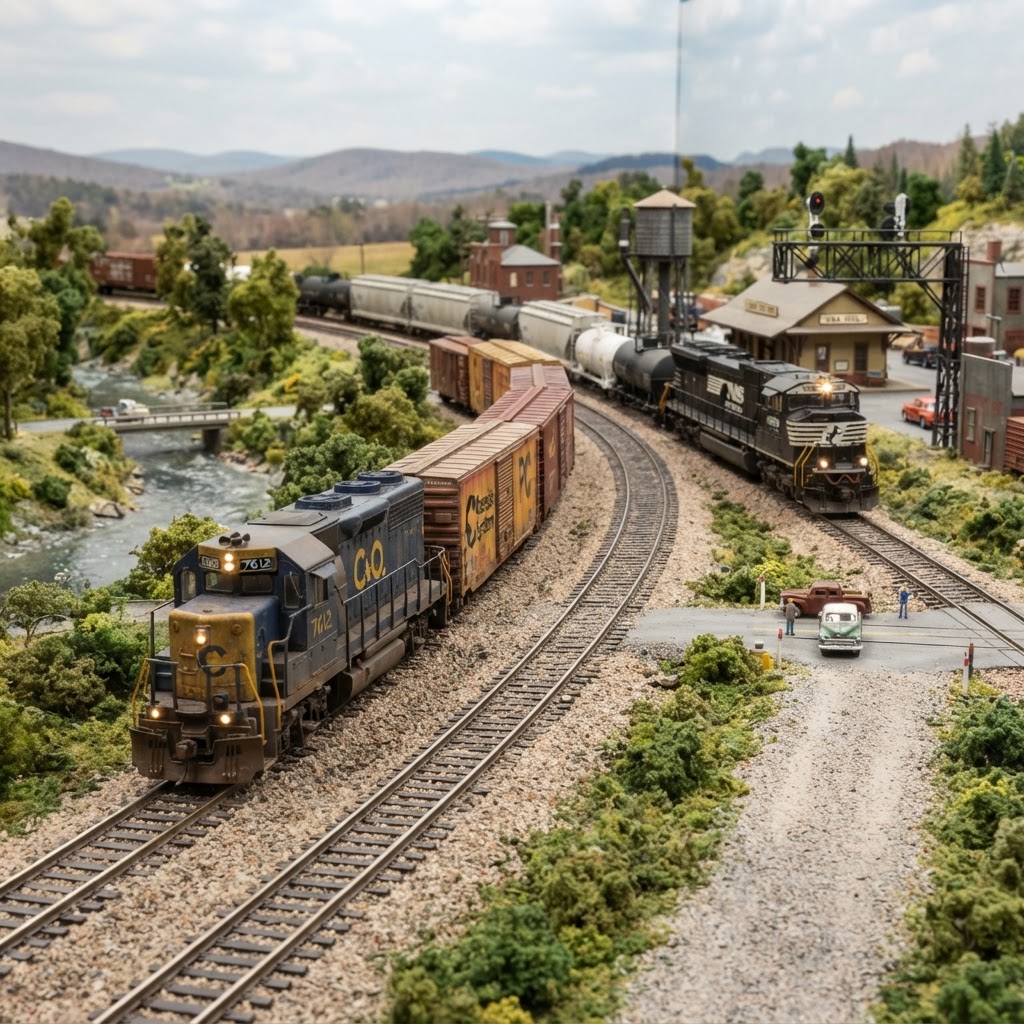
If you're just getting started in the model railroad hobby, one of the first big decisions you'll face is choosing between DCC and DC locomotives. The debate around dcc vs dc locomotives has been going on for decades, and for good reason — the control system you choose will shape nearly every aspect of your layout, from how you wire your track to how many trains you can run simultaneously. Understanding the core differences between these two technologies is essential before you invest in your first locomotive or starter set.
DC (Direct Current) has been the traditional standard in model railroading for most of the hobby's history. It's simple, affordable, and widely understood. DCC (Digital Command Control), on the other hand, represents the modern evolution of train control — offering far greater flexibility, realism, and capability at the cost of a steeper learning curve and higher upfront investment. Neither system is universally "better," but one will almost certainly suit your goals and budget more effectively than the other.
In this guide, we'll break down everything you need to know about DCC vs DC locomotives — how each system works, the practical pros and cons of each, compatibility considerations, and how to choose the right option for your layout. Whether you're building your very first layout or upgrading an existing one, this article will give you a clear, honest picture of both technologies.
How DC Locomotives Work
DC model trains operate on a straightforward principle: the speed and direction of the locomotive are controlled by varying the voltage and polarity of the electrical current sent through the rails. Turn the power pack's throttle up, and the locomotive speeds up. Flip the direction switch, and the polarity reverses, sending the train in the opposite direction.
This simplicity is one of DC's greatest strengths. The technology has been refined over many decades, and there's an enormous selection of DC-compatible locomotives, controllers, and accessories available at virtually every price point.
The DC Power Pack
The central component of a DC system is the power pack (or transformer). This device plugs into the wall and outputs a variable DC voltage — typically ranging from 0 to around 12–18 volts depending on the scale. Most beginner starter sets include a basic power pack, and they're generally inexpensive and easy to use.
However, traditional DC power packs have limitations. Because the voltage is applied to the entire track section, every locomotive on that section receives the same signal. If you want two trains to run independently on the same track, you need to divide your layout into electrically isolated "blocks," each with its own controller. This is known as block wiring, and for complex layouts, it can become a significant wiring challenge.
Running Multiple Trains on DC
Running multiple trains under DC requires careful planning and additional hardware. Each block of track needs its own power district, and operators must manually switch power between sections. It's manageable, but it demands more infrastructure and attention compared to DCC. If you're planning a layout with several locomotives running simultaneously, the wiring complexity of DC can become a real limitation.
How DCC Locomotives Work
Digital Command Control takes a fundamentally different approach. Instead of varying the voltage to control train speed, DCC sends a constant AC-like voltage through the rails along with a digital data signal. Each locomotive on the layout is fitted with a small decoder chip that receives commands addressed specifically to that engine's unique ID number.
This means multiple locomotives can run on the same track section independently, each responding only to commands intended for it. The possibilities this opens up for layout operation are significant.
The DCC Decoder
The decoder is the heart of any DCC locomotive. It's a small circuit board installed inside the locomotive that interprets digital commands and controls the motor, lights, and — in the case of sound-equipped decoders — audio effects. Many modern locomotives come DCC-ready (with a socket for easy decoder installation) or DCC-equipped (with a decoder already installed).
Sound decoders, sometimes called DCC Sound decoders, add an entirely new dimension of realism. They can replicate diesel prime movers revving up, steam chuffing in sync with the drivers, horns, bells, and even crew chatter. For hobbyists chasing realistic operation, this is a major draw of DCC. You can explore a comparison of DCC-equipped systems in our detailed guide on Kato vs Bachmann DCC: Which Control System Is Right For Your Layout?.
Command Stations and Throttles
A DCC system consists of a command station (which generates the DCC signal), a booster (which amplifies that signal for the track), and one or more throttles (handheld or cab-mounted controllers). Many entry-level DCC systems combine the command station and booster into a single unit.
Popular entry-level DCC systems include the Bachmann E-Z Command, the Digitrax Zephyr, and the NCE PowerCab. These systems are reasonably affordable and well-suited to smaller layouts. As your layout grows, DCC systems can be expanded with additional throttles, wireless walk-around control, and computer interface capabilities.
DCC vs DC Locomotives: Key Differences at a Glance
| Feature | DC | DCC | |---|---|---| | Control method | Voltage variation | Digital decoder commands | | Multiple train operation | Requires block wiring | Native multi-train support | | Sound capabilities | Very limited | Full sound decoders available | | Wiring complexity | High (for complex layouts) | Lower overall wiring burden | | Cost (entry level) | Lower | Moderate to higher | | Locomotive availability | Vast | Growing rapidly | | Lighting control | Basic on/off | Independent, programmable | | Momentum/braking simulation | Limited | Built-in decoder functions |
Advantages of DC Locomotives
Lower Upfront Cost
A basic DC power pack and a starter set can get you running for under $100 in HO or N scale. If you're on a tight budget or just want to try the hobby before committing to a more complex system, DC is a practical starting point. Check out some of the best budget-friendly options in our guide to the 10 Best HO Scale Starter Sets for Beginners or the Best N Scale Starter Sets For 2024.
Simplicity and Reliability
DC systems have fewer components to fail. There are no decoders to program, no addresses to assign, and no software to update. For hobbyists who prefer plug-and-play simplicity — or for those setting up a basic loop for children — DC is hard to beat.
Massive Compatibility
Nearly every model locomotive ever manufactured is DC-compatible. Vintage locomotives from the 1950s through the 1990s were designed for DC operation, making DC the default choice for collectors of older equipment.
Advantages of DCC Locomotives
Independent Multi-Train Control
This is DCC's killer feature. You can run a dozen locomotives on the same track simultaneously, each at its own speed and direction, without any block wiring. For operators building complex, realistic layouts, this is transformative.
Realistic Sound and Lighting
DCC sound decoders bring layouts to life in ways that DC simply cannot match. Beyond sound, DCC allows you to independently control headlights, cab lights, ditch lights, and Mars lights — each programmable for prototypical behavior.
Advanced Features
Modern DCC decoders support features like momentum simulation, back-EMF (which keeps the locomotive running smoothly at slow speeds), consist control (coupling multiple units to behave as one), and even wireless Bluetooth control. These features push realism and operational enjoyment to new heights.
Simplified Wiring for Large Layouts
Counterintuitively, large DCC layouts often require less wiring than equivalent DC layouts. Because you don't need to divide the layout into separately switched blocks, the track wiring is far simpler. You do still need power districts for electrical fault protection, but the overall complexity is reduced.
Compatibility: Can You Mix DC and DCC?
This is a common concern for hobbyists transitioning from DC to DCC. The short answer: DCC decoders can usually run in "analog mode" on a DC layout, though performance is sometimes degraded. Running a non-decoder locomotive on a DCC system is generally not recommended, as the constant voltage can damage older DC motors.
Many hobbyists transition gradually, converting their locomotives to DCC one at a time while continuing to expand their decoder-equipped fleet. If you already have a strong collection of DC locomotives, factor the cost of decoder installation (typically $15–$60 per locomotive for basic decoders) into your upgrade budget.
For track considerations during a system upgrade, our guide to The Best HO Scale Track Options: A Guide to Building a Reliable Layout covers important wiring and track planning topics that apply to both systems.
Which System Is Right for You?
Choose DC If...
- You're a complete beginner on a limited budget
- You want to run a simple loop or small layout with one train at a time
- You collect vintage or older locomotives
- You prefer minimal technology and setup complexity
Choose DCC If...
- You plan to run multiple locomotives simultaneously
- You want realistic sound, lighting, and motion effects
- You're building a large or complex layout
- You anticipate expanding and upgrading your setup over time
For beginners still figuring out which scale to start with, our guides on HO Scale vs N Scale and What Is the Best Beginner Train Scale? can help you make that foundational decision before diving into the DC vs DCC question. You can also browse our top 5 model railroad brands for beginners to get a sense of which manufacturers produce quality entry-level DCC and DC equipment.
Once you've settled on a system, make sure you have the right tools for installation and layout building — our roundup of the 10 Best Beginner Model Railroad Tools Every Hobbyist Needs is a great starting point. You can also browse our recommended products page for curated gear across both DC and DCC categories.
Frequently Asked Questions
Can I run DCC locomotives on a DC layout?
Many DCC-equipped locomotives can operate in "analog DC mode" on a traditional DC layout, though some advanced functions like sound may not be available. Performance can vary by manufacturer and decoder. It's best to check the locomotive's documentation before attempting DC operation with a DCC decoder installed.
Are DCC locomotives more expensive than DC models?
Generally, yes. DCC-equipped locomotives carry a price premium due to the cost of the decoder and, in sound-equipped models, the speaker and audio hardware. However, the price gap has narrowed significantly in recent years. Entry-level DCC locomotives in HO and N scale can be found for $50–$100, not far above comparable DC models. For brand comparisons, see our guide on Bachmann vs Kato: The Ultimate Guide to N Scale Reliability.
Is DCC hard to learn?
The basic operation of DCC — assigning addresses, setting speed, and changing direction — is straightforward and most beginners pick it up quickly. Advanced programming (CV values, consisting, sound customization) has a steeper learning curve but is entirely optional when you're starting out. Most entry-level DCC systems have well-written manuals and strong community support online.
What is "DCC Ready" vs "DCC Equipped"?
"DCC Ready" means the locomotive has a standardized socket (typically an 8-pin or 21-pin NEM socket) that makes decoder installation easy — you simply plug in the decoder of your choice. "DCC Equipped" means a decoder is already installed from the factory. "DCC Sound Equipped" means both a decoder and sound system are pre-installed.
Does DCC work with O scale trains?
Yes, DCC is available for O scale, though the landscape is different from HO and N scale. O scale hobbyists often choose between proprietary systems like Lionel's TMCC/Legacy or MTH's DCS rather than traditional NMRA-standard DCC. Our article on Lionel vs MTH: Choosing the Best O Scale System for Your Layout explores this topic in detail.
Conclusion
The DCC vs DC locomotives debate ultimately comes down to what you want from the hobby. DC remains a reliable, affordable, and perfectly valid choice — especially for beginners, budget-conscious hobbyists, and collectors of vintage equipment. DCC, however, opens up a world of operational realism, multi-train flexibility, and technological possibility that has made it the dominant standard for modern model railroading.
Take your time, consider your layout goals, and don't be afraid to start simple and upgrade later. The model railroad hobby rewards patience and experimentation, and there's no wrong path — only the one that keeps you engaged and enjoying the journey.
Ready to take the next step? Explore our full library of beginner guides to continue building your knowledge, or visit our recommended products page to find the right gear for your system of choice.
Affiliate Disclosure: Some links in this article are affiliate links. We may earn a commission at no extra cost to you.
Enjoying this guide?
Browse our favorite recommended products.
James Mitchell
Model Train Enthusiast & Writer
James has been building layouts and collecting trains for over 15 years. He started Model Train Insider to help newcomers navigate the hobby with practical, no-nonsense advice drawn from hands-on experience.
Stay on Track
Get beginner guides, brand reviews, and layout tips delivered to your inbox. No spam—just trains.
Free forever. Unsubscribe anytime.
Related Articles
5 Best Starter DCC Controllers for New Model Railroad Hobbyists
Looking for the best starter DCC controller? We evaluate the top 5 entry-level systems to help you easily control your model train layout with precision.
Read more
10 Essential Tools for Model Railroading: The Ultimate Starter Toolkit
Building a layout? Discover the 10 best tools for model railroading that every beginner needs to achieve professional results and precise detailing.
Read more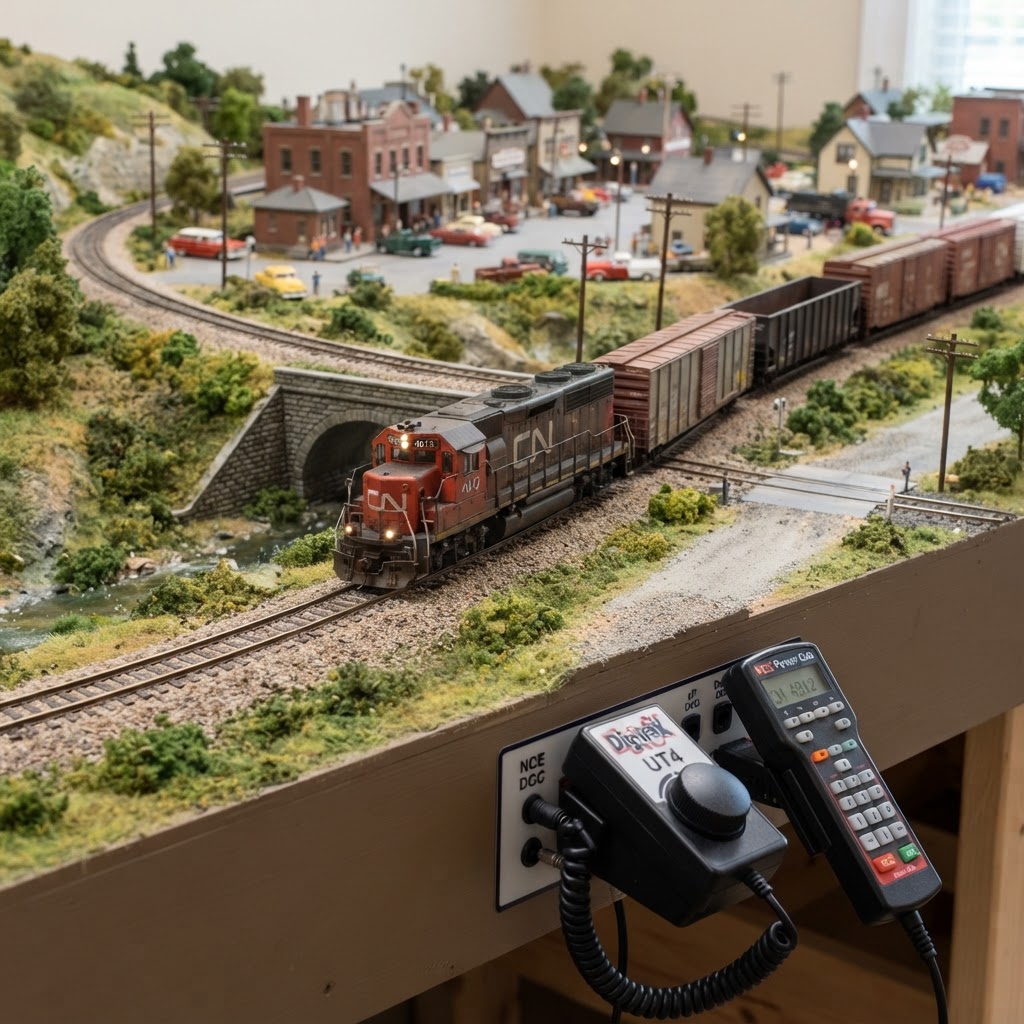
Best Starter DCC Controllers Reviewed: Top Picks for New Model Railroaders
Looking to upgrade your layout? We review the best starter DCC controllers to help beginners take full control of their model trains with ease and precision.
Read more