HO Scale vs N Scale: A Comprehensive Guide to Choosing the Perfect Model Train Size
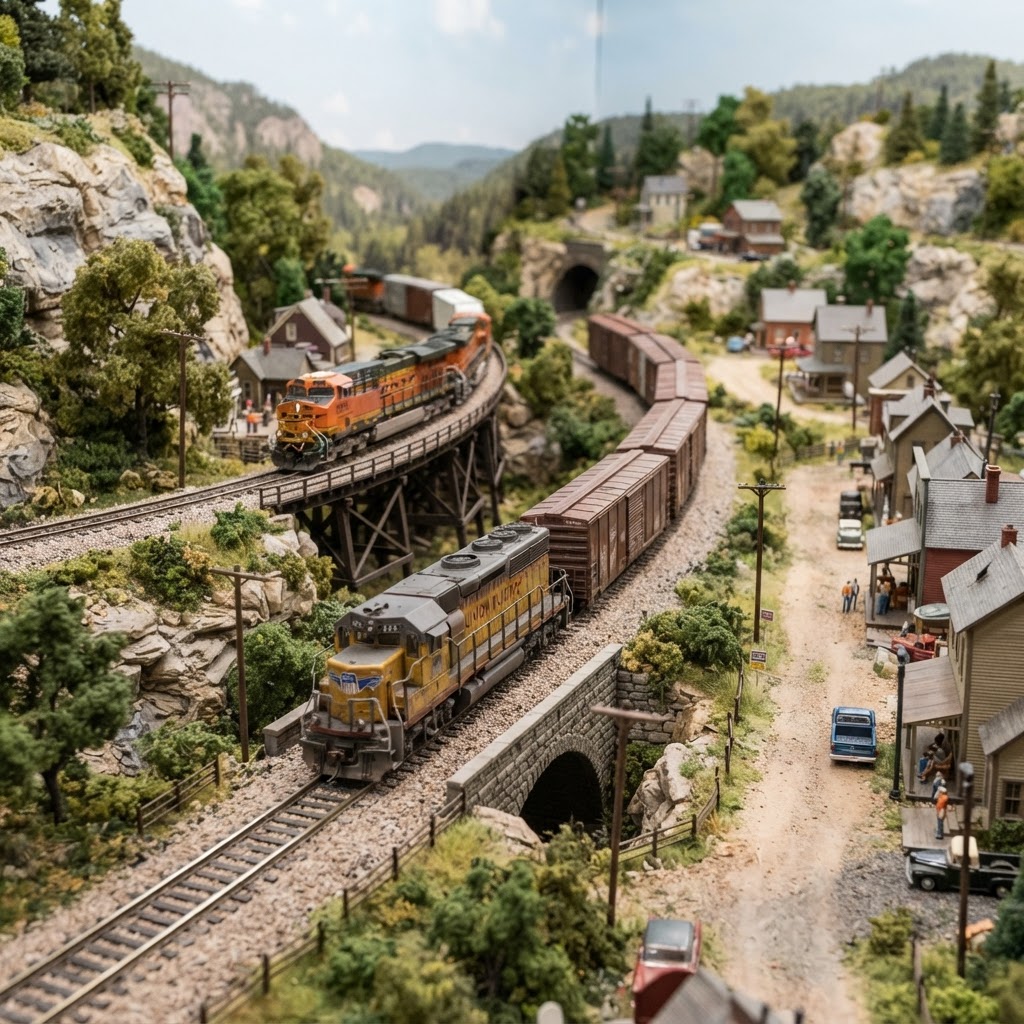
When hobbyists first dive into the world of model railroading, one of the very first decisions they face is choosing the right scale. The ho scale vs n scale comparison is one of the most debated topics in the hobby, and for good reason — both scales have loyal followings, distinct advantages, and real trade-offs that can make or break your enjoyment of the hobby. Whether you're setting up a layout in a spare bedroom or carving out a small corner of your apartment, understanding the differences between these two popular scales is essential before you spend a single dollar on track, locomotives, or scenery.
HO scale (1:87 ratio) and N scale (1:160 ratio) together dominate the model railroad market, accounting for the vast majority of products sold worldwide. They're the two most supported scales in terms of available locomotives, rolling stock, accessories, and aftermarket parts. But that abundance of choice can also feel overwhelming when you're just starting out. Which scale works best for your available space? Which is easier to detail? Which offers better value for money? These are exactly the questions this guide is designed to answer.
By the end of this article, you'll have a clear, practical picture of how HO and N scale stack up against each other in real-world hobbyist scenarios. If you're still exploring the broader landscape of model railroading scales, you might also want to check out our guide on What Is the Best Beginner Train Scale? A Complete Guide to Starting Your Hobby before diving deeper. Otherwise, let's get into the details that matter most.
Understanding the Basics: Scale, Size, and What They Mean
Before comparing the two scales head-to-head, it helps to understand what "scale" actually means in model railroading. A scale is simply a ratio between the model and its real-world counterpart. HO scale models are built at 1:87, meaning the prototype (real train) is 87 times larger than the model. N scale operates at 1:160, so the models are significantly smaller.
HO Scale at a Glance
HO scale has been the most popular model train scale in North America for decades. The acronym "HO" stands for "Half O," reflecting that it was originally developed as half the size of the older O scale. A standard HO scale locomotive is roughly 6–8 inches long, and the track gauge (the distance between rails) is 16.5mm. These dimensions make HO models large enough to include fine details, yet small enough to build reasonably sized layouts without needing a dedicated room.
N Scale at a Glance
N scale models operate on a track gauge of 9mm — noticeably narrower than HO. A typical N scale locomotive runs about 3–4 inches in length, roughly half the physical size of an equivalent HO model. This compact footprint is N scale's superpower: it allows modelers to build dramatically larger, more geographically expansive layouts in the same physical space as a smaller HO layout — or to build a complete, satisfying layout in a much tighter space.
Space Requirements: The Most Important Factor for Most Hobbyists
If there's one area where the HO scale vs N scale comparison tips decisively in one direction, it's space. Your available layout space should be the first thing you consider.
HO Scale Space Needs
For a basic HO scale oval loop, you'll need a minimum radius of around 18 inches, which means a 3×6-foot table is the practical starting point for any meaningful layout. To model realistic curves and longer mainline runs, most serious HO modelers want at least a 4×8-foot sheet of plywood, and many enthusiasts use much more. HO is ideally suited to a dedicated hobby room, a large basement, or a sizable garage workshop.
That said, 4×8 layouts in HO are incredibly popular and well-documented, and they can produce impressively detailed scenes in a modest footprint. If you have that kind of space, HO is very manageable.
N Scale Space Needs
N scale shines in smaller spaces. A satisfying N scale loop with a 9.75-inch minimum radius can fit comfortably on a 2×4-foot board. That means you can build a fully operational N scale layout on a coffee table, a bookshelf shelf, or the surface of a desk. For apartment dwellers, college students, or anyone with limited square footage, N scale often becomes the obvious winner.
The real excitement of N scale for space-conscious modelers is the ability to model longer prototype distances realistically. A 4×8 board in N scale can represent dramatically more geographical territory than the same board in HO, allowing for long sweeping curves, multiple towns, and complex track arrangements that simply aren't possible in HO at the same physical size.
Detail and Visibility: The Case for Bigger Models
HO Scale Detail Advantages
One of the most compelling arguments for HO scale is the level of detail achievable on models and scenery. Because HO locomotives and rolling stock are physically larger, manufacturers can mold finer details into the models — cab interiors, brake rigging, separately applied grab irons, and more. Painting and weathering HO models is also considerably easier, as there's simply more surface to work with.
For scratch-builders and kitbashers who enjoy building structures and adding custom details, HO scale is significantly more forgiving. Smaller hands, less steady hands, and modelers who work without magnification will find HO much more comfortable. Browse our Best Model Train Kits For Beginners: A Complete Starter Guide for a look at some excellent HO and N scale options to get started with.
N Scale Detail Challenges and Improvements
N scale models have come a long way in terms of detail quality. Modern manufacturers like Kato, Atlas, and Intermountain produce N scale locomotives with remarkable detail for their size. However, the fundamental reality is that smaller models simply offer less surface area for detail, and some fine features visible in HO are either absent or require magnification to appreciate in N scale.
That said, N scale scenery can be absolutely breathtaking from a distance, as the smaller scale allows you to build expansive mountain ranges, long river valleys, and multi-town vistas that create a powerful sense of realism and geographic scope.
Product Availability and Variety
Both HO and N scale benefit from enormous product ecosystems, but HO scale maintains a clear edge in total variety.
HO Scale Product Ecosystem
HO scale is the dominant scale globally in terms of product availability. Virtually every major railroad era, prototype road, and car type is available in HO. The aftermarket for decoders, sound systems, replacement parts, and custom details is vast. Brands like Athearn, Atlas, Walthers, Bachmann, Kato, and dozens more offer extensive HO product lines. If you're interested in exploring premium HO models, take a look at our comparison of Athearn Genesis vs Standard: Is the Premium Upgrade Worth Your Investment? to understand the quality tiers available.
For beginners, HO scale also means more starter sets, more budget-friendly options, and more local hobby shop inventory. Our roundup of the 10 Best HO Scale Starter Sets for Beginners is a great place to start if you're leaning toward HO.
N Scale Product Ecosystem
N scale has a strong and growing product ecosystem that covers most major North American and European prototypes. While the absolute variety is somewhat less than HO, the major manufacturers — particularly Kato and Atlas — produce excellent N scale offerings. For most hobbyists, N scale variety is more than sufficient, especially if you're modeling a mainstream railroad era.
For more context on which brands offer the best value at the beginner level, our guide to the Top 5 Model Railroad Brands for Beginners covers both HO and N scale options worth considering.
Cost Comparison: What Does Each Scale Actually Cost?
Neither scale is definitively "cheaper" than the other — costs depend heavily on the specific products you choose, the level of detail you want, and how large you build your layout.
Entry-Level Costs
Both HO and N scale offer starter sets in the $100–$250 range that include a locomotive, some cars, an oval of track, and a basic power pack. These are comparable in price across both scales.
Long-Term Costs
Layout benchwork costs are similar or slightly lower in N scale simply because the physical footprint is smaller — less lumber, less foam board, less track overall. However, N scale locomotives can sometimes be priced similarly to HO models of equivalent quality, so don't assume N scale automatically saves money on rolling stock.
DCC conversion and sound installation tend to be more expensive in N scale because the decoders and speakers must be smaller and more specialized. For a deep dive into control systems, our guides on Kato vs Bachmann DCC: Which Control System Is Right For Your Layout? and the 10 Best DCC Control Systems For Model Train Beginners will help you understand what to budget for. Be sure to also check out our recommended products page for curated gear across both scales.
Power supplies are another consideration — our Best Power Supplies for Model Trains: A Complete Buying Guide covers what you'll need for both HO and N scale operations.
Maintenance and Troubleshooting
HO scale has a slight maintenance advantage simply because the larger components are easier to access, clean, and repair. Cleaning HO scale track, lubricating locomotive mechanisms, and replacing wheels or couplers is manageable for most hobbyists.
N scale maintenance is more delicate. The smaller mechanisms require more careful handling, and track cleaning is especially critical because the tiny pickup areas on N scale locomotives are more sensitive to dirt and oxidation. If you ever run into power issues, our guide on How to Troubleshoot Locomotive Power Issues applies to both scales and walks you through the most common fixes.
Which Scale Is Right for You? A Practical Decision Guide
Here's a simple framework to help you decide:
-
Choose HO scale if: You have a dedicated space of at least 4×6 feet, you enjoy hands-on detailing and kitbashing, you want the widest possible product selection, or you're new to the hobby and want maximum community support.
-
Choose N scale if: You're working with limited space (under 4×4 feet), you want to model sprawling landscapes and long mainlines, you live in an apartment or shared space, or you prioritize geographic scope over fine model detail.
-
Either scale works well if: You're starting fresh, you're on a moderate budget, or you want a scale with strong manufacturer support and community resources.
For a broader comparison of all available scales, don't miss our What Is the Best Beginner Train Scale? A Complete Guide to Starting Your Hobby and our 5 Best Beginner Model Train Kits To Start Your Hobby Today for practical starting-point recommendations in either scale.
Frequently Asked Questions
Is HO scale or N scale better for beginners?
HO scale is generally considered the more beginner-friendly option due to its larger size, easier handling, wider product availability, and more forgiving maintenance requirements. However, N scale is an excellent choice for beginners who are specifically limited by space. Both scales have strong beginner product lines and community support.
Can I run HO and N scale trains on the same layout?
No — HO and N scale trains use different track gauges (16.5mm for HO vs. 9mm for N) and are not compatible with each other. You cannot run N scale trains on HO track or vice versa. Most modelers commit to one scale for their primary layout.
Is N scale cheaper than HO scale?
Not necessarily. Entry-level starter sets are similarly priced across both scales. N scale may save money on layout materials due to its smaller footprint, but rolling stock and DCC conversion costs are comparable. High-quality models in both scales carry similar price tags from premium manufacturers.
Which scale has more product variety?
HO scale has the largest product variety of any model railroad scale worldwide. However, N scale has an extensive and well-supported product ecosystem that covers most major prototypes and eras. For the vast majority of hobbyists, both scales offer more than enough variety to build a satisfying railroad.
Is N scale harder to maintain than HO scale?
N scale requires more delicate handling during maintenance due to its smaller size. Track cleanliness is especially critical in N scale, as dirty rails cause more operational problems in smaller locomotives. HO scale is somewhat more forgiving for routine maintenance tasks like track cleaning, lubrication, and coupler adjustments.
Conclusion
The HO scale vs N scale comparison ultimately comes down to your personal priorities: space, detail, product variety, and budget all play roles in the decision. HO scale offers the richest product ecosystem, easier handling, and excellent detailing opportunities — making it the top choice for modelers with dedicated space and a love of fine craftsmanship. N scale offers an unmatched ability to model sweeping landscapes in tight quarters, making it the go-to for space-conscious hobbyists who want maximum geographic impact from every square foot of layout.
There's no universally "right" answer — the best scale is the one that fits your space, your goals, and your passion for the hobby. The most important thing is to get started. Explore our other guides here at Model Train Insider for deeper dives into locomotives, DCC systems, scenery techniques, and everything in between. Your perfect layout is closer than you think.
Affiliate Disclosure: Some links in this article are affiliate links. We may earn a commission at no extra cost to you.
Enjoying this guide?
Browse our favorite recommended products.
James Mitchell
Model Train Enthusiast & Writer
James has been building layouts and collecting trains for over 15 years. He started Model Train Insider to help newcomers navigate the hobby with practical, no-nonsense advice drawn from hands-on experience.
Stay on Track
Get beginner guides, brand reviews, and layout tips delivered to your inbox. No spam—just trains.
Free forever. Unsubscribe anytime.
Related Articles
10 Best HO Scale Track Plans for Your Home Layout
Discover the 10 best HO scale track plans to transform your space. From compact switching layouts to grand mainlines, find the perfect design for your model train.
Read more
How to Solder Track Feeders: A Step-by-Step Guide for Beginners
Master the essential skill of soldering track feeders to your model railroad layout. Follow our simple, step-by-step guide to ensure reliable power delivery.
Read more
Kato Unitrack vs. Bachmann E-Z Track: The Ultimate Comparison for Modelers
Deciding between Kato Unitrack and Bachmann E-Z Track? We compare reliability, ease of use, and realism to help you choose the best track for your layout.
Read more