10 Best HO Scale Track Plans for Your Home Layout
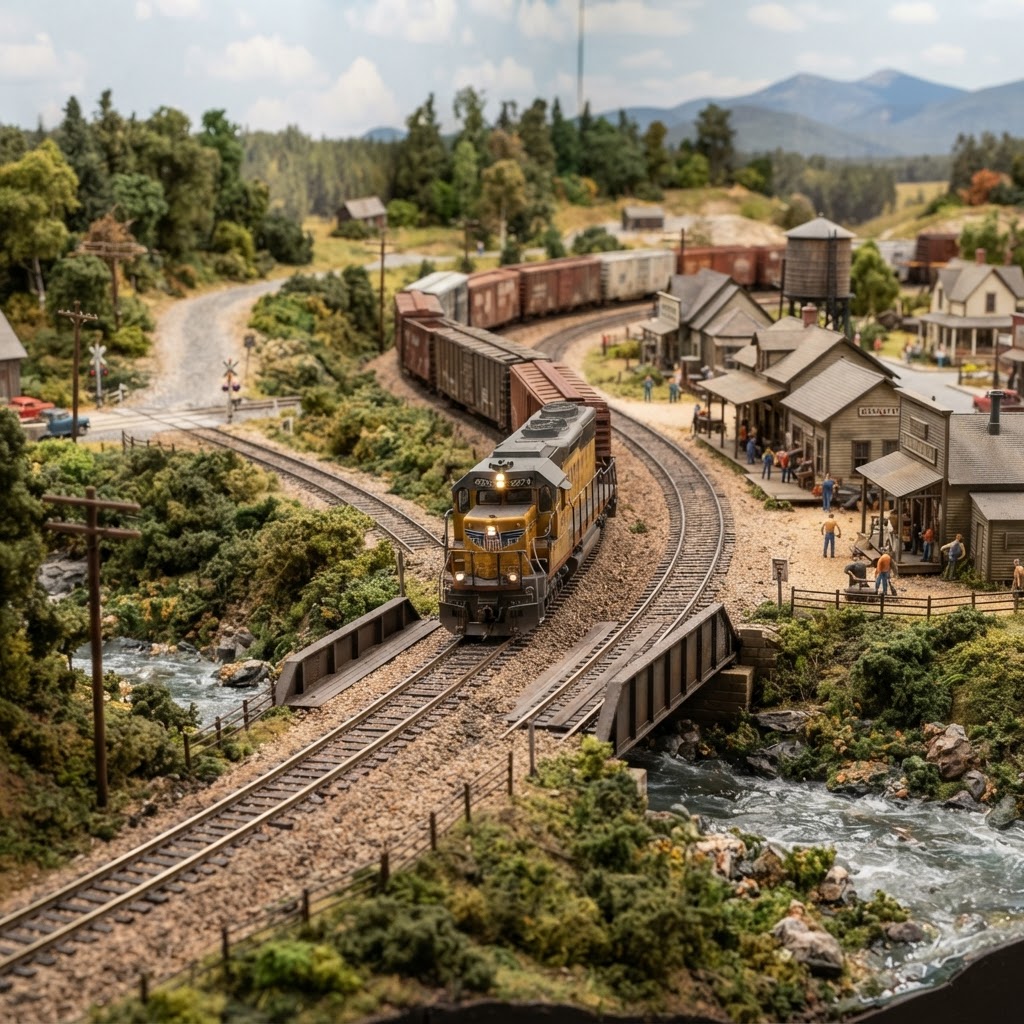
If you've been searching for the best HO scale track plans to bring your model railroad vision to life, you've landed in the right place. HO scale — at 1:87 ratio — is the most popular scale in the hobby for good reason. It strikes a perfect balance between detail and space efficiency, giving you the ability to build impressive, realistic layouts without needing an entire basement (though a basement certainly helps). Whether you're a first-time builder or a seasoned hobbyist ready to tackle your most ambitious project yet, the track plan you choose will define every other decision you make.
Choosing the right layout design is more than just picking a shape. It's about understanding your available space, your operating preferences, your budget, and the kind of railroading experience you want to create. Do you dream of watching long freight trains wind through mountain passes? Or do you prefer the charm of a small-town switching puzzle? The best HO scale track plans serve a wide range of goals, and in this guide, we've curated ten outstanding options to match hobbyists at every level.
Before diving into the plans themselves, keep in mind that a great track plan is only the beginning. You'll also need to think about wiring, scenery, rolling stock, and control systems. If you're just getting started, be sure to check out our guide on Best Model Train Starter Sets of 2024: Top Picks for New Hobbyists to make sure you have the right foundation in place.
What Makes a Great HO Scale Track Plan?
Before we explore the ten plans, it helps to understand what separates a good layout from a great one. The best designs share a few core qualities:
- Operational interest — The layout should give you something to do, whether that's switching cars, running through staging, or simulating a prototype railroad.
- Visual appeal — Good sight lines, scenic variety, and a sense of depth make a layout feel alive.
- Practical construction — Every part of the layout should be reachable for maintenance and derailment recovery. A rule of thumb: no point should be more than 30 inches from an aisle.
- Room for growth — The best plans leave room to expand or evolve as your skills and interests develop.
With those principles in mind, let's get into the plans.
10 Best HO Scale Track Plans for Your Home
1. The Classic Oval — Perfect for Beginners
The humble oval is where most model railroaders begin, and don't let its simplicity fool you. A well-designed oval with a passing siding, a small yard, and one or two industries can provide hours of enjoyment. For a 4×8 foot sheet of plywood, an 18-inch minimum radius oval with a runaround track and two or three spurs gives newcomers everything they need to practice switching operations and train handling.
This is an ideal starting plan if you're still assembling your tool kit — our guide to 10 Essential Tools for Model Railroading: The Ultimate Starter Toolkit will make sure you're prepared before you lay your first piece of track.
2. The Point-to-Point Shelf Layout
Point-to-point designs simulate how real railroads actually operate — a train departs one terminal, travels through intermediate towns, and arrives at a destination. Shelf layouts running along one or more walls are ideal for narrow spaces like spare bedrooms or home offices. A 12-foot shelf just 18 inches deep can support a surprisingly rich point-to-point design with a small classification yard at each end.
This style rewards operational thinking and works beautifully with Digital Command Control (DCC). If you're considering going digital, check out our 5 Best Starter DCC Controllers for New Model Railroad Hobbyists to find the right system for this type of layout.
3. The Dog-Bone Layout
The dog-bone is essentially a stretched oval with loops at each end, allowing trains to reverse direction without a traditional loop. It fits naturally in rectangular rooms and provides more linear run than a simple oval. Adding a helix or elevation change between the two loops dramatically increases the sense of a journey and allows for scenic variety — a mountain pass at one end, a river valley at the other.
4. The Around-the-Room Loop
If you have a dedicated room to work with, an around-the-room loop maximizes your run length and lets you model distinct geographic regions as the train travels from wall to wall. A 10×12 foot room can support a continuous main line of 30 feet or more, with room for a small yard, engine facility, and multiple scenic districts. This is one of the most popular configurations among intermediate builders and one of the best HO scale track plans for those serious about operations.
5. The Twice-Around Plan
The twice-around adds a second level to a continuous loop, effectively doubling your run length within the same footprint. Trains appear to travel a great distance before returning to the starting point, which enhances the illusion of travel. The key challenge is the helix or gradient connection between levels — keep grades at 2% or less for reliable operation with longer trains. This plan works exceptionally well with high-quality steam locomotives; see our Which Brand Makes the Best Steam Locomotives? A Collector's Guide for motive power recommendations.
6. The Switching Puzzle (Inglenook or Timesaver)
Not every great layout needs a continuous main line. Switching puzzles like the classic Inglenook Sidings or the Timesaver are compact, intensely operational designs that can fit on a single shelf or a small table. The goal is to sort cars into a specific order using a limited number of moves. These plans are surprisingly addictive and are excellent for apartment dwellers or hobbyists with limited space. A well-built Inglenook in HO scale can fit in under 3 linear feet.
7. The Walk-In U-Shape Layout
The U-shaped layout is a favorite for basement builders. By placing benchwork along three walls in a U-configuration, you create an immersive operating environment where you literally stand inside the layout. The interior peninsula — or open aisle space — allows comfortable access to the entire railroad. This design supports complex yard arrangements, staging tracks, and multiple main line routes. Plan your aisles at a minimum of 24 inches wide; 30 inches is more comfortable for extended operating sessions.
8. The Folded Dog-Bone
A variation on the traditional dog-bone, the folded version tucks the return loops back alongside the main run, making it fit more efficiently in L-shaped or square rooms. This plan is particularly clever for a 10×10 foot room where a standard dog-bone might be awkward. The layout can include a main line, a branch line, a small yard, and significant scenic development — all within a manageable construction scope.
9. The Multi-Deck Layout
For experienced builders ready to maximize operational complexity, a multi-deck layout uses vertical space to create two or even three separate operating levels. Each deck can represent a different era, location, or type of railroad operation. The engineering challenges are significant — staging connections, lighting each deck, and achieving comfortable viewing angles all require careful planning. But the result is a railroad that can realistically simulate an entire division of a prototype railroad within a typical basement.
Proper wiring is absolutely critical on multi-deck layouts. Our guide on How to Solder Track Feeders: A Step-by-Step Guide for Beginners is essential reading before you start connecting track buses on a build this complex.
10. The Modular Layout
Can't commit to a permanent layout? A modular layout built to NMRA or Free-Mo standards gives you the flexibility to build in sections, rearrange your railroad as needed, and even join other hobbyists at club events. Each module is a self-contained scenic unit that connects to others through standardized track and wiring interfaces. This approach is ideal for renters, hobbyists who move frequently, or those who simply enjoy variety in their railroading.
For locomotives and rolling stock to populate your modules, our guide to The Best Steam Locomotive Brands For Serious Model Train Collectors offers excellent recommendations across price points.
Tips for Getting the Most Out of Your HO Scale Track Plan
Start With a Scale Drawing
Before buying a single piece of track, draw your plan to scale on graph paper or use free software like AnyRail or XtrkCAD. Verify that your curves meet minimum radius requirements for your largest locomotives and that all sections are within arm's reach.
Invest in Quality Track
Atlas, Kato Unitrack, and Peco are among the most trusted names in HO scale track. Flex track gives you the most flexibility for curves and is preferred for permanent layouts, while sectional track is convenient for beginners. Check out our recommended products page for current picks on track, accessories, and tools.
Plan Your Wiring Early
Even simple layouts benefit from a proper wiring plan. For DCC layouts, bus wires running the length of the layout with regular feeder connections ensure reliable electrical performance. If you plan to run multiple trains independently, explore decoder options in our guide to The Best DCC Decoders for Locomotive Upgrades: A Comprehensive Guide.
Think About Operations From Day One
The most satisfying layouts are those designed with operating sessions in mind. Think about car forwarding, local industries, and realistic traffic flows as you design. Even a small layout can provide rich operating sessions if the track plan is thoughtfully crafted.
Frequently Asked Questions
What is the minimum space needed for an HO scale layout?
A basic HO scale oval can fit on a 4×8 foot sheet of plywood using 18-inch radius curves. However, for more realistic operation with longer equipment, a space of at least 4×12 feet is recommended to allow for wider curves and additional track features.
What minimum curve radius should I use for HO scale?
The standard minimum is 18 inches for most locomotives and rolling stock. However, larger steam engines and longer passenger cars perform much better on 22-inch or even 24-inch radius curves. Always check the manufacturer's recommendations for your specific locomotives.
Is DCC necessary for an HO scale layout?
DCC is not strictly required, but it dramatically enhances the operating experience by allowing independent control of multiple locomotives, realistic sound effects, and lighting control. For any layout with more than one train, we highly recommend it. See our Best Starter DCC Controllers Reviewed: Top Picks for New Model Railroaders for guidance.
How do I choose between a continuous loop and a point-to-point layout?
It depends on your operating style. Continuous loops are relaxing and allow you to simply watch trains run, while point-to-point designs are more operationally challenging and prototypically accurate. Many hobbyists combine both approaches by adding return loops or staging yards to a point-to-point base plan.
What software can I use to design my HO scale track plan?
Popular free options include XtrkCAD and the basic version of AnyRail. AnyRail's full version is a paid upgrade but is widely considered the most user-friendly option. Both programs include libraries of track from major manufacturers, allowing you to plan accurately before buying materials.
Conclusion
Finding the best HO scale track plans for your home is ultimately a personal journey — one shaped by your space, your budget, and the kind of railroading experience that excites you most. Whether you're drawn to the simplicity of a 4×8 oval or the ambition of a multi-deck basement empire, the ten plans outlined here offer a starting point for every level of the hobby.
The key is to start planning, start building, and be willing to refine your design as you go. No layout is ever truly finished, and that's part of the magic. If you're still building your knowledge base, explore more of our guides here at Model Train Insider — from choosing the right DCC controller to picking the best model train sets for younger family members, we've got the resources to help you at every stage of the hobby.
Happy modeling!
Affiliate Disclosure: Some links in this article are affiliate links. We may earn a commission at no extra cost to you.
Enjoying this guide?
Browse our favorite recommended products.
James Mitchell
Model Train Enthusiast & Writer
James has been building layouts and collecting trains for over 15 years. He started Model Train Insider to help newcomers navigate the hobby with practical, no-nonsense advice drawn from hands-on experience.
Stay on Track
Get beginner guides, brand reviews, and layout tips delivered to your inbox. No spam—just trains.
Free forever. Unsubscribe anytime.
Related Articles
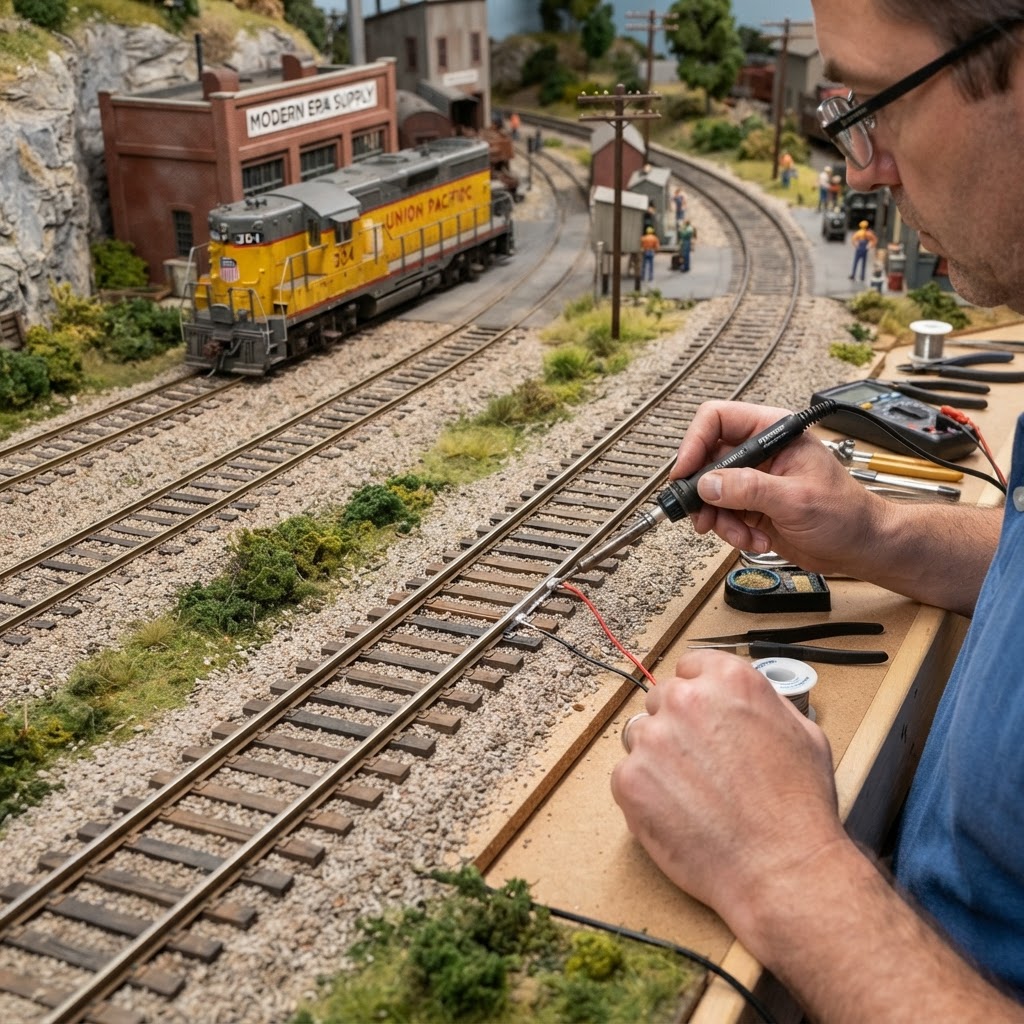
How to Solder Track Feeders: A Step-by-Step Guide for Beginners
Master the essential skill of soldering track feeders to your model railroad layout. Follow our simple, step-by-step guide to ensure reliable power delivery.
Read more
Kato Unitrack vs. Bachmann E-Z Track: The Ultimate Comparison for Modelers
Deciding between Kato Unitrack and Bachmann E-Z Track? We compare reliability, ease of use, and realism to help you choose the best track for your layout.
Read more
The Best HO Scale Track Options: A Guide to Building a Reliable Layout
Discover the best HO scale track options for your model railroad. Learn which brands offer the most reliability and realism for your dream layout design.
Read more