Kato Unitrack vs. Bachmann E-Z Track: The Ultimate Comparison for Modelers
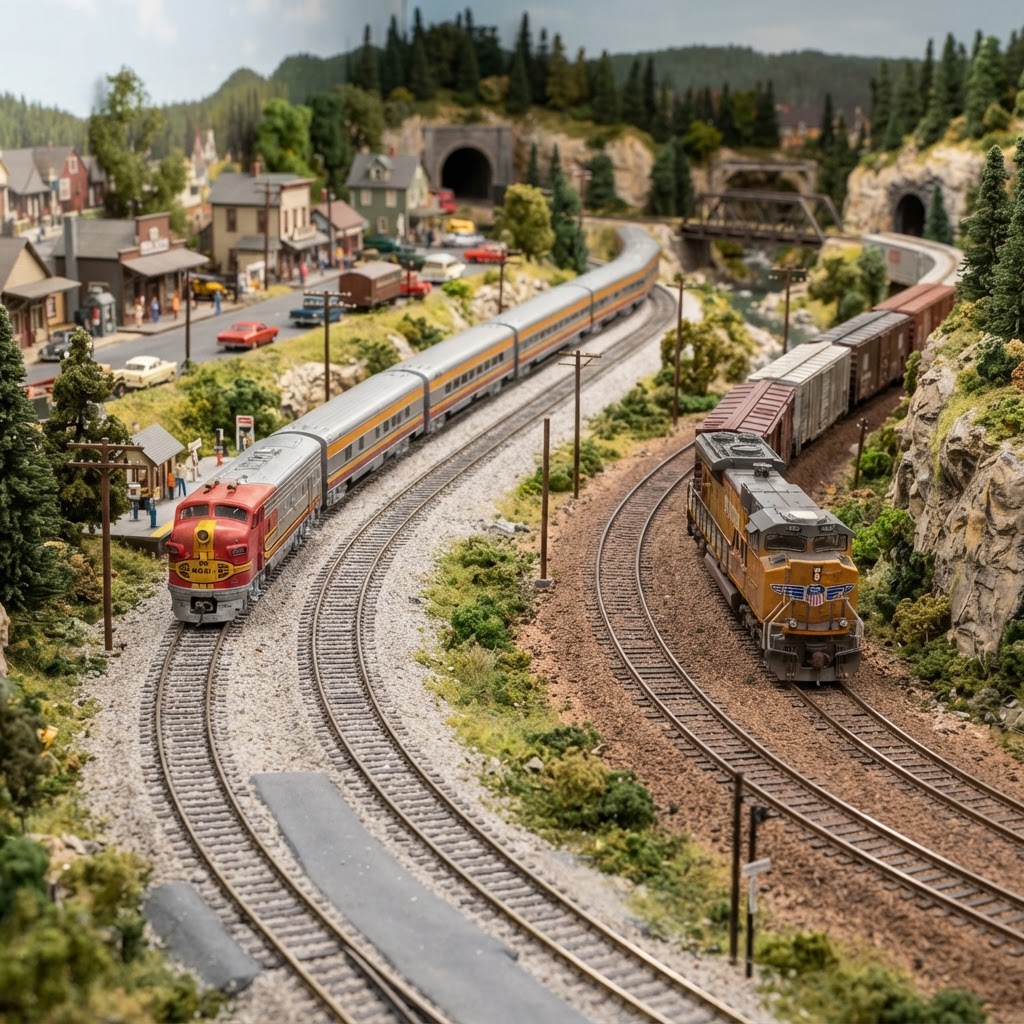
When building a model railroad layout, one of the most important decisions you'll make is choosing the right track system. For hobbyists comparing kato track vs bachmann track, the choice often comes down to two industry-leading systems: Kato Unitrack and Bachmann E-Z Track. Both are popular sectional track systems designed to make layout building accessible and enjoyable, but they differ significantly in design philosophy, performance, and long-term value. Whether you're a beginner setting up your first oval or an experienced modeler planning a complex switching layout, understanding these differences can save you time, money, and frustration.
Kato Unitrack and Bachmann E-Z Track dominate the entry-to-mid-level model railroad market for good reason — both systems combine track and roadbed into a single integrated unit, eliminating the need for separate cork or foam underlayment. This makes setup quick and relatively foolproof. However, "easy to use" doesn't mean both systems perform equally. From electrical reliability to curve radius options, turnout quality to overall aesthetics, these two track systems have meaningful differences that will impact your layout experience for years to come.
In this comprehensive comparison, we'll break down every major factor you should consider before committing to a track system. If you're still in the early stages of planning your layout and haven't yet chosen locomotives or rolling stock, be sure to check out our guide to the Best Starter Model Train Sets For Beginners 2024: A Buyer's Guide to make sure your track choice aligns with your overall setup.
Overview of Each Track System
Kato Unitrack
Kato Unitrack has been a benchmark for quality sectional track since its introduction in the 1980s. Originally developed in Japan, Unitrack is available in N scale and HO scale and is renowned for its precision manufacturing, consistent rail height, and rock-solid electrical connectivity. The track features a gray integrated roadbed with a realistic ballast profile, and each section snaps together with a secure, positive-click connector that maintains excellent electrical contact over time.
Kato's system offers an extensive catalog of track pieces including standard straights, curves of varying radii, easement curves, double-track pieces, and a wide range of turnouts. The engineering tolerances are tight, meaning derailments from poorly aligned joints are rare.
Bachmann E-Z Track
Bachmann E-Z Track is arguably the most recognizable track system in the hobby, largely because it ships with nearly every Bachmann train set sold at retail. Available in N, HO, and large-scale formats, E-Z Track combines nickel silver rail with a black plastic roadbed. The system is designed for quick assembly and is a staple in hobby stores nationwide.
E-Z Track is available in both steel rail and nickel silver rail versions — and this distinction matters. The nickel silver variant offers better conductivity and corrosion resistance and is strongly recommended over the steel rail version. Bachmann's system is widely available, affordable, and compatible with many third-party track accessories.
Head-to-Head Comparison
Build Quality and Materials
Kato Unitrack is built to tighter tolerances than virtually any other sectional track system on the market. The rail is nickel silver as standard, and the roadbed is made from a durable, rigid plastic that resists warping even in varying temperature conditions. The snap-together connectors are positively locking and maintain alignment precisely.
Bachmann E-Z Track (nickel silver version) is solid for the price, but the plastic roadbed is slightly more flexible and can develop minor misalignments over time, especially on curves. The rail joiners use a friction-fit rather than a locking connector, which means sections can work loose after repeated assembly and disassembly.
Winner: Kato Unitrack — superior materials and construction tolerances.
Electrical Reliability
Electrical reliability is critical for consistent train operation, especially if you're running DCC or multiple locomotives. Kato's locking connector system ensures consistent metal-to-metal contact at every joint, making it one of the most electrically reliable sectional track systems available. Modelers frequently report running large layouts with minimal feeder wires thanks to Kato's excellent joint conductivity.
Bachmann E-Z Track's friction-fit joiners can develop electrical gaps over time, particularly on larger layouts or after the track has been assembled and disassembled multiple times. Running additional feeder wires is often recommended to ensure reliable power delivery across the entire layout.
Winner: Kato Unitrack — significantly better electrical continuity.
Track Variety and Flexibility
Kato offers an impressive range of track geometry options. In HO scale, you'll find curves ranging from 15" to 24" radius, multiple straight lengths, rerailers, bumpers, and a solid selection of left and right turnouts. The N scale system is even more comprehensive. Kato also offers specialized track pieces like the very useful "Unijoiner" adapter that allows you to connect Kato track to flex track or other brands.
Bachmann E-Z Track also covers the basics well — standard curves, straights, turnouts, and rerailers are all available. However, the catalog is less extensive than Kato's, particularly for more complex layout needs like wye turnouts or crossovers. The available curve radii are somewhat limited compared to Kato.
Winner: Kato Unitrack — more comprehensive track geometry options.
Aesthetics and Realism
Both systems use an integrated roadbed, which means neither will ever look as realistic as hand-laid track or flex track with separately applied ballast. That said, Kato's gray roadbed with its subtle ballast texture looks noticeably more prototypical than Bachmann's dark black roadbed. The Kato roadbed more closely mimics the appearance of real ballasted mainline track.
Bachmann's black roadbed has a somewhat toy-like appearance that can be distracting on a detailed layout. Many modelers paint or weather the Bachmann roadbed to improve its appearance, which adds time and effort to the building process.
Winner: Kato Unitrack — more realistic visual appearance out of the box.
Price and Availability
This is where Bachmann E-Z Track has a clear advantage. E-Z Track is significantly less expensive than Kato Unitrack on a per-piece basis, and it's widely available at hobby shops, big-box retailers, and online stores. For budget-conscious hobbyists or those building a simple starter layout, the cost savings can be substantial.
Kato Unitrack carries a premium price tag that reflects its superior quality. While you can often find Kato track at major hobby retailers and online, it's not as universally stocked as Bachmann, and building a large layout entirely from Kato can be a significant investment.
Winner: Bachmann E-Z Track — more affordable and widely available.
Compatibility with Other Systems
Neither system is directly compatible with the other without adapters, but both can be connected to standard flex track using appropriate rail joiners. Kato sells dedicated "Unijoiner" adapters specifically for this purpose, making hybrid layouts easier to achieve. Bachmann E-Z Track can also be connected to standard code 100 (HO) or code 80 (N) flex track with standard joiners, though the roadbed height difference requires some creative shimming.
For modelers who want to eventually transition to flex track for more realistic scenery options, both systems offer a viable starting point. Check out our article on Top 10 Essential Model Railroad Accessories Every Layout Needs for tips on tools and accessories that work with both systems.
Turnout Quality and Performance
Turnouts (switches) are often the most failure-prone components of any track system, so this comparison deserves special attention.
Kato Turnouts
Kato turnouts are among the best in the sectional track world. They feature smooth, reliable point movement, solid frog construction, and consistent electrical performance. Both manual and electrically operated versions are available. Derailment rates through Kato turnouts are impressively low, and the points close tightly against the stock rails for reliable wheel guidance.
Bachmann E-Z Track Turnouts
Bachmann turnouts are functional but more prone to derailments and electrical issues, particularly with fine-scale wheels or longer rolling stock. The manual versions use a simple snap-action mechanism that works adequately, but the electrical contact through the frog can be inconsistent. Power routing turnouts require careful attention to avoid stalling non-decoder-equipped locomotives.
Winner: Kato Unitrack — more reliable turnout performance by a clear margin.
Which Track System Is Right for You?
Choose Kato Unitrack If:
- You want the best electrical reliability and operational performance
- You're planning a permanent or semi-permanent layout
- You intend to run DCC with multiple locomotives — see our guide on DC vs DCC Control Systems: A Comprehensive Guide for Model Railroaders
- You value realistic aesthetics and track geometry variety
- Budget is less of a concern than long-term quality
Choose Bachmann E-Z Track If:
- You're a beginner on a tight budget
- You're building a temporary or display layout
- You want easy availability at local retailers
- You're purchasing a Bachmann train set that includes E-Z Track
- You're introducing children or new hobbyists to the hobby
For those just entering the hobby and looking for a complete package, our Best Locomotives for Beginners: Top 5 Reliable Trains to Start Your Collection guide pairs well with either track system recommendation.
Practical Tips for Getting the Most from Either System
Regardless of which track system you choose, a few best practices will improve your experience:
-
Clean your track regularly. Rail contamination is the number one cause of poor electrical contact. Invest in a good rail cleaner — our 10 Best Model Train Maintenance Tools Every Enthusiast Needs guide covers the best options.
-
Add feeder wires on longer layouts. Even with Kato's excellent joints, layouts over 6-8 feet benefit from additional feeders every few feet.
-
Use a rerailer section at the entry point to your layout. Both Kato and Bachmann offer rerailer track pieces that help guide rolling stock smoothly onto the layout.
-
Store sectional track carefully. Keep unused sections in their original packaging or in compartmentalized storage to prevent rail damage and lost joiners.
-
Test all turnouts before scenery work. Once scenery is applied, accessing problematic turnouts becomes much harder.
You can find many of the tools and supplies mentioned above on our recommended products page.
Frequently Asked Questions
Q: Is Kato Unitrack compatible with Bachmann E-Z Track? A: Not directly, but both systems can be connected to standard flex track using appropriate rail joiners. Kato also sells dedicated adapter pieces ("Unijoiners") to bridge the gap between Unitrack and standard track. The roadbed height difference between the two systems makes direct connection awkward without shimming.
Q: Which track system is better for DCC operations? A: Kato Unitrack is the better choice for DCC layouts due to its superior electrical connectivity at rail joints. Reliable power delivery is essential for DCC decoders to function properly, and Kato's locking connector system delivers consistent contact that Bachmann's friction-fit joiners can struggle to match on larger layouts. Learn more in our DCC vs DC For Beginners guide.
Q: Can I mix Kato and Bachmann track on the same layout? A: Yes, with some effort. Using flex track as a transition between the two systems is the most common approach. You'll need to account for the different roadbed heights and use appropriate rail joiners. However, mixing systems adds complexity and potential electrical issues, so it's generally better to standardize on one system.
Q: Is Bachmann E-Z Track good enough for a serious adult hobbyist? A: For simple display layouts or beginner setups, absolutely. However, serious hobbyists planning larger, more complex layouts will generally find Kato Unitrack's superior quality and track variety more satisfying in the long run. Check out our 10 Best Model Train Sets For Serious Adult Hobbyists In 2024 for more context on serious hobby investments.
Q: What scale is available for each system? A: Kato Unitrack is available in N scale and HO scale. Bachmann E-Z Track is available in N scale, HO scale, and large scale (G gauge equivalent), giving Bachmann a slight edge in scale variety.
Conclusion
When it comes to the kato track vs bachmann track debate, there's no single right answer for every modeler — but there is likely a right answer for you. Kato Unitrack is the clear winner on quality, electrical performance, aesthetic realism, and turnout reliability, making it the preferred choice for dedicated hobbyists willing to invest in a premium system. Bachmann E-Z Track earns its place as an accessible, affordable entry point that serves beginners and casual hobbyists well.
Our recommendation: if you're serious about the hobby and plan to build a layout you'll enjoy for years, budget for Kato Unitrack. If you're just getting started or building a simple holiday display, Bachmann E-Z Track will serve you admirably without breaking the bank.
Ready to take the next step? Explore our full range of layout guides and product reviews right here on Model Train Insider. Whether you're choosing locomotives, control systems, or accessories, we have the expert guidance you need to build the layout of your dreams.
Affiliate Disclosure: Some links in this article are affiliate links. We may earn a commission at no extra cost to you.
Enjoying this guide?
Browse our favorite recommended products.
James Mitchell
Model Train Enthusiast & Writer
James has been building layouts and collecting trains for over 15 years. He started Model Train Insider to help newcomers navigate the hobby with practical, no-nonsense advice drawn from hands-on experience.
Stay on Track
Get beginner guides, brand reviews, and layout tips delivered to your inbox. No spam—just trains.
Free forever. Unsubscribe anytime.
Related Articles
The Best HO Scale Track Options: A Guide to Building a Reliable Layout
Discover the best HO scale track options for your model railroad. Learn which brands offer the most reliability and realism for your dream layout design.
Read more
HO Scale vs N Scale: A Comprehensive Guide to Choosing the Perfect Model Train Size
Struggling to choose between HO and N scale? Our in-depth comparison covers space requirements, detail levels, and pros and cons to help you decide.
Read more
Illuminate Your Layout: The Best Model Train Lighting Options
Discover the best lighting options for model trains to enhance your layout's realism and beauty!
Read more