What Is the Best Beginner Train Scale? A Complete Guide to Starting Your Hobby
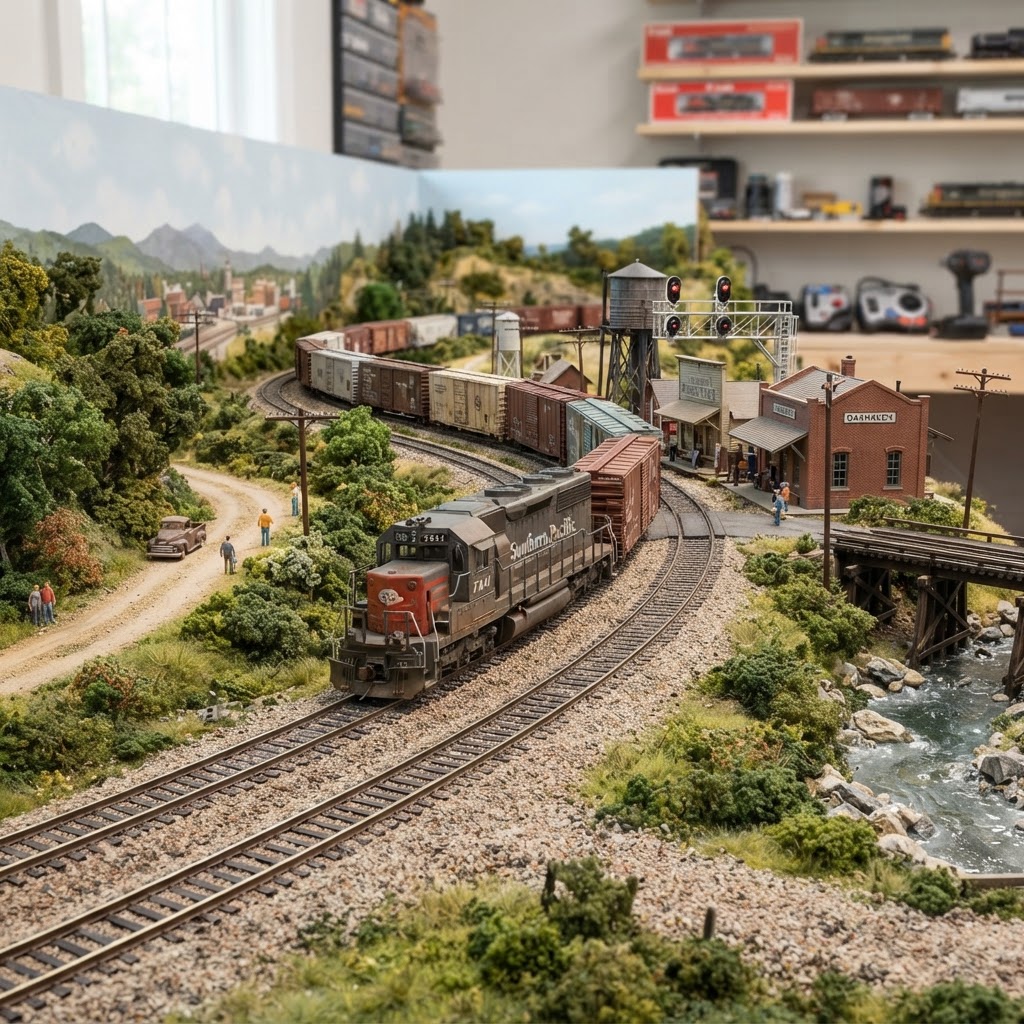
Stepping into the world of model railroading is one of the most rewarding hobby decisions you can make — but it can also feel overwhelming at first. With dozens of scales, brands, and starter kits on the market, new hobbyists often find themselves frozen by choice before they ever lay a single piece of track. One of the most common questions we hear from newcomers is: what is the best beginner train scale? It's the right question to start with, and the answer can shape everything from your budget to your available layout space.
Choosing the right scale isn't just about picking the most popular option — it's about matching a scale to your lifestyle, your goals, and the kind of experience you want to build over time. Some beginners want a compact layout that fits on a bookshelf. Others dream of sprawling basement empires with mountains, tunnels, and a dozen locomotives. The best beginner train scale for you depends on where you fall on that spectrum. In this guide, we'll break down the most popular scales, compare their pros and cons, and help you make a confident, informed choice so you can start your model railroad journey on the right track.
Understanding Model Train Scales: What Do They Mean?
Before diving into recommendations, it helps to understand what "scale" actually means in the model railroad world. Scale refers to the ratio between the size of the model and the real-life prototype it represents. For example, HO scale is 1:87, meaning the model is 87 times smaller than the actual train. N scale is 1:160, making it much smaller, while O scale is 1:48 — noticeably larger and more detailed.
Scale also determines track gauge, which is the distance between the rails. Different scales use different track standards, and accessories, scenery, and rolling stock are all designed to match specific scales. Mixing scales on the same layout isn't possible without significant modifications, so choosing the right one from the beginning matters more than many beginners realize.
Why Scale Choice Matters for Beginners
For new hobbyists, scale choice has practical consequences in three key areas:
- Space: Larger scales need more room to run effectively. Smaller scales can fit into tighter spaces but require more careful handling.
- Cost: Larger scales generally cost more per item, but smaller scales may require more precise tools and accessories that add up quickly.
- Availability: Some scales have a much wider selection of locomotives, rolling stock, and accessories than others — which affects how easily you can grow your layout over time.
The Most Popular Beginner Train Scales Compared
HO Scale (1:87) — The Most Recommended for Beginners
If there's one scale that consistently earns the title of best beginner train scale, it's HO. Running at a ratio of 1:87, HO scale strikes a near-perfect balance between size, cost, and availability. It's the most widely used scale in North America and much of the world, which means you'll find the largest selection of locomotives, freight cars, passenger cars, track systems, and scenery products at virtually every hobby price point.
HO scale locomotives are large enough to handle with ease, detailed enough to be visually impressive, and small enough to build a satisfying layout in a spare bedroom or garage. A basic oval track can fit on a 4×8-foot sheet of plywood — a standard beginner benchmark — with plenty of room for sidings, scenery, and structures.
For beginners exploring HO scale, we recommend checking out our guide to the 10 Best HO Scale Starter Sets for Beginners: Start Your Model Railroad Journey to see what's available at different price points. You'll also want to look at our Top 5 Model Railroad Brands for Beginners to understand which manufacturers offer the best quality and support for new hobbyists.
Pros of HO Scale:
- Widest selection of locomotives, cars, and accessories
- Strong community support and resources
- Compatible with both DC and DCC control systems
- Easy to find at hobby shops and online retailers
Cons of HO Scale:
- Not the smallest option if space is severely limited
- Mid-tier price range — not the cheapest per item
N Scale (1:160) — Best for Small Spaces
N scale is the second most popular scale in North America, and for good reason. At 1:160, N scale trains are small enough to build a complex, scenically rich layout in a fraction of the space required by HO. A layout that would need a 4×8 table in HO can often be accomplished in N scale on a 2×4 surface — making it ideal for apartment dwellers, hobbyists with limited room, or anyone who wants to model a longer, more realistic stretch of railroad with sweeping curves and multiple towns.
The tradeoff is handling difficulty. N scale locomotives and rolling stock are genuinely tiny, which can make maintenance and derailment troubleshooting more fiddly than in HO. First-time hobbyists with vision issues or less-than-steady hands may find this frustrating. That said, for beginners who are committed to the scale and have limited space, N scale is absolutely a viable starting point — just be prepared for a steeper mechanical learning curve.
Pros of N Scale:
- Excellent for small spaces and apartments
- Good variety of locomotives and accessories
- Allows for more realistic, longer route layouts in less space
Cons of N Scale:
- Small size makes handling and maintenance more challenging
- Less forgiving of track imperfections
O Scale (1:48) — Big, Bold, and Beautiful
O scale is the grandfather of modern model railroading in many ways. Running at 1:48, O scale trains are large, heavy, and impressively detailed. Brands like Lionel have made O scale (and the related O gauge) synonymous with classic American toy train culture, and there's a nostalgic warmth to running a large O scale locomotive that's hard to replicate with smaller scales.
For most beginners, however, O scale presents two significant challenges: space and cost. You need a large area to run O scale trains effectively, and individual locomotives and cars carry premium price tags compared to HO or N scale equivalents. If you're setting up a holiday display or want a rugged, impressive layout that you don't need to handle too delicately, O scale can be a fantastic choice. For younger enthusiasts, check out our roundup of the Best Model Train Sets for Kids, where O gauge trains often shine.
Pros of O Scale:
- Large, visually impressive, and easier to handle
- Great for holiday displays and family-friendly setups
- Durable and forgiving for younger operators
Cons of O Scale:
- Requires significantly more space
- Higher cost per locomotive and car
- Fewer realistic detail options compared to HO
G Scale (1:22.5) — Outdoor Railroading
G scale is the giant of the common model railroad scales, and it's primarily designed for outdoor garden railroads. If you have a backyard and a dream of watching trains wind through real landscaping and flower beds, G scale is worth a serious look. These trains are rugged, weather-resistant, and large enough to be visible from across a yard.
For most indoor beginners, G scale is overkill — the cost and space requirements are simply too high to be practical. But for hobbyists with outdoor space and a desire for a truly unique modeling experience, it's a remarkable option.
Choosing the Right Control System for Your Scale
Once you've chosen your scale, the next big decision is your control system. Traditional DC (analog) control is simpler and cheaper but limits you to one train per power district. DCC (Digital Command Control) allows multiple independently controlled locomotives on the same track and unlocks advanced features like sound effects and lighting control.
For beginners, many hobbyists start with DC and upgrade to DCC as their layout grows. If you're ready to dive into DCC from the start, our guide to the 10 Best DCC Control Systems For Model Train Beginners is an excellent resource. We also have a detailed comparison of Kato vs Bachmann DCC if you're weighing specific brands early on.
Don't overlook your power supply either — it's the backbone of any reliable layout. Our Best Power Supplies for Model Trains: A Complete Buying Guide covers everything you need to know about matching your power supply to your scale and control system.
Getting Started: Starter Sets vs. Building Your Own
One of the most practical decisions beginners face is whether to buy a complete starter set or assemble a layout piece by piece. Starter sets bundle a locomotive, a few cars, an oval of track, and a power supply into a single package — often at a significant discount compared to buying components separately. They're a low-commitment way to get rolling quickly and determine whether the hobby is right for you.
If you'd like to explore starter set options across different budgets and brands, our guides to the Best Model Train Kits For Beginners and 5 Best Beginner Model Train Kits To Start Your Hobby Today offer thorough, side-by-side comparisons.
For hobbyists who prefer to build their collections gradually with specific locomotives and rolling stock, our recommended products page is regularly updated with curated picks across all major scales and price ranges.
Common Beginner Mistakes to Avoid
Even with the right scale chosen, beginners can run into frustrating early problems. Here are a few pitfalls to sidestep:
- Buying incompatible track systems: Not all track from different brands is compatible, even within the same scale. Stick to one track system until you're comfortable mixing.
- Skipping track cleaning: Dirty track is the #1 cause of poor electrical connectivity and stalling locomotives. Clean your rails regularly.
- Ignoring minimum curve radius: Every locomotive has a minimum curve radius it can navigate. Buying large steam engines for tight curves leads to derailments.
- Overcomplicating the first layout: Start simple. A basic oval with a siding teaches you more than an ambitious layout that never gets finished.
If you run into locomotive power issues — and most beginners eventually do — our How to Troubleshoot Locomotive Power Issues guide walks through the most common causes and solutions step by step.
Frequently Asked Questions
What is the easiest train scale for beginners?
HO scale is widely considered the easiest train scale for beginners. Its mid-size makes handling straightforward, and the enormous variety of available products, tutorials, and community support makes it the most accessible starting point for new modelers.
Is N scale harder to work with than HO scale?
Yes, generally speaking. N scale trains and components are significantly smaller, which makes handling, maintenance, and troubleshooting more physically demanding. Beginners with limited space may find N scale worth the extra challenge, but HO is typically recommended as the starting point for most new hobbyists.
How much does it cost to start a model railroad?
A basic starter set in HO or N scale can be found for as little as $80–$150, which includes a locomotive, a few cars, an oval of track, and a power pack. A modest beginner layout with additional track, scenery, and structures typically runs between $300–$600. Costs grow as your layout expands.
Can kids participate in model railroading?
Absolutely. For younger children, O gauge trains from brands like Lionel are durable and easy to handle. For older kids and teenagers, HO scale offers a more detailed and engaging experience. Check out our guide to the Best Model Train Sets for Kids for age-appropriate recommendations.
Should I start with DC or DCC control?
If you're on a tight budget or just want to test the hobby, DC (analog) control is a perfectly fine starting point. If you plan to eventually run multiple locomotives and want sound features, starting with DCC will save you the hassle of upgrading later. Our DCC beginner's guide can help you decide.
Conclusion
Choosing the best beginner train scale is one of the most important first steps in your model railroading journey — and thankfully, it's not as complicated as it might initially seem. For the vast majority of beginners, HO scale offers the best combination of accessibility, variety, community support, and value. N scale is a strong alternative for space-constrained hobbyists, while O scale and G scale serve more specialized needs.
The most important thing is to start. Don't let decision paralysis keep you off the tracks. Pick a scale that fits your space and budget, grab a solid starter set, and begin learning by doing. The model railroad community is welcoming, knowledgeable, and eager to help newcomers find their footing.
Ready to take the next step? Explore our full library of beginner guides, dive into our recommended products page, or check out our article on Athearn Genesis vs Standard when you're ready to start thinking about upgrading your rolling stock. The hobby grows with you — and there's never been a better time to begin.
Affiliate Disclosure: Some links in this article are affiliate links. We may earn a commission at no extra cost to you.
Enjoying this guide?
Browse our favorite recommended products.
James Mitchell
Model Train Enthusiast & Writer
James has been building layouts and collecting trains for over 15 years. He started Model Train Insider to help newcomers navigate the hobby with practical, no-nonsense advice drawn from hands-on experience.
Stay on Track
Get beginner guides, brand reviews, and layout tips delivered to your inbox. No spam—just trains.
Free forever. Unsubscribe anytime.
Related Articles
10 Best Beginner Model Train Sets for Starting Your Hobby Today
Looking for the best beginner model train sets? Explore our expert-reviewed list to find the perfect starter kit to begin your model railroading journey.
Read more
The Best Starter Kits for N Scale Beginners: A Comprehensive Guide
Looking for the best starter kit for N scale? Explore our expert recommendations to help you kickstart your model railroad journey with confidence and ease.
Read more
5 Best Beginner Model Train Brands to Start Your Hobby Today
Looking to start your model railroad journey? Discover the top beginner-friendly train brands that offer high quality, reliability, and ease of use.
Read more