Bachmann vs Kato: The Ultimate Guide to N Scale Reliability
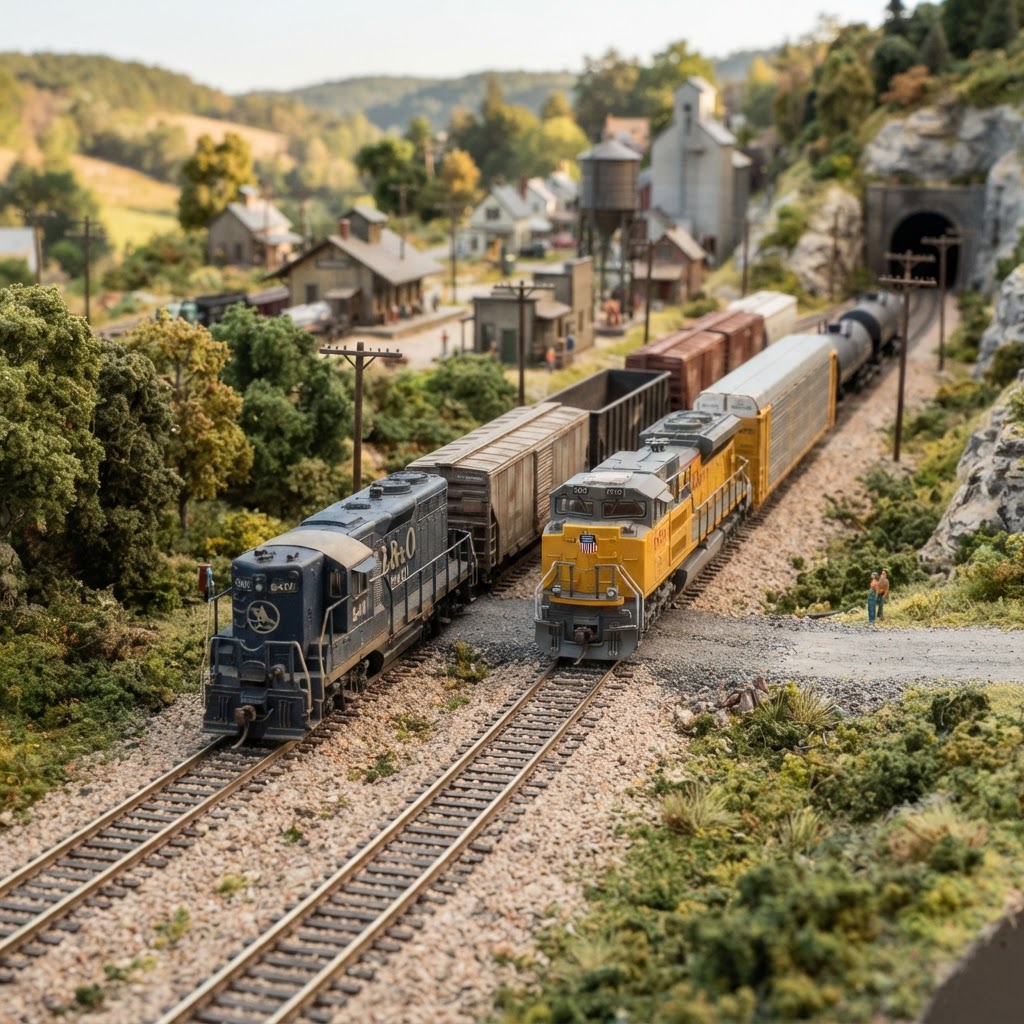
When hobbyists start researching bachmann vs kato n scale reliability, they quickly discover that this is one of the most debated topics in the model railroad community. Both manufacturers have been producing N scale locomotives and rolling stock for decades, and both have earned loyal followings — but for very different reasons. Whether you're a first-time buyer trying to make a smart investment or an experienced modeler looking to expand your roster, understanding how these two brands stack up against each other can save you time, money, and frustration.
N scale has grown into one of the most popular model train formats in the hobby, largely because it allows impressive layouts in compact spaces. As you build out your pike, locomotive reliability becomes a critical factor — a derailing engine or a motor that quits after a few hours of operation can bring an entire session to a halt. That's why so many modelers take the bachmann vs kato n scale reliability question so seriously. It's not just about aesthetics or prototype accuracy; it's about which locomotive will keep running smoothly session after session.
In this guide, we'll break down both brands across several key reliability factors: build quality, motor performance, DCC compatibility, long-term durability, and value for money. By the end, you'll have a clear picture of which brand fits your needs — and why that answer might be different depending on your experience level, budget, and modeling goals.
A Brief History of Both Brands
Bachmann: America's Entry-Level Champion
Bachmann Industries has been a fixture in the model railroad world since the 1940s, and in N scale, they've long been positioned as an approachable, budget-friendly option. Their Spectrum line brought improved quality in the 1990s, and today their E-Z Track system makes them especially popular with beginners. Bachmann is an American company that manufactures most of its products in China, and they sell locomotives, rolling stock, and complete train sets across multiple scales.
If you're just getting into the hobby and looking for an affordable way to start, Bachmann is a name you'll encounter constantly. For a broader introduction to beginner-friendly options, check out our guide to the Top 5 Model Railroad Brands for Beginners: A Guide to Getting Started.
Kato: Japan's Precision Engineering Powerhouse
Kato Precision Railroad Models was founded in Japan in 1957 and has built a global reputation for tight tolerances, smooth operation, and exceptional reliability. Their N scale locomotives are manufactured in Japan (with some production in the U.S. for domestic prototypes), and the brand is consistently praised by experienced modelers for producing some of the best-running locomotives in the hobby.
Kato tends to be priced higher than Bachmann, but their products are widely regarded as worth the investment — particularly for modelers who prioritize smooth, consistent performance over everything else.
Build Quality and Materials
Bachmann Build Quality
Bachmann's build quality has improved considerably over the years, but it remains inconsistent across their product lines. Their entry-level locomotives — particularly those included in train sets — are made largely from plastic with simpler mechanisms that can wear quickly under heavy use. The Spectrum and Bachmann Plus lines offer noticeably better construction, with more metal components and finer detail work.
That said, hobbyists frequently report quality control issues with Bachmann N scale products, including:
- Trucks that don't seat properly on the rails
- Couplers that fail or require replacement (many modelers swap to Micro-Trains couplers)
- Paint and lettering inconsistencies between units
For beginners who are still figuring out the hobby, these quirks can be discouraging but are usually fixable with some minor adjustments.
Kato Build Quality
Kato's build quality is a step above in almost every category. Their locomotives feature:
- Die-cast metal chassis for weight and stability
- Precision-machined flywheels for smooth momentum
- Low-profile wheels that adhere to NMRA standards
- Factory-installed directional lighting on most models
The fit and finish on Kato models is consistently tight, with minimal flash or misaligned parts. Couplers work reliably out of the box, and trucks track cleanly even on tighter radius curves. For modelers who invest significant time in building detailed layouts, Kato's precision is a major advantage.
Motor and Drivetrain Performance
This is where the reliability gap between the two brands becomes most apparent.
Bachmann Motors
Bachmann uses a variety of motors across their locomotive lineup, and performance varies widely depending on the specific model. Older Bachmann N scale models used open-frame motors that were prone to overheating and inconsistent performance at slow speeds. More recent releases have incorporated better enclosed motors, but many hobbyists still report:
- Poor slow-speed control, especially on DC
- Uneven running that can trigger derailments on grades
- Noisy operation compared to Japanese-manufactured alternatives
The Spectrum locomotives are a significant improvement over standard Bachmann units, offering smoother operation and better low-speed performance. If you're troubleshooting a Bachmann locomotive that isn't performing well, our guide on How to Troubleshoot Locomotive Power Issues walks you through the most common fixes.
Kato Motors
Kato's motors are widely regarded as some of the best in the N scale market. Their can motors paired with flywheel-equipped drivetrains produce:
- Whisper-quiet operation even at low speeds
- Exceptional slow-speed control ideal for switching operations
- Consistent performance across long operating sessions
- Excellent pulling power relative to locomotive size
For DCC users, Kato's smooth drivetrain makes decoder installation more rewarding because the motor responds precisely to throttle inputs. If you're interested in comparing DCC compatibility between both brands in greater depth, we have a dedicated article on Kato vs Bachmann DCC: Which Control System Is Right For Your Layout?.
DCC Compatibility
Bachmann and DCC
Bachmann deserves credit here: they were early adopters of DCC-ready designs, and many of their locomotives include an onboard DCC socket that makes decoder installation relatively straightforward. Their DCC On Board series comes with decoders pre-installed, which is great news for beginners who want to skip the installation step entirely.
However, the quality of Bachmann's factory-installed decoders has received mixed reviews. Some run well; others exhibit address response lag or inconsistent motor control. For modelers building a more sophisticated DCC layout, upgrading the decoder is often recommended. For guidance on choosing the right DCC system, see our roundup of the 10 Best DCC Control Systems For Model Train Beginners: A 2024 Guide.
Kato and DCC
Kato has historically been slower to embrace DCC, and some modelers find their approach frustrating. Many Kato N scale locomotives require a drop-in decoder board rather than a conventional socket installation, which can be more complex for beginners. However, Kato now offers DCC-friendly versions of many popular models, and third-party decoder manufacturers produce boards specifically designed for Kato mechanisms.
Once properly decoded, Kato locomotives are exceptional DCC performers thanks to their smooth motors. The extra effort involved in decoder installation is usually well worth it for experienced hobbyists.
Long-Term Durability and Reliability
What Hobbyists Say About Bachmann
Community forums and hobby shop feedback paint a consistent picture: Bachmann locomotives are adequate for casual use, but they don't always hold up well under heavy, continuous operation. Gears can strip, motors can burn out, and plastic components can warp or break over time. That said, Bachmann offers a lifetime warranty on most products, which provides some peace of mind — though the warranty claim process can be time-consuming.
For modelers who run their layouts occasionally and aren't pushing locomotives hard, Bachmann can provide years of satisfactory service, especially with basic maintenance.
What Hobbyists Say About Kato
Kato locomotives have a reputation for running reliably for decades with proper care. Their sealed mechanisms are less susceptible to dust contamination, and their precision gearing shows minimal wear over time. Many experienced modelers report running Kato units regularly for 10, 15, or even 20 years with nothing more than periodic lubrication.
This long-term durability is a significant part of the brand's value proposition. While you'll spend more upfront, you're less likely to face costly repairs or replacements down the road.
Value for Money
Bachmann Pricing
Bachmann N scale locomotives typically range from $35 to $130 depending on the model and level of detail. Complete train sets with track and power supply are available for under $100, making them an attractive entry point for new hobbyists. For those just starting out, our guide to the Best Model Train Kits For Beginners includes several Bachmann options worth considering.
The value calculation for Bachmann depends heavily on your goals. If you want to get running quickly at minimal cost, they deliver solid bang for the buck. If you expect years of reliable, smooth operation, the initial savings may be offset by replacement costs.
Kato Pricing
Kato N scale locomotives typically range from $80 to $200+ for standard releases. Limited-edition and specialty models can command even higher prices. For budget-conscious hobbyists, this is a real barrier — but many experienced modelers consider Kato locomotives a long-term investment rather than a purchase with a short shelf life.
If you're weighing whether to invest in higher-quality equipment from the start, it may also be helpful to read our comparison of Athearn Genesis vs Standard: Is the Premium Upgrade Worth Your Investment?, which explores similar trade-offs in a different brand context.
Which Brand Is Right for You?
The honest answer is: it depends on where you are in the hobby.
- Beginners and casual hobbyists will find Bachmann more accessible, affordable, and forgiving. If you're still exploring whether N scale is right for you, there's no reason to commit to Kato-level pricing right away. Our guide to What Is the Best Beginner Train Scale? can help you sort out the bigger picture before committing to either brand.
- Intermediate and advanced modelers who run their layouts frequently, operate DCC, or want to build a high-quality roster will almost always be better served by Kato. The performance difference is noticeable, and the durability advantage compounds over time.
- Mixed approaches are also common. Many hobbyists use Bachmann rolling stock (freight cars, passenger cars) alongside Kato locomotives — getting the budget-friendly cars behind premium motive power. This is a practical strategy that many experienced modelers recommend.
For a broader comparison of scale options before making your final decision, our HO Scale vs N Scale: A Comprehensive Guide is a great resource.
You can also browse our recommended products page for curated picks from both brands across different budget levels.
Frequently Asked Questions
Is Kato N scale worth the extra money over Bachmann?
For most experienced modelers, yes. Kato locomotives consistently outperform Bachmann in terms of smooth operation, slow-speed control, quiet running, and long-term durability. If you plan to run your layout regularly and want locomotives that hold their value and performance over many years, Kato is worth the investment. Beginners may want to start with Bachmann and upgrade to Kato as their layouts mature.
Do Bachmann N scale trains work on Kato track?
Yes. Both brands conform to NMRA N scale standards, so Bachmann locomotives and rolling stock will operate on Kato Unitrack and vice versa. Keep in mind that Bachmann's wheels can occasionally be slightly out of gauge on older models, which may cause issues on any track system. Always check wheel gauge if you're experiencing persistent derailments.
Which brand is better for DCC beginners?
Bachmann has the edge for absolute DCC beginners because many models come with decoders pre-installed and ready to run. Kato requires more hands-on decoder installation in most cases. However, once installed, Kato's smooth motor makes for a better DCC experience overall. For more detail, see our article on Kato vs Bachmann DCC.
How long do Bachmann N scale locomotives last?
With proper care and maintenance, Bachmann locomotives can run reliably for several years. However, their motors and gearing are generally not as robust as Kato's, and heavy use can lead to premature wear. Lubricating moving parts regularly and avoiding extended high-speed runs will extend their service life considerably.
Can I mix Bachmann and Kato rolling stock on the same layout?
Absolutely. Mixing brands is extremely common in the hobby. Many modelers run Kato locomotives with Bachmann freight cars or passenger sets without any issues. The most important thing is to ensure wheel gauge and coupler height are consistent across your equipment. Micro-Trains couplers are a popular aftermarket upgrade that helps standardize coupling across mixed fleets.
Conclusion
When it comes to bachmann vs kato n scale reliability, there's no single winner that's right for every hobbyist. Bachmann offers accessibility, affordability, and a low barrier to entry that makes them a practical choice for beginners and casual runners. Kato delivers premium performance, exceptional durability, and smooth operation that serious modelers are willing to pay for.
The smartest approach is to match your choice to your current stage in the hobby. Start with what fits your budget and experience level — then upgrade as your layout and ambitions grow. And remember, the two brands aren't mutually exclusive. Plenty of successful layouts feature equipment from both.
Ready to keep learning? Explore our guides on 5 Best Beginner Model Train Kits and the Top 5 Model Railroad Brands for Beginners to continue building your knowledge — and your roster.
Affiliate Disclosure: Some links in this article are affiliate links. We may earn a commission at no extra cost to you.
Enjoying this guide?
Browse our favorite recommended products.
James Mitchell
Model Train Enthusiast & Writer
James has been building layouts and collecting trains for over 15 years. He started Model Train Insider to help newcomers navigate the hobby with practical, no-nonsense advice drawn from hands-on experience.
Stay on Track
Get beginner guides, brand reviews, and layout tips delivered to your inbox. No spam—just trains.
Free forever. Unsubscribe anytime.
Related Articles
MTH vs Lionel: Comparing Sound Fidelity and DCC Control Features
Struggling to choose between MTH and Lionel? We break down the key differences in sound realism and DCC control systems to help you build your perfect layout.
Read more
Athearn Genesis vs Standard: Is the Premium Upgrade Worth Your Investment?
Deciding between Athearn Genesis and Standard series? We break down the key differences in detail, build quality, and performance to help you choose.
Read more
Lionel vs MTH: Choosing The Perfect O Gauge Brand For Your Collection
Deciding between Lionel vs MTH for O gauge? We compare features, compatibility, and value to help you choose the best brand for your model railroad layout.
Read more