10 Best Model Train Tools Every Beginner Needs for Their Layout
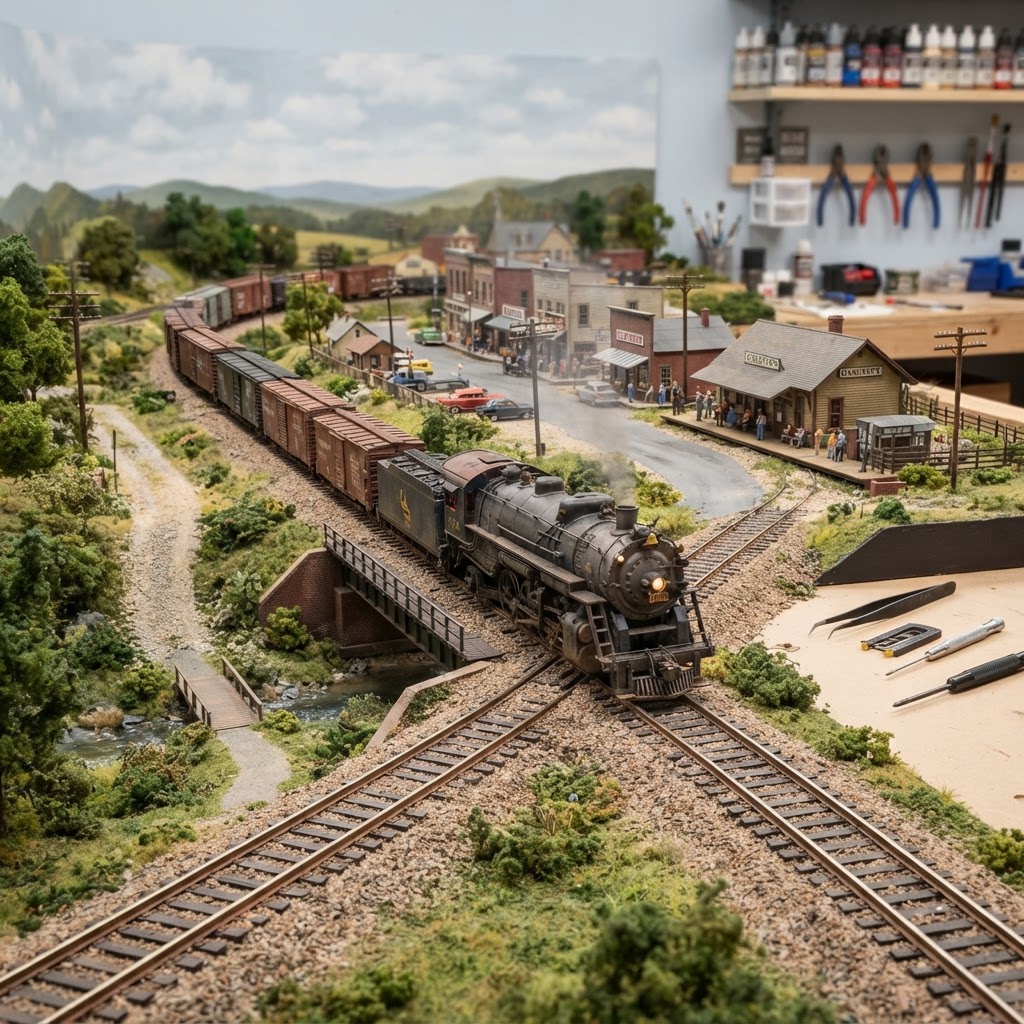
Whether you're just getting started with your first layout or you've been running trains for years, having the right equipment on your workbench makes all the difference. The best model train tools aren't necessarily the most expensive ones — they're the ones that help you work accurately, efficiently, and safely as you bring your miniature world to life. From cutting and shaping scenery to wiring your track and detailing your rolling stock, every task in this hobby benefits from purpose-built tools that are up to the job.
If you've recently picked up one of the 10 Best Beginner Model Train Sets for Starting Your Hobby Today, you may already be wondering what comes next. A starter set gets you running, but building a real layout — complete with scenery, structures, reliable trackwork, and smooth operation — requires a dedicated toolkit. Investing in quality tools early on saves you time, frustration, and money in the long run.
In this guide, we've rounded up 10 essential tools that belong on every model railroader's workbench. Whether you're modeling in HO, N, O, or any other scale, these picks will serve you well from your very first baseboard to your most ambitious future projects. Let's dig in.
1. Track Cutters (Rail Nippers)
Few tools see more use on a model railroad workbench than a good pair of rail nippers. These flush-cutting pliers are designed specifically to snip through metal rail cleanly, without crushing or deforming the cut end.
Why You Need Them
Standard wire cutters leave a jagged, pinched cut that can derail locomotives and damage wheel flanges. Rail nippers, by contrast, produce a clean, square cut that requires minimal filing before laying. If you're working from a track plan that requires custom-length rails or curved sections, you'll reach for these constantly.
Pro tip: After cutting, use a small flat file to smooth the rail ends before joining sections. Even a clean nipper cut benefits from a light pass with a file.
2. Needle Files
A set of quality needle files is one of the most versatile additions to your toolkit. These small, fine-toothed files come in a variety of profiles — flat, round, half-round, triangular, and more — and they're indispensable for smoothing rail cuts, cleaning up plastic parts, and fitting structures together.
Best Uses for Needle Files
- Deburring freshly cut rail ends
- Cleaning mold lines from plastic locomotive and rolling stock bodies
- Fitting scratch-built or kit-built structure components
- Opening up windows or doors on resin or plastic building kits
A good set of needle files costs very little but will last for years with proper care. Store them in a roll or case to protect the cutting surfaces.
3. A Quality Soldering Iron
Electrical reliability is the backbone of any model railroad layout. Loose connections, poor feeders, and oxidized joints cause the intermittent power problems that frustrate hobbyists at every experience level. A quality temperature-controlled soldering iron is one of the best model train tools you can own for ensuring clean, dependable electrical connections throughout your layout.
What to Look For
- Temperature control: A station with adjustable temperature (typically 600–750°F for track work) prevents overheating delicate components.
- Fine tip: A pencil-tip or chisel-tip iron in the 25–40 watt range is ideal for track feeders and small wiring work.
- Good solder: Use rosin-core solder (60/40 or 63/37) designed for electronics — never plumbing solder.
If you're new to soldering track feeders, our detailed walkthrough at How to Solder Track Feeders: A Step-by-Step Guide for Beginners will take you through the entire process step by step.
4. Digital Calipers
Precision matters enormously in a scale hobby. Digital calipers allow you to measure track gauge, check wheel back-to-back spacing, verify clearances for structures and bridges, and confirm that parts fit correctly before glue or paint is applied.
Why Digital Over Analog?
Digital calipers offer instant, easy-to-read measurements in both imperial and metric units. For hobbyists who work across multiple scales — perhaps running HO on the main layout while experimenting with N scale on a portable module — switching between measurement systems is effortless.
A mid-range 6-inch digital caliper is more than sufficient for most model railroad tasks and can be found at most hobby or hardware stores for a reasonable price.
5. A Hobby Knife Set
The humble hobby knife — most commonly associated with the X-Acto brand — is perhaps the single most-used tool in any model railroader's collection. From trimming plastic kits to cutting masking tape for painting, scribing wood textures to scoring foam for scenery, a sharp hobby knife with a fresh blade handles an enormous range of tasks.
Blade Selection
- #11 blade: The standard pointed blade for fine cutting and trimming
- #17 blade: A chisel-tip blade useful for scraping and cleaning flash from castings
- #22 blade: A curved blade ideal for cutting heavier materials like cardstock or balsa
Always work with a sharp blade — a dull blade requires more pressure and dramatically increases the risk of slipping and injury. Keep a supply of replacement blades on hand and change them often.
6. Pin Vise and Micro Drill Bits
When it comes to drilling fine holes in plastic, resin, or wood — for installing grab irons, adding handrails, running wire through structures, or mounting lighting — a pin vise is far superior to a power drill. The pin vise gives you complete manual control, preventing the cracking or blowout that a power tool can cause in thin, delicate materials.
Recommended Drill Bit Sizes
For most model railroad detail work, you'll want drill bits ranging from 0.3mm up to about 2.0mm. Bits in this range are fragile, so always drill slowly with light pressure and keep spares on hand — they break easily, especially the smallest sizes.
A pin vise is an inexpensive tool that pays dividends in the quality and realism of your finished models. Check our recommended products page for trusted sources on quality pin vise sets.
7. Tweezers (Multiple Types)
If you've ever tried to place a tiny figure, a grab iron, or a small detail part with your fingers alone, you already know the value of a good pair of tweezers. Fine-point tweezers give you control over parts that are simply too small for the human hand to position accurately.
Types Worth Having
- Straight fine-point: General-purpose placement of small parts
- Angled/curved: Reaching into tight spaces on assembled models
- Self-closing (reverse action): Holds parts without constant hand pressure, useful when applying glue to small components
Look for stainless steel tweezers with a good spring tension. Cheap tweezers that don't close evenly are more trouble than they're worth.
8. Foam Cutter or Hot Wire Cutter
Scenery construction is one of the most creatively rewarding parts of the hobby, and expanded polystyrene foam (EPS) is one of the most popular materials for building terrain. A hot wire foam cutter allows you to slice cleanly through foam insulation board without the crumbling mess that a regular knife or saw creates.
Applications in Layout Building
- Shaping hillsides, mountain profiles, and valleys
- Cutting cliff faces and rock formations
- Creating smooth, precise foam risers for elevated track sections
Hot wire cutters range from simple bow-style tools to more sophisticated table-mounted units with adjustable temperature. For most hobby layouts, a handheld or simple bow cutter is entirely adequate. If you're planning a complex HO layout, browsing some HO scale track plans first will help you understand how much terrain-shaping work your project will require.
9. A Good Magnification Source
Model railroading increasingly demands fine detail work — whether you're painting tiny figures, installing micro LEDs, reading part numbers on small castings, or wiring decoders into tight locomotive shells. Good magnification makes these tasks safer, more accurate, and far less frustrating.
Options to Consider
- Magnifying headband loupe: Hands-free magnification ideal for detail painting and wiring
- Illuminated magnifier lamp: Combines magnification with directed task lighting — excellent for workbench use
- Clip-on magnifier: Attaches to standard eyeglasses for occasional use
If you're running DCC-equipped locomotives and installing or programming decoders, a magnifier lamp is practically essential. Decoder wiring can be extraordinarily fine, and proper lighting alongside magnification prevents mistakes that can damage expensive equipment.
10. A Dedicated Workbench Mat
It might not be the most glamorous item on this list, but a quality self-healing cutting mat is genuinely one of the best model train tools you can add to your workspace. These mats protect your work surface, provide a non-slip base for cutting and assembly, and their printed grid lines help you keep structures square and track sections aligned.
Features to Look For
- Self-healing surface that closes after knife cuts
- Printed grid and measurement markings
- Non-slip backing
- At least 12"x18" in size — larger is generally better
Pair your cutting mat with a metal ruler (never cut against a plastic ruler) and your hobby knife set, and you have a core cutting station that handles nearly every layout construction task cleanly and safely.
Frequently Asked Questions
What are the most important tools for a beginner model railroader?
For beginners, the highest-priority tools are a hobby knife set, rail nippers, needle files, and a basic soldering iron. These four items cover the most common tasks you'll face when setting up your first layout. If you haven't chosen your first set yet, take a look at our guide to the Best Model Train Starter Sets of 2024 before investing in tools.
Do I really need a soldering iron for model railroading?
While it's technically possible to build a simple loop layout without soldering, any layout with a moderate level of complexity will benefit enormously from soldered track feeders and wiring connections. Solder joints are far more reliable than mechanical connections and prevent the intermittent power issues that cause derailments and stalling.
What scale should I consider when choosing tools?
Most of the tools on this list work across all scales, but precision tools like digital calipers and drill bit sizes become more critical as you move to smaller scales like N or Z. If you're working in N scale, visit our N scale beginner guide for scale-specific advice.
Where can I buy quality model railroad tools?
Quality hobby tools are available from dedicated hobby shops, major online retailers, and specialty model railroad suppliers. Our recommended products page lists trusted sources for the tools mentioned in this guide.
How much should I expect to spend on a basic tool kit?
A functional beginner toolkit covering the essentials — hobby knife, rail nippers, needle files, tweezers, and a basic cutting mat — can be assembled for $50–$100. A temperature-controlled soldering station adds another $40–$80, and digital calipers run $15–$30. You don't need to buy everything at once; build your toolkit gradually as your layout grows.
Conclusion
Building a model railroad is a deeply rewarding long-term hobby, and the right tools make every step of the process more enjoyable and more successful. From the precision of digital calipers to the satisfying cleanness of a fresh blade on a self-healing mat, each tool on this list earns its place on your workbench. Start with the essentials and add to your collection as your skills and ambitions grow.
Ready to keep learning? Explore our full library of beginner guides, including our overview of the 5 Best Beginner Model Train Brands and our in-depth look at the best model train brands for serious collectors. Whatever scale you model and whatever era you love, Model Train Insider has the guides to help you build with confidence.
Affiliate Disclosure: Some links in this article are affiliate links. We may earn a commission at no extra cost to you.
Enjoying this guide?
Browse our favorite recommended products.
James Mitchell
Model Train Enthusiast & Writer
James has been building layouts and collecting trains for over 15 years. He started Model Train Insider to help newcomers navigate the hobby with practical, no-nonsense advice drawn from hands-on experience.
Stay on Track
Get beginner guides, brand reviews, and layout tips delivered to your inbox. No spam—just trains.
Free forever. Unsubscribe anytime.
Related Articles
10 Best Beginner Model Train Sets for Starting Your Hobby Today
Looking for the best beginner model train sets? Explore our expert-reviewed list to find the perfect starter kit to begin your model railroading journey.
Read more
The Best Starter Kits for N Scale Beginners: A Comprehensive Guide
Looking for the best starter kit for N scale? Explore our expert recommendations to help you kickstart your model railroad journey with confidence and ease.
Read more
5 Best Beginner Model Train Brands to Start Your Hobby Today
Looking to start your model railroad journey? Discover the top beginner-friendly train brands that offer high quality, reliability, and ease of use.
Read more