The Best DCC Decoders for Locomotive Upgrades: A Comprehensive Guide
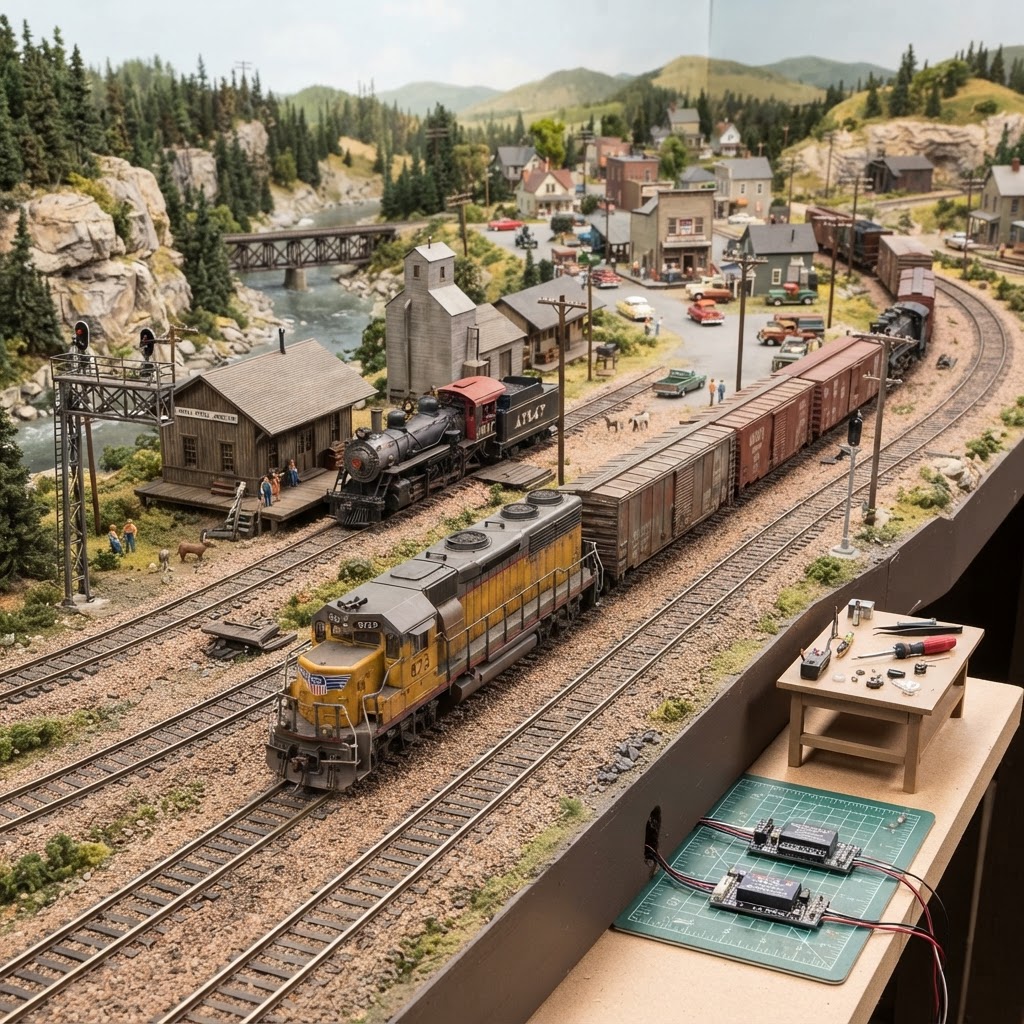
Upgrading your locomotives with Digital Command Control technology is one of the most rewarding investments you can make in the hobby. Whether you're a seasoned modeler or just moving beyond basic DC operation, finding the best DCC decoders for locomotive upgrades can transform the way you run your layout — giving you precise speed control, realistic sound, and the ability to operate multiple trains independently on the same track. The market offers dozens of options across every price range, and knowing which decoder fits your needs can save you both money and frustration.
Choosing the right decoder isn't simply about picking the most expensive option or the most popular brand. It comes down to your locomotive's scale, the board space available inside the shell, the features you actually need, and your comfort level with installation. A beginner retrofitting an HO steam locomotive has very different requirements than an experienced modeler adding sound to a brass N scale diesel. This guide is designed to walk you through everything you need to know — from understanding decoder specs to the top picks available today.
In this article, we'll break down the leading DCC decoders across several categories, explain the features that matter most, and give you practical installation tips to get the best performance out of your investment. If you're also in the market for a compatible command station, be sure to check out our DCC Controller Review: Top 5 Picks for Precision Control and Best Value to ensure your entire system works in harmony.
What Is a DCC Decoder and Why Does It Matter?
A DCC decoder is a small electronic circuit board installed inside a locomotive that receives digital signals from your command station and translates them into specific actions — acceleration, deceleration, lighting effects, and sound. Without a decoder, your locomotive operates on analog DC power, meaning every engine on the same track moves at the same speed simultaneously. DCC changes everything by assigning a unique address to each locomotive, giving you individual control over every engine on your layout.
Modern decoders have become remarkably sophisticated. High-end sound decoders include recorded audio from real prototype locomotives, dynamic braking sounds, crew chatter, and ambient environmental effects. Motor control decoders use Back-EMF (Back Electromotive Force) technology to maintain consistent speed on grades. Lighting decoders can simulate ditch lights, Mars lights, and cab interiors with programmable flash rates.
Key Decoder Specifications to Understand
Before diving into specific products, here are the specs you should evaluate when shopping:
- Current Rating (Amps): Must match or exceed your motor's draw. HO locomotives typically need 1–1.5A; larger scales may require more.
- Form Factor: Drop-in boards fit specific locomotive models without wiring. Plug-in decoders use NMRA standard connectors (8-pin, 21-pin, Next18). Hard-wire decoders require soldering.
- Motor Protocol Support: Look for support for DCC, and optionally DC compatibility for layouts not fully converted.
- Back-EMF: Essential for smooth, consistent slow-speed operation.
- Function Outputs: More outputs mean more lighting and accessory control options.
- Sound: Sound decoders include an onboard speaker and audio samples; non-sound decoders focus purely on motor and lighting control.
Best DCC Decoders by Category
Best Overall: Digitrax DZ126T (N Scale Drop-In)
For N scale modelers, the Digitrax DZ126T consistently earns top marks as a versatile, reliable drop-in decoder. It features a 1.0A continuous motor rating, Back-EMF for smooth slow-speed control, and two function outputs for lighting. Its compact size makes it an excellent fit for the tight confines of N scale locomotives, and Digitrax's reputation for quality and customer support is hard to beat.
Digitrax decoders integrate seamlessly with their own Zephyr and Super Chief command stations, but they're fully NMRA-compliant and work with any DCC system. If you're running N scale and want a straightforward, no-fuss upgrade, the DZ126T is hard to beat. For more N scale inspiration, see our guide to the Top 10 Best N Scale Locomotives for Compact Layouts in 2024.
Best Sound Decoder: SoundTraxx Tsunami2
The SoundTraxx Tsunami2 line is widely regarded as the gold standard for DCC sound decoders, particularly among HO and O scale steam enthusiasts. Tsunami2 decoders feature exceptionally realistic audio recordings, a powerful onboard amplifier, and extensive CV (Configuration Variable) programming options that let you fine-tune every aspect of the sound profile.
What sets Tsunami2 apart is its Dynamic Digital Exhaust™ technology, which synchronizes steam chuff sounds to actual wheel rotation rather than using a fixed timer. The result is a locomotive that sounds genuinely alive. Tsunami2 also offers robust Back-EMF motor control and supports up to eight function outputs, giving you plenty of room for lights, smoke units, and other accessories.
The downside is complexity — the sheer number of programmable CVs can be overwhelming for beginners. But for experienced modelers who want the best sound reproduction available, Tsunami2 is worth every penny.
Best Budget Option: TCS (Train Control Systems) T1
If you're upgrading a fleet of locomotives and need to keep costs down without sacrificing quality, the TCS T1 is an exceptional value. TCS has built a loyal following by delivering reliable, well-engineered decoders at very competitive prices. The T1 features a 1.5A motor rating, Back-EMF, and two function outputs in a compact hard-wire package.
TCS decoders are particularly praised for their out-of-the-box performance. Many modelers find they need minimal CV adjustments to get smooth, realistic operation right away. TCS also offers excellent customer service and detailed installation guides, making them a great choice for hobbyists newer to decoder installation.
Best for Large Scale / O Scale: QSI Quantum
For O scale and large-scale modelers — especially those running MTH or Lionel equipment — the QSI Quantum decoder system offers the power handling and feature set required by bigger locomotives. QSI decoders support higher current ratings necessary for larger motors, include high-quality sound, and often come factory-installed in premium locomotives.
QSI's proprietary programming interface gives you deep control over sound levels, motor behavior, and lighting effects. If you're running a large layout with scale-appropriate trains, QSI is one of the few decoder families built specifically to handle the demands.
Best Drop-In for HO: Digitrax SDH166D
For HO modelers who want sound without the hassle of hard-wiring, the Digitrax SDH166D is a superb drop-in option for a wide range of HO diesel and steam locomotives. It features 1.5A motor control, Digitrax's excellent Back-EMF implementation, and high-quality steam or diesel sound files pre-loaded.
The SDH166D uses an integrated speaker connection and includes a compact speaker that fits neatly into many locomotive shells. Installation in compatible models can take as little as fifteen minutes, making it an ideal weekend project. Check our list of top model railroad accessories for speaker baffles and enclosures that improve sound quality significantly.
Best for Advanced Programmers: ESU LokSound 5
The ESU LokSound 5 is arguably the most feature-rich decoder on the consumer market and a favorite among serious modelers who want total control. Available in multiple form factors — including the micro version for tight spaces — LokSound 5 supports DCC, DC, Märklin AC, and Selectrix protocols, making it one of the most versatile decoders available.
Sound quality is stunning, and ESU provides a free sound project editor called LokProgrammer that allows you to download new sound files, create custom CV configurations, and update decoder firmware. The LokSound 5 also features 8 function outputs, adjustable motor frequency, and RailCom® support for advanced feedback operations.
The LokSound 5 is not cheap, but for modelers who treat their hobby as a serious craft, it represents the pinnacle of what a decoder can do.
Practical Installation Tips
Plan Before You Open the Shell
Before purchasing a decoder, research your specific locomotive model online. Many manufacturers publish decoder guides, and hobbyist forums often have detailed threads on exactly which decoder fits which model. Knowing whether your locomotive has an NMRA plug or requires hard-wiring will save you significant frustration.
Use the Right Tools
A quality soldering iron with a fine tip, flux, helping hands, and good lighting are essential for any hard-wire decoder installation. Our guide to the 10 Best Model Train Maintenance Tools Every Enthusiast Needs covers everything you'll want in your workbench toolkit. You can also browse our recommended products page for curated tool suggestions.
Test Before Reassembly
After installing a decoder, always test the locomotive on a programming track before closing the shell. Program the address first, then verify motor direction, lighting function outputs, and — if applicable — sound levels. Reassembling a shell only to discover a wiring error means doing the whole job twice.
Keep Your Track Clean
Even the best decoder can't compensate for dirty track. Poor electrical contact causes stuttering, stalling, and erratic behavior that no amount of CV tuning will fix. Make track cleanliness a regular part of your maintenance routine — our Ultimate Guide to Cleaning Track Rails is an excellent resource.
Matching Decoders to Your Scale
Scale matters enormously when choosing a decoder. N scale requires physically tiny boards with appropriate current ratings; HO offers the widest selection; O and G scale need higher-power units. If you're still exploring which scale is right for your layout, our Choosing a Model Train Scale: The Ultimate Guide for Beginners will help you make that foundational decision before investing in decoder upgrades.
For modelers who own Athearn equipment, it's also worth understanding the differences between locomotive tiers — read our Athearn Genesis vs Standard comparison to see how decoder-ready features vary between their product lines.
Frequently Asked Questions
Do I need a special command station to use these decoders?
No — all NMRA-compliant DCC decoders work with any NMRA-compliant DCC command station. However, some advanced features (like RailCom feedback) require a compatible system to function. Always verify compatibility between your decoder and command station for full feature access.
Can I install a DCC decoder in an analog DC locomotive?
Yes, as long as the locomotive has a working motor and adequate interior space. Most modern locomotives either include an NMRA socket for plug-in decoders or can be hard-wired with some soldering skill. Older brass and vintage locomotives may require more customization.
What's the difference between a motor decoder and a sound decoder?
A motor decoder controls only the locomotive's speed, direction, and lighting. A sound decoder includes all of that functionality plus an onboard digital sound system with recorded prototype audio, requiring a speaker installed in the locomotive. Sound decoders cost more but dramatically enhance the realism of operation.
How do I know which decoder fits my locomotive?
Check the manufacturer's website, the decoder brand's compatibility chart, or community forums like the Model Railroad Hobbyist forum or Reddit's r/modeltrains. Most decoder manufacturers publish cross-reference guides organized by locomotive brand and model number.
Is it worth upgrading a budget locomotive with an expensive decoder?
It depends on your goals. A high-quality sound decoder in a budget locomotive will dramatically improve the audio and operational experience, but the underlying mechanism quality remains the same. If you're committed to a particular locomotive for sentimental or prototype reasons, upgrading the decoder is absolutely worthwhile. For a general layout fleet, matching decoder quality to locomotive quality makes the most financial sense.
Conclusion
Choosing from the best DCC decoders for locomotive upgrades ultimately comes down to your scale, your budget, and the level of realism you want to achieve. From the budget-friendly TCS T1 to the feature-packed ESU LokSound 5, there's a decoder for every modeler and every locomotive. Take the time to research compatibility, invest in proper installation tools, and don't overlook the importance of clean track and good electrical contact as the foundation of smooth DCC performance.
The hobby of model railroading rewards patience, research, and hands-on experimentation — and upgrading your fleet to DCC is one of the most satisfying milestones you can reach. We encourage you to explore more of our guides here at Model Train Insider to keep building your knowledge and your layout with confidence.
Affiliate Disclosure: Some links in this article are affiliate links. We may earn a commission at no extra cost to you.
Enjoying this guide?
Browse our favorite recommended products.
James Mitchell
Model Train Enthusiast & Writer
James has been building layouts and collecting trains for over 15 years. He started Model Train Insider to help newcomers navigate the hobby with practical, no-nonsense advice drawn from hands-on experience.
Stay on Track
Get beginner guides, brand reviews, and layout tips delivered to your inbox. No spam—just trains.
Free forever. Unsubscribe anytime.
Related Articles
DCC Controller Review: Top 5 Picks for Precision Control and Best Value
Looking for the right DCC controller? Our comprehensive review breaks down the best value units for model train hobbyists seeking precision and easy operation.
Read more
How to Clean Track Rails Effectively: The Ultimate Guide for Smooth Running Trains
Learn how to clean track rails effectively to ensure your model trains run smoothly. Discover the best tools and techniques for pristine, conductive tracks.
Read more
10 Best Model Train Maintenance Tools Every Enthusiast Needs
Discover the top 10 essential tools for keeping your model trains running smoothly. Improve performance and longevity with our expert maintenance guide.
Read more