The Ultimate Guide to the Best Freight Cars for HO Scale Model Trains
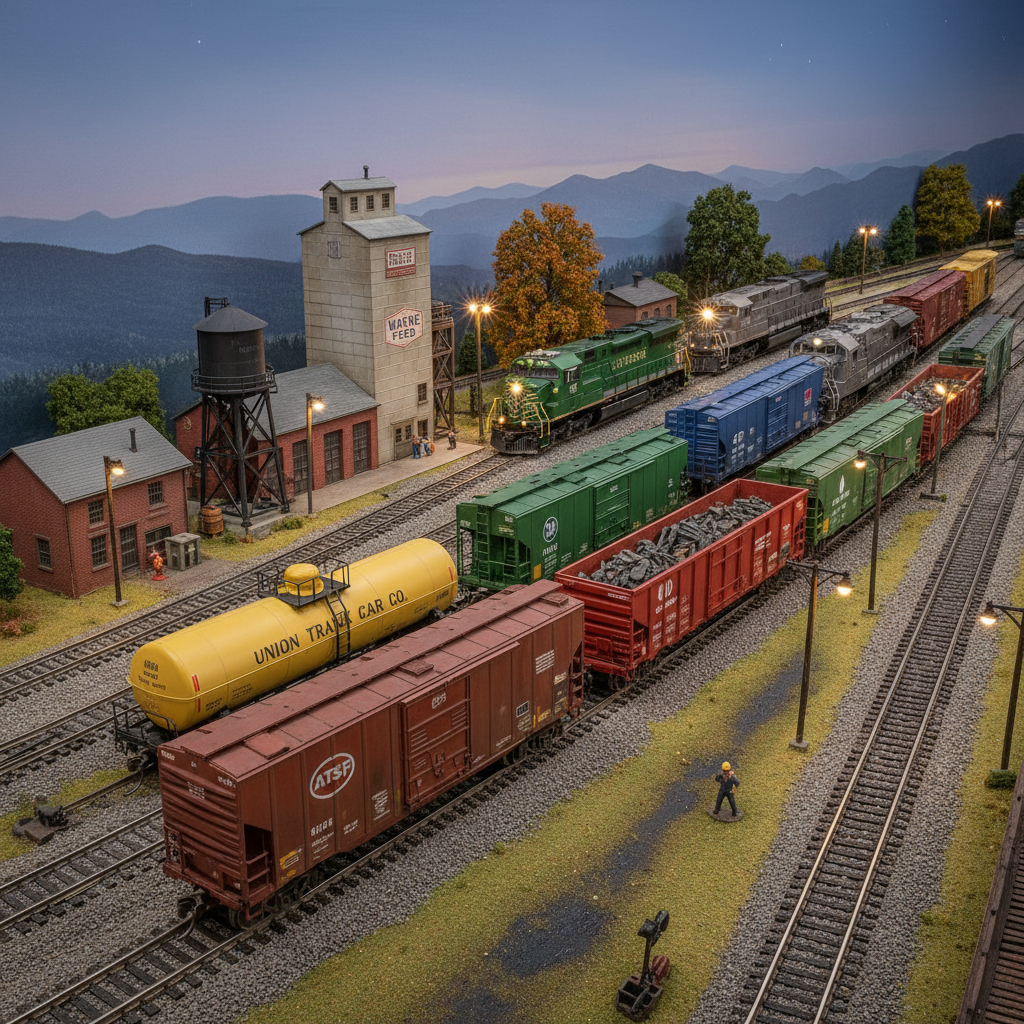
Whether you're just getting started or you've been running trains for decades, finding the best freight cars for HO scale is one of the most rewarding parts of building a realistic model railroad layout. HO scale — at 1:87 — is the most popular model train scale in the world, and for good reason. It strikes the perfect balance between detail, affordability, and the sheer variety of rolling stock available. Freight cars are the backbone of any serious layout, giving your locomotives something meaningful to haul while bringing that authentic railroad atmosphere to life.
Choosing the right freight cars, however, isn't as simple as picking whatever looks good on the shelf. You need to consider era accuracy, manufacturer quality, prototype fidelity, and how well the cars perform on your specific track and layout. From boxcars and gondolas to hoppers and tank cars, the options can be overwhelming — especially when you factor in the wide range of brands competing in the HO market. That's why we put together this comprehensive guide to help you navigate the best choices available today.
In this article, we'll break down the top freight car types, highlight the best manufacturers in the business, and give you practical tips for building a realistic and reliable fleet. Whether you're modeling the steam era of the 1940s or the modern-day Class I railroads, there's something here for every model railroader. And if you're still putting your layout together, be sure to check out our guide on Discover the Best Track Planning Software for Model Railroaders to get the most out of your space before you start filling it with rolling stock.
Why Freight Cars Matter on Your HO Layout
Freight cars do more than just look pretty behind your locomotive. They tell the story of your railroad — what industries it serves, what era it's set in, and what region of the country it represents. A well-curated fleet of freight cars makes your layout feel like a working railroad rather than a toy train set.
From an operational standpoint, freight cars also affect how your trains run. Heavy, well-weighted cars with quality trucks and couplers will track smoothly around curves and through turnouts. Lightweight or poorly manufactured cars can cause derailments, coupler problems, and constant frustration. Investing in quality rolling stock from the start saves you time and headaches down the road.
Era and Prototype Accuracy
One of the first decisions you'll make is what era you're modeling. Freight car designs changed dramatically over the decades. A 40-foot boxcar from the 1950s looks very different from the 89-foot auto rack cars used by modern railroads. If you're aiming for historical accuracy, doing your research before purchasing can save you from buying cars that were never used in your chosen era.
The Association of American Railroads (AAR) standardized many freight car designs over the years, so many types are broadly appropriate across several decades. However, specific road numbers, paint schemes, and car types can be very era-specific. Prototype research — looking at real railroad photographs and historical records — is always worth the effort.
Top Types of HO Scale Freight Cars
Before diving into specific products and brands, let's look at the most common freight car types and why they deserve a place on your layout.
Boxcars
Boxcars are the quintessential freight car and a must-have for any layout. They haul everything from grain to appliances to auto parts, making them appropriate for virtually any era and railroad. Manufacturers like Athearn, Kadee, and Atlas produce outstanding HO boxcars with excellent detail and smooth-running trucks.
- 40-foot boxcar: Perfect for steam and transition era layouts (1930s–1960s)
- 50-foot boxcar: Common from the 1960s onward and well-suited for modern layouts
- Plug-door boxcar: Used for temperature-sensitive goods; great for postwar layouts
Gondolas
Gondolas are open-top cars used for bulk materials like scrap metal, coil steel, and aggregate. They add visual variety and pair well with industrial scenes. Walthers and Atlas offer some of the best HO gondolas on the market, with highly detailed interiors and accurate proportions.
Hoppers and Covered Hoppers
If your layout features coal mines, grain elevators, or cement plants, hoppers are essential. Open hoppers carry coal and aggregate, while covered hoppers are used for grain, plastic pellets, and other granular materials. Intermountain Railway and Atlas are well-regarded for their hopper models.
Tank Cars
Tank cars haul liquid and gaseous commodities like fuel oil, chemicals, and molasses. They're visually striking and immediately communicate industrial purpose. Athearn's blue box tank cars have been a hobby staple for years, while more recent offerings from Tangent Scale Models set a new bar for accuracy and detail.
Flatcars and Spine Cars
Flatcars are incredibly versatile — they can carry lumber, machinery, military equipment, trailers, and containers. Modern spine cars and well cars are essential for modeling today's intermodal operations. Walthers makes an excellent selection of modern intermodal equipment.
Refrigerator Cars (Reefers)
Refrigerator cars, or "reefers," were critical for hauling perishable food products before modern refrigerated trucking took over. Pacific Fruit Express and SFRD cars are perennial favorites among modelers of the steam and early diesel eras.
Best HO Freight Car Manufacturers
Now let's talk about the brands that consistently produce the best freight cars for HO scale. Understanding what each manufacturer does well helps you make smarter purchasing decisions. For a broader look at brand options, see our article on Best Model Train Brands Compared for Beginners and Collectors.
Athearn
Athearn is one of the oldest and most respected names in HO scale rolling stock. Their "Blue Box" series was the go-to for budget-minded modelers for decades, offering decent quality at an affordable price point. Today, Athearn Genesis and Athearn Roundhouse lines offer dramatically improved detail, metal wheels, and Kadee-compatible couplers right out of the box. Athearn is an excellent brand for building a large fleet without breaking the bank.
Best for: Budget-conscious modelers, fleet building, steam and diesel eras
Kadee Quality Products
Kadee is famous primarily for their knuckle couplers — the industry standard in HO scale — but they also produce exceptionally accurate freight cars. Their HO scale boxcars are renowned for prototype fidelity and smooth running. If you're only going to buy one or two premium cars, Kadee's offerings are hard to beat.
Best for: Prototype accuracy, premium quality, collectors
Atlas Model Railroad Co.
Atlas produces a wide range of HO freight cars at a mid-range price point with excellent detail. Their gondolas, boxcars, and hoppers are well-regarded for consistent quality and reliable performance. Atlas also frequently releases cars in specific road names with accurate paint schemes, making them great for prototype modelers.
Best for: Consistent quality, good variety, mid-range budget
Walthers
Walthers is both a manufacturer and a major distributor in the model railroad industry. Their Mainline and Proto series freight cars offer outstanding detail at various price points. Walthers is particularly strong in modern era equipment — their intermodal cars, centerbeam flatcars, and modern hoppers are among the best available. You can explore many of their offerings and others through our recommended products page.
Best for: Modern era modeling, intermodal equipment, wide variety
Intermountain Railway Company
Intermountain is known for producing highly accurate, finely detailed freight cars with excellent quality control. Their tank cars, hoppers, and boxcars are often praised for prototype accuracy and smooth-running, free-rolling trucks. They tend to be priced at the premium end but are worth every penny for the serious hobbyist.
Best for: Premium detail, prototype accuracy, serious collectors
Tangent Scale Models
A relative newcomer compared to the legacy brands, Tangent Scale Models has quickly earned a sterling reputation for extraordinary detail and prototype accuracy. Their tank cars and covered hoppers in particular are considered among the finest in the hobby. If you want museum-quality rolling stock, Tangent is the name to know.
Best for: Ultra-high detail, prototype enthusiasts, display-quality models
Tips for Building a Realistic Freight Car Fleet
Having a great roster of freight cars is only part of the equation. Here are some practical tips for getting the most out of your rolling stock.
Weathering Your Cars
Fresh-from-the-factory paint looks unrealistic on a working railroad. Weathering — applying dirt, rust, fading, and grime effects — brings your cars to life. Simple techniques like dry brushing, chalk pastels, and washes can dramatically improve the look of even budget-priced cars.
Upgrading Wheels and Couplers
If you purchase budget cars, consider upgrading to metal wheels and Kadee knuckle couplers. Metal wheels roll more freely, conduct electricity better, and look more realistic than plastic wheels. Kadee couplers provide reliable, prototype-accurate coupling and uncoupling. This simple upgrade can transform an inexpensive car into a reliable performer.
Weighting Your Cars
NMRA (National Model Railroad Association) standards recommend specific weights for freight cars based on their length. Properly weighted cars track better, resist derailments, and provide more realistic train handling. You can add small lead or steel weights inside the car body to hit the target weight.
Running Your Layout with DCC
If you haven't already upgraded to Digital Command Control, your layout — and your freight trains — will benefit enormously. Check out our guide on Top DCC Systems for Beginners: Ultimate Guide to Easy Operation to find the right system for your setup. And don't forget to keep your tracks clean for the best electrical performance — our article on How to Clean Model Train Tracks Properly Without Damaging Them covers everything you need to know.
Researching Road Names and Car Types
Take time to research which car types and road names are appropriate for your modeled railroad and era. Online communities, prototype photographs, and reference books are invaluable resources. Running accurate rolling stock dramatically enhances the realism and personal satisfaction of your layout.
Budgeting for Your Freight Car Fleet
Building a fleet of high-quality freight cars can be a significant investment. If you've ever wondered why model railroading costs as much as it does, our article Why Are Model Trains So Expensive? The Real Reasons Explained breaks down the economics in detail. The good news is that you don't have to buy everything at once. A methodical approach — starting with a few high-quality pieces and gradually expanding — keeps costs manageable while allowing you to build a curated, coherent fleet over time.
Look for sales at hobby shops, online retailers, and train shows. Buying secondhand is also a smart strategy — many modelers sell off duplicate or unwanted cars at prices well below retail. Check out our guide on Who Buys Model Trains Near Me? Best Places to Sell Your Collection for ideas on where to find (and sell) used rolling stock.
Frequently Asked Questions
What are the best HO scale freight car brands for beginners?
For beginners, Athearn and Atlas offer the best combination of quality and value. Their cars run reliably out of the box, are widely available, and come in a huge variety of road names and car types. As you gain experience and confidence, you can invest in premium brands like Kadee, Intermountain, or Tangent for higher-detail pieces.
How many freight cars should I start with?
There's no hard rule, but a practical starting point is 10–20 freight cars per locomotive. This gives you a realistic-looking train without overwhelming your track or your budget. Start with a variety of car types — a few boxcars, a gondola or two, a couple of hoppers — and expand from there based on what industries your layout serves.
What is the most popular HO freight car type?
The boxcar is generally considered the most popular and versatile freight car in HO scale. Because boxcars were used by virtually every major railroad across many decades, they're appropriate for almost any layout. They're also among the most widely produced by manufacturers, giving you the most variety in road names, paint schemes, and eras.
Do I need to upgrade the couplers on my freight cars?
Not necessarily, but it's strongly recommended. Most better-quality HO freight cars now come with Kadee-compatible "knuckle" couplers or actual Kadee couplers installed. If you buy budget or older cars with horn-hook or "X2F" couplers, upgrading to Kadee knuckle couplers will significantly improve coupling reliability and prototypical appearance.
Are expensive freight cars worth the price?
It depends on your goals. If you're building a large operating layout and want to fill it with rolling stock, mid-range cars from Athearn or Atlas offer tremendous value. If you're a prototype modeler focused on accuracy, or if you enjoy the craft of collecting, premium brands like Tangent or Kadee deliver a level of detail that's genuinely extraordinary and absolutely worth the extra cost.
Conclusion
Finding the best freight cars for HO scale is a journey, not a destination — and that's what makes it so enjoyable. Whether you're drawn to the rugged simplicity of steam-era boxcars or the sleek complexity of modern intermodal equipment, there's a world of outstanding rolling stock waiting to populate your layout. Start with the brands and car types that make sense for your era and prototype, invest in quality where it counts, and don't be afraid to upgrade and experiment as your layout evolves.
We hope this guide has given you a solid foundation for building a fleet you're proud of. For more in-depth guidance on every aspect of the hobby, explore our other articles on Top Model Train Companies Every Beginner Should Know and browse our recommended products page for curated gear and supplies. Happy modeling!
Affiliate Disclosure: Some links in this article are affiliate links. We may earn a commission at no extra cost to you.
Enjoying this guide?
Browse our favorite recommended products.
James Mitchell
Model Train Enthusiast & Writer
James has been building layouts and collecting trains for over 15 years. He started Model Train Insider to help newcomers navigate the hobby with practical, no-nonsense advice drawn from hands-on experience.
Stay on Track
Get beginner guides, brand reviews, and layout tips delivered to your inbox. No spam—just trains.
Free forever. Unsubscribe anytime.
Related Articles
Top 7 Best Steam Locomotives For Serious Collectors
Discover the best steam locomotives for collectors. From rare prototypes to master-grade detailing, find the crown jewels for your model railroad collection.
Read more
Top 10 Best N Scale Diesel Locomotives to Elevate Your Model Fleet
Looking to upgrade your model railroad? Discover the 10 best N scale diesel locomotives known for superior detail, smooth performance, and reliability.
Read moreTop Picks: Best Model Trains for Collectors
Discover the best model trains for collectors with our highly recommended picks for your collection.
Read more