Why Are Model Trains So Expensive? The Real Reasons Explained
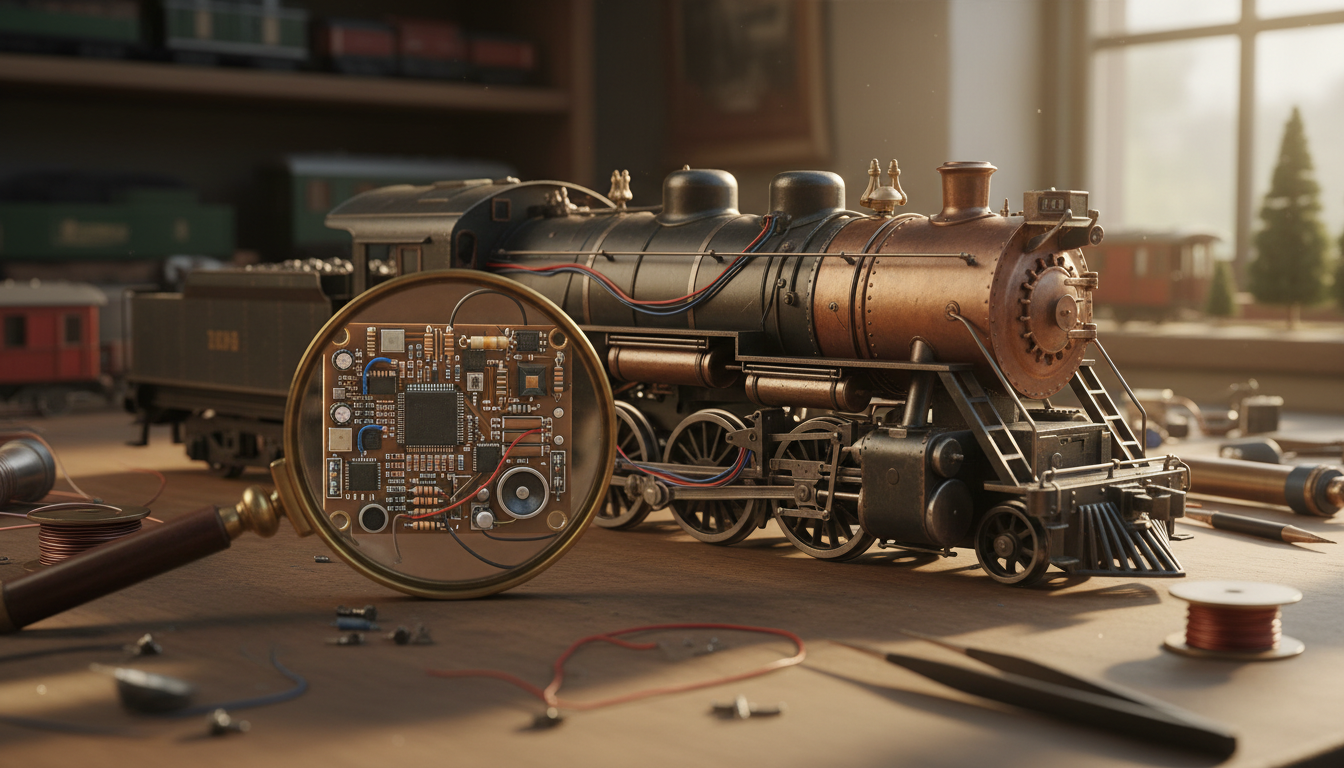
If you've ever browsed a hobby shop or scrolled through an online retailer and felt a twinge of sticker shock at model train prices, you're not alone. A single HO scale locomotive can cost more than a gaming console. A complete starter set can rival the price of a quality bicycle. And don't even look at the brass imports section unless you're prepared for four-figure price tags.
But here's the thing: once you understand what goes into designing, manufacturing, and selling a modern model train, the pricing actually makes sense. This isn't mass-market toy production — it's precision engineering for a niche market, and every dollar in the price tag has a reason behind it.
Let's break down exactly why model trains cost what they do, and how you can enjoy the hobby without emptying your savings.
The Tooling Investment
The single biggest cost in model train manufacturing happens before a single unit is produced: tooling. Creating the molds, dies, and injection-molding tools needed to produce a new locomotive model is staggeringly expensive.
A complete tooling setup for a new HO scale locomotive typically costs between $80,000 and $150,000. For complex prototypes with multiple body variations, that number can climb above $200,000. This includes:
- Master pattern creation — A precision reference model, often hand-carved or CNC-machined
- Injection mold fabrication — Hardened steel molds with cavities for each body component
- Test shots and refinement — Multiple rounds of sample parts to verify fit, detail, and ejection quality
- Assembly fixtures — Custom jigs for consistent assembly of multi-part models
Here's the critical math: that tooling cost has to be spread across the total production run. If a manufacturer produces 5,000 units, each locomotive carries $16–$40 in tooling cost alone. If the run is only 2,000 units (common for specialty prototypes), that jumps to $40–$100 per unit.
This is fundamentally different from mass-market toys. A Hot Wheels car shares tooling across millions of units. A model train shares it across thousands — sometimes hundreds.
Precision Manufacturing
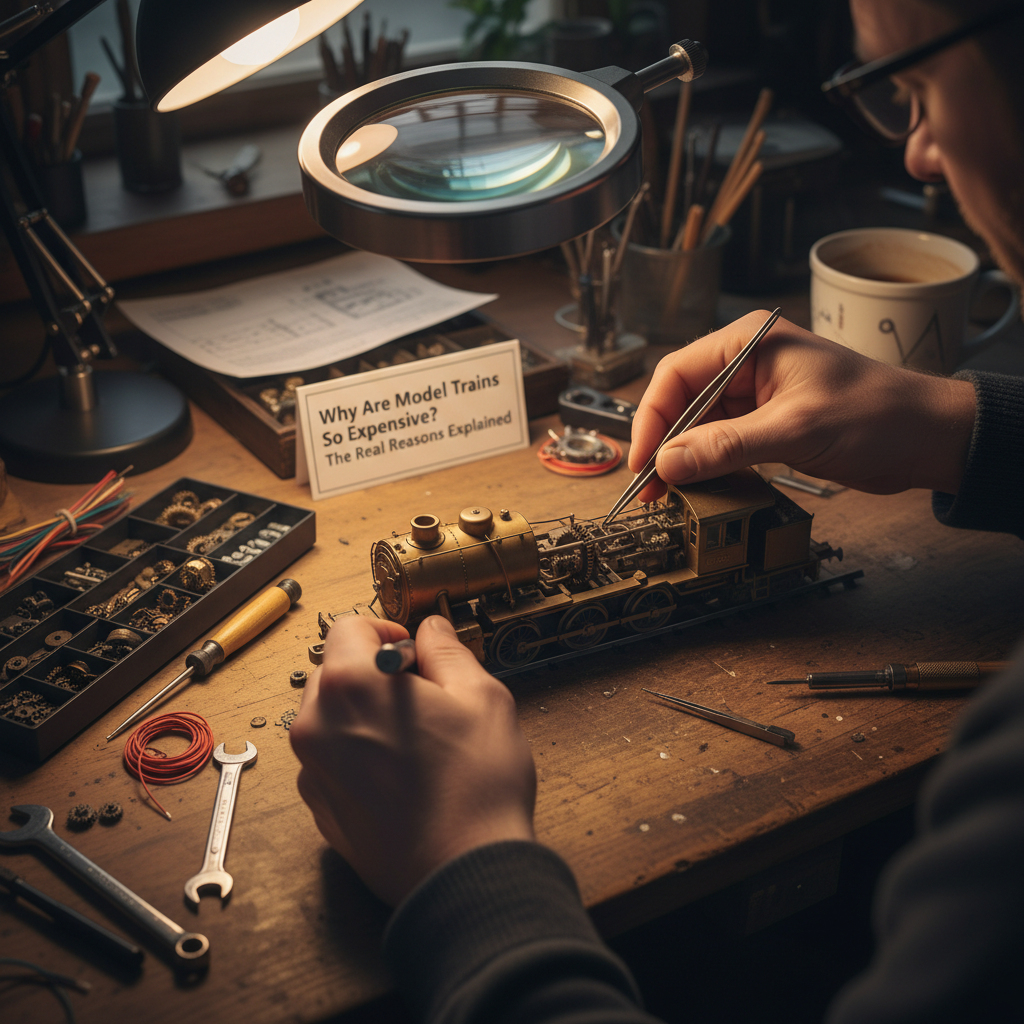
Model trains aren't stamped out on a production line like consumer electronics. Each locomotive is assembled from dozens — sometimes hundreds — of individual parts, many of which require precise alignment and hand finishing.
Consider what goes into a typical mid-range HO locomotive:
- Die-cast metal frame for weight and stability
- Precision-machined metal wheels with proper flanges
- High-quality motor with flywheel for smooth momentum
- Multiple gear stages for speed reduction and pulling power
- Separate window glazing, handrails, and detail parts
- Multi-layer paint application with masking, printing, and clear coating
- Quality control testing — every unit runs on a test track before packaging
This level of manufacturing attention is closer to watchmaking than toy production. The labor costs alone are substantial, even in countries with lower manufacturing costs.
The DCC Revolution
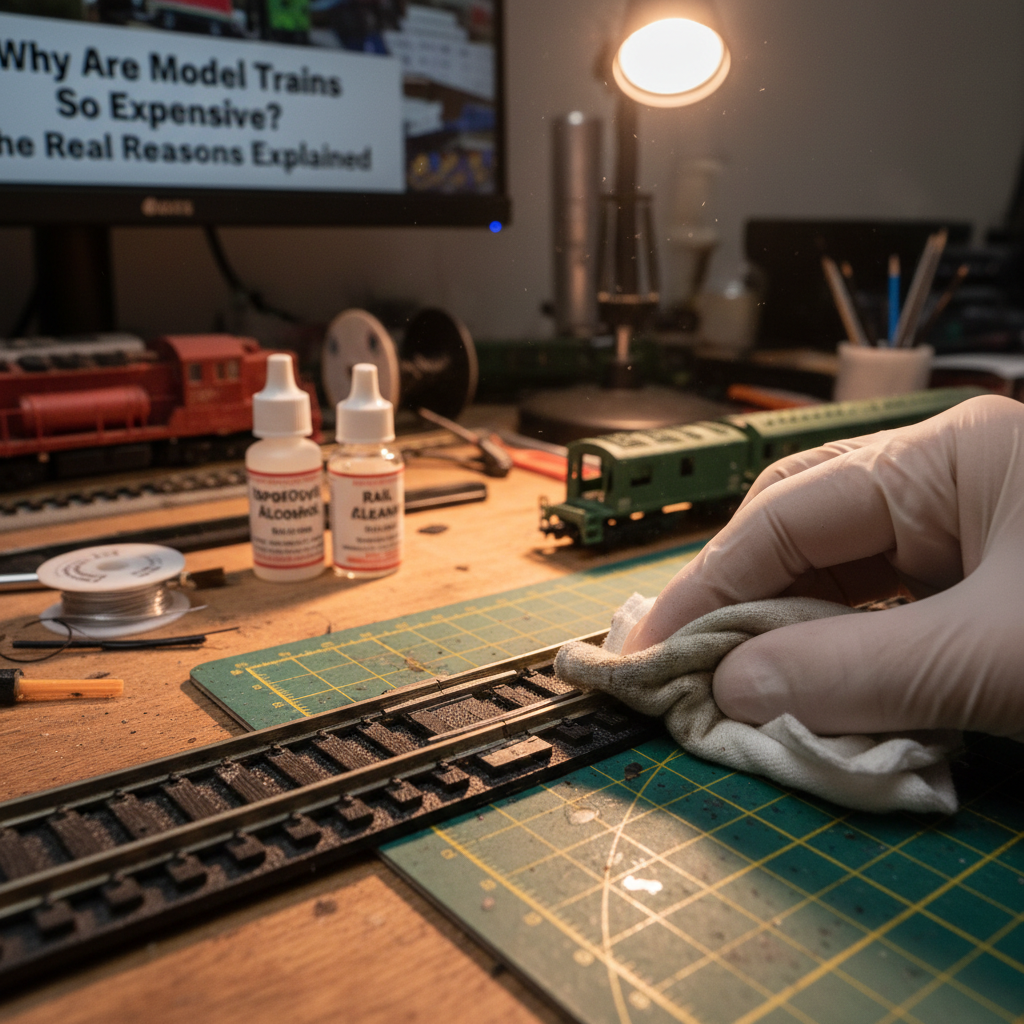
Digital Command Control (DCC) has transformed model railroading from a simple electrical hobby into a sophisticated digital experience. Modern DCC-equipped locomotives contain a computer on a chip that controls:
- Motor speed and acceleration curves
- Directional lighting with prototypical effects (ditch lights, Mars lights, etc.)
- Sound systems with recorded audio from real locomotives
- Smoke generators synchronized to the chuff rate
- Multiple function outputs for accessories
A quality DCC sound decoder alone — the tiny circuit board installed inside the locomotive — costs the manufacturer $30–$60 at wholesale. Premium decoders from companies like ESU (LokSound) or SoundTraxx (Tsunami) cost even more.
The sound files themselves are expensive to develop. Recording real locomotive audio, processing it for playback on a tiny speaker, and programming it to respond realistically to throttle inputs is a specialized skill. Some manufacturers hire professional sound engineers and spend days trackside with recording equipment.
When you buy a $200 DCC sound locomotive, roughly $50–$80 of that price is the electronics alone.
Licensing and Research
Ever notice that model trains carry the same logos, paint schemes, and road numbers as real railroads? That's not free. Model train manufacturers pay licensing fees to use railroad trademarks.
Union Pacific, BNSF, Norfolk Southern, CSX, and other major railroads all have licensing programs. While the specific fees are confidential, industry insiders estimate that licensing adds $2–$8 per unit depending on the railroad and the prominence of the trademark usage.
Beyond licensing, accurate modeling requires research:
- Factory visits to measure and photograph real equipment
- Access to official technical drawings and blueprints
- Verification of era-specific details (what color was that hood in 1974?)
- Review by railroad historical societies and prototype experts
This research process ensures that when you buy an Athearn Genesis SD70ACe in Union Pacific livery, it's not just a "close enough" representation — it's accurate down to the placement of individual grab irons.
Limited Production Runs
Unlike mass-market products, model trains are typically produced in limited batches. A manufacturer might produce 3,000–5,000 units of a specific model, and once that run sells out, it may never be produced again.
This limited-run model exists for practical reasons:
- Niche market — The model train hobby, while passionate, is small. Total worldwide market revenue is estimated at roughly $1–1.5 billion annually — a fraction of markets like gaming or consumer electronics.
- Prototype variety — Railroads operated thousands of different locomotive types, each with era-specific variations. Demand for any single model is inherently limited.
- Retail shelf life — Hobby shops have limited display space. Manufacturers rotate products regularly to keep offerings fresh.
Limited runs create collector dynamics. A model that sells out quickly may appreciate in value, which is great for collectors but frustrating for latecomers who missed the initial release.
The Brass Factor
At the top end of the market sit brass locomotives — handmade models crafted from brass sheet, wire, and castings. These are produced in runs of 25–500 units, often by skilled craftsmen in Japan or Korea.
Brass models can cost $500 to $5,000+ because:
- Hand assembly — Each model is soldered together by skilled artisans
- Material cost — Brass is more expensive than plastic injection molding
- Extremely limited runs — Fixed costs spread across tiny quantities
- Museum-quality detail — Brass allows for finer details than plastic molding
- Custom painting — Many brass models are sold unpainted, allowing collectors to commission professional paint jobs
Brass models are the haute couture of model railroading. They're not for everyone, but for collectors who want the most accurate, detailed representation possible, nothing else compares.
Collector Demand and Market Economics
Like any collectible market, model trains follow supply-and-demand pricing. Several factors inflate prices beyond manufacturing costs:
- Nostalgia premium — Vintage Lionel sets from the 1950s carry emotional value that far exceeds their material worth
- Completism — Collectors seeking every variation of a specific locomotive type will pay premiums for rare versions
- Condition sensitivity — A mint-in-box model can be worth 2–5× the price of the same model in loose, used condition
- Discontinuation — Once a model is out of production, secondary market prices often rise
Where the Money Actually Goes
Here's an approximate breakdown of where your money goes when you buy a $250 HO scale DCC sound locomotive:
| Cost Component | Estimated % | Approx. Amount | |----------------|-------------|----------------| | Manufacturing (materials + labor) | 25–30% | $62–$75 | | DCC Sound Decoder | 20–25% | $50–$62 | | Tooling Amortization | 8–12% | $20–$30 | | Licensing & Research | 3–5% | $7–$12 | | Packaging & Shipping | 5–8% | $12–$20 | | Retailer Margin | 30–40% | $75–$100 |
The retailer margin might look large, but hobby shops operate on thin overall margins. They stock thousands of slow-moving items, maintain knowledgeable staff, and provide community space for the hobby. That margin keeps the lights on.
Budget-Saving Tips for the Hobby
Model railroading can be expensive, but it doesn't have to break the bank. Here are practical ways to enjoy the hobby on a budget:
Buy Used
The secondhand market is enormous. Train shows, eBay, and Facebook groups regularly have quality equipment at 30–60% below retail. Many used trains are barely run — someone bought them, displayed them on a shelf, and is now downsizing.
Start Small
You don't need a basement empire to enjoy the hobby. A 4×8-foot HO layout or a 2×4-foot N-scale layout provides years of enjoyment and costs a fraction of a large permanent installation.
Choose Your Battles
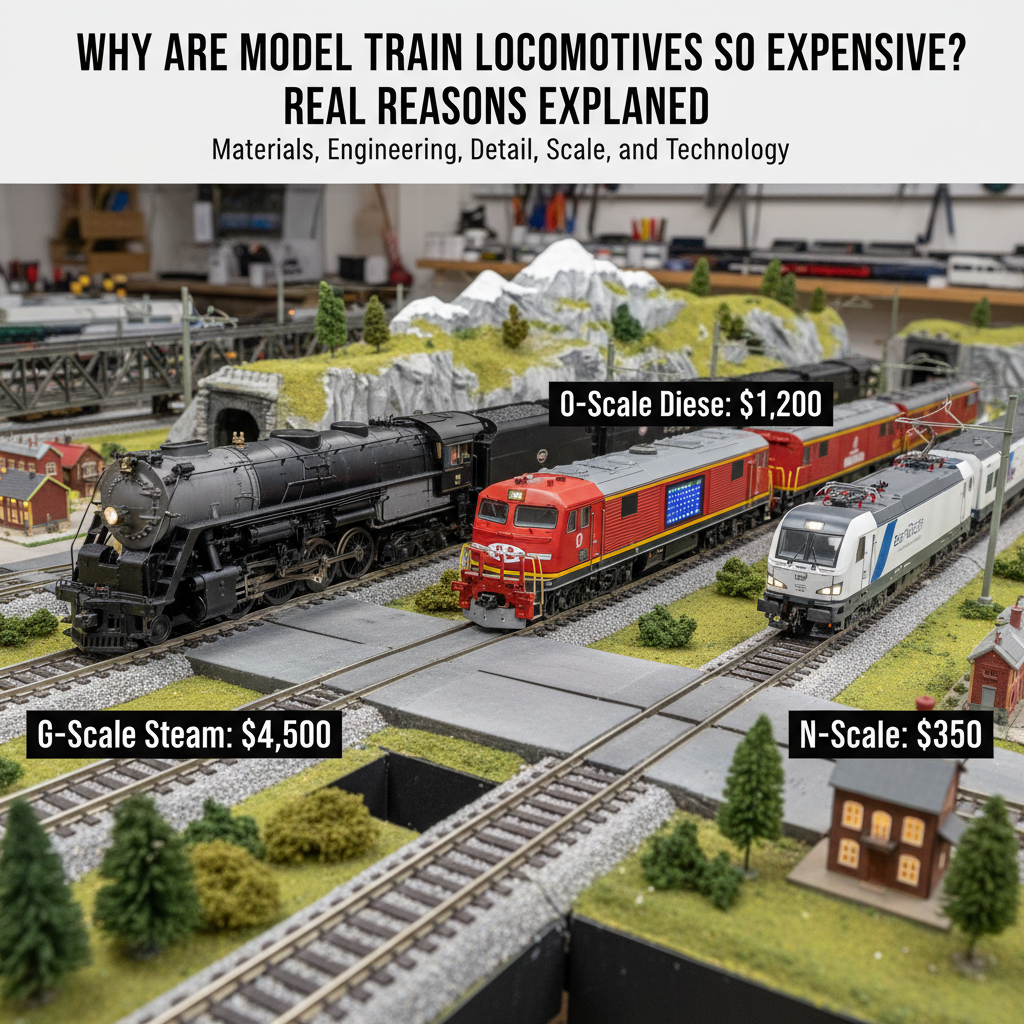
You don't need the most expensive locomotive to enjoy realistic operations. A $100 Bachmann DCC locomotive runs on the same track as a $350 Athearn Genesis. The Genesis has more detail, but both pull trains.
Build Gradually
The beauty of model railroading is that it's an ongoing project. Buy one or two quality items per month instead of everything at once. Over a year, you'll have a substantial collection without any single purchase feeling painful.
Join a Club
Model railroad clubs often have shared layouts, group purchasing discounts, and experienced members who are happy to sell or trade equipment at fair prices. Clubs are also a great way to try before you buy.
Consider Kits
Building rolling stock from kits (offered by Accurail, Bowser, and others) is significantly cheaper than buying ready-to-run models, and the assembly process is part of the hobby's charm.
Watch for Sales
Holiday sales, train show specials, and end-of-production clearances can save 20–50%. Patience pays in this hobby.
The Value Perspective
Here's a way to think about model train costs that puts them in context: a quality HO locomotive costs about the same as a dinner out for two at a nice restaurant. That dinner lasts an evening. The locomotive provides years — potentially decades — of enjoyment. When you amortize the cost over the hours of pleasure a good model train provides, it's actually one of the better entertainment values available.
The hobby also has a tangible return on investment that many hobbies don't: quality model trains hold value, and some appreciate over time. You can't say that about a concert ticket or a streaming subscription.
Frequently Asked Questions
Why are some locomotives $100 and others $400? The price difference reflects detail level, DCC features, and brand positioning. A $100 locomotive has basic molding and DC power. A $400 locomotive has separately applied details, factory DCC sound with premium decoders, die-cast construction, and prototype-verified accuracy.
Are vintage trains worth more than new ones? Sometimes. Vintage brass, early Lionel (1930s–1960s), and rare limited runs can be very valuable. However, many mass-produced trains from the 1970s–1990s (Tyco, Life-Like, basic AHM) have minimal collector value.
Is DCC worth the extra cost? For most hobbyists, yes. DCC allows independent control of multiple locomotives, realistic sound, lighting effects, and sophisticated operations that make the hobby dramatically more engaging. If you're buying new equipment, DCC is the standard to invest in.
Why are train sets cheaper than buying components separately? Starter sets are intentionally priced as loss-leaders or breakeven products. Manufacturers know that getting someone started in the hobby leads to years of additional purchases. The set gets you in the door; the upgrades are where they make their margin.
Do model trains appreciate in value? Quality models from established brands tend to hold value well, and limited runs often appreciate. However, this isn't guaranteed, and buying model trains purely as investments is a poor strategy. Buy what you enjoy running and displaying — any appreciation is a bonus.
What's the cheapest way to get started? A used Bachmann starter set from eBay or a train show can get you running for under $50. Add a basic 4×8 table and you have a complete hobby setup for less than $100. It won't be museum-quality, but it's real model railroading.
Understanding brand differences can help you spend wisely. Read our detailed Brand Comparison Guide to see how major manufacturers stack up. New to the hobby? Start with Top Model Train Companies Every Beginner Should Know.
Enjoying this guide?
Browse our favorite recommended products.
James Mitchell
Model Train Enthusiast & Writer
James has been building layouts and collecting trains for over 15 years. He started Model Train Insider to help newcomers navigate the hobby with practical, no-nonsense advice drawn from hands-on experience.
Stay on Track
Get beginner guides, brand reviews, and layout tips delivered to your inbox. No spam—just trains.
Free forever. Unsubscribe anytime.
Related Articles
Top Model Train Companies Every Beginner Should Know
A comprehensive guide to the biggest names in model railroading — from Lionel's American legacy to Kato's Japanese precision — so you can pick the brand that fits your layout, scale, and budget.
Read more
Best Model Train Brands Compared for Beginners and Collectors
A detailed head-to-head comparison of the top model train manufacturers, breaking down quality, price, realism, and beginner-friendliness to help you choose the right brand.
Read more