Best DCC Controllers For Beginners: Top Picks To Master Your Model Railroad
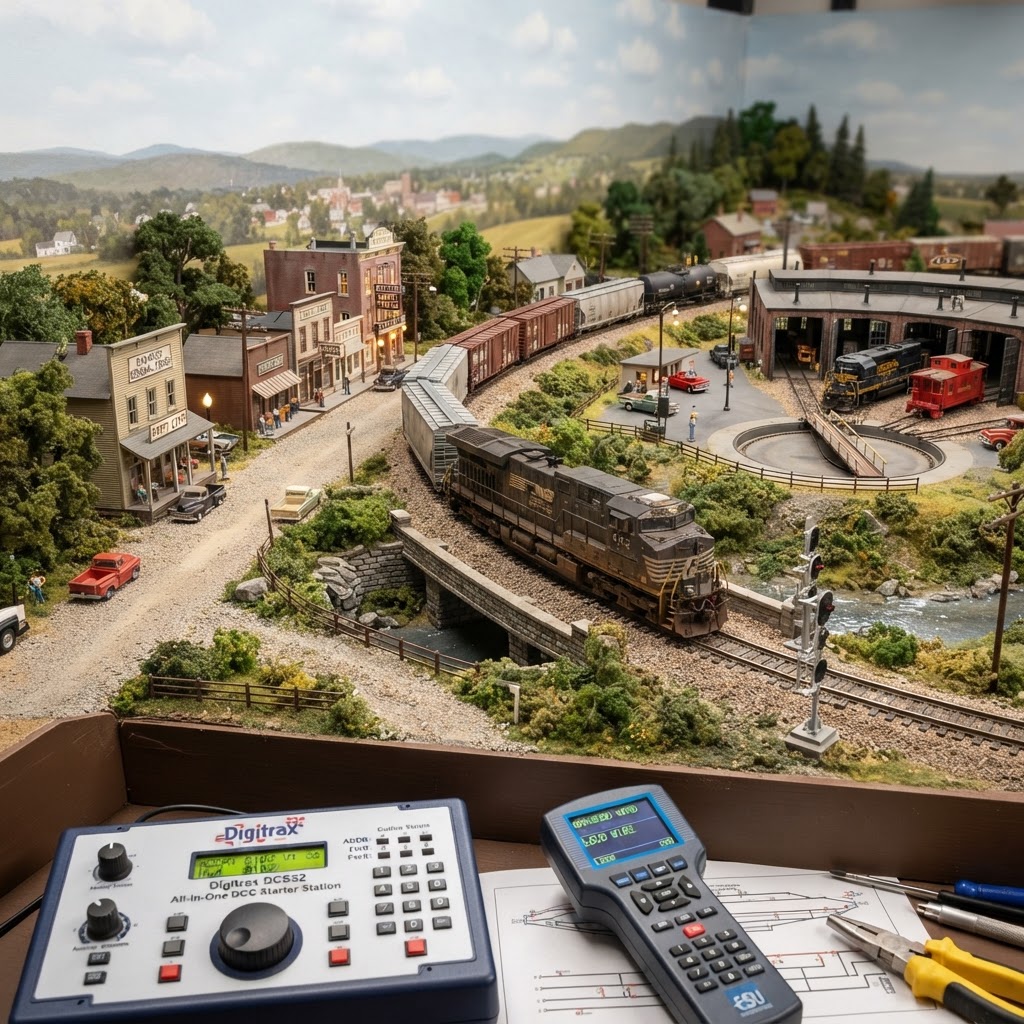
If you're just getting started in the model railroad hobby, choosing the best DCC controller for beginners can feel overwhelming. The market is packed with options ranging from bare-bones starter units to feature-rich systems that rival professional-grade equipment. The good news? You don't need to spend a fortune or have an engineering degree to get up and running with Digital Command Control. With the right information, you can find a controller that matches your skill level, budget, and long-term goals.
DCC technology has transformed the way hobbyists operate their layouts. Unlike traditional DC analog control, DCC allows you to run multiple locomotives independently on the same track, control lighting effects, sound, and momentum — all from a single handheld unit. For newcomers, this opens up a world of realistic operation that simply wasn't accessible a generation ago. If you're still weighing the pros and cons of going digital, our DCC Systems Comparison 2024: The Ultimate Guide To Choosing The Best Digital Control is an excellent place to start before diving into specific product recommendations.
In this guide, we've done the research so you don't have to. We'll walk you through the top DCC controllers suited for beginners, explain what features actually matter when you're starting out, and help you avoid the common pitfalls that trip up new hobbyists. Whether you're building your first HO scale layout or experimenting with N scale, this article will give you a clear path forward.
What Is DCC and Why Does It Matter for Beginners?
Before we get into specific products, it's worth understanding what makes DCC such a game-changer for model railroading. Digital Command Control works by sending a continuous digital signal through the track. Each locomotive is equipped with a decoder chip that listens for commands addressed specifically to it. This means two trains can run on the same loop of track at entirely different speeds — something impossible with traditional analog control.
For beginners, the practical benefits are significant:
- Independent control of multiple locomotives without complex wiring
- Sound functions like horns, bells, and engine sounds built into decoders
- Realistic momentum and braking to simulate the feel of real trains
- Easy expansion as your layout grows
If you're still in the early stages of building your first layout, check out our guide to The Best HO Scale Starter Sets For New Hobbyists: A Buyer's Guide to make sure your rolling stock and track are ready for DCC operation before investing in a controller.
What to Look for in a Beginner DCC Controller
Not all DCC systems are created equal, and what works for an experienced modeler with a basement-sized layout may be unnecessarily complex for someone just starting out. Here are the key factors to evaluate:
Ease of Use
This is non-negotiable for beginners. Look for a controller with an intuitive interface — ideally a backlit LCD screen, clearly labeled buttons, and a throttle knob that feels natural in your hand. Avoid systems that require extensive programming just to run a single locomotive.
Amperage Output
For a small starter layout, a system outputting 1.5 to 3 amps is usually sufficient. If you plan to run multiple locomotives simultaneously or use larger scale trains, you'll want to consider a booster down the road. Most beginner systems top out around 3 amps, which is perfectly adequate for HO or N scale.
Expandability
Even if you're a beginner today, you won't be one forever. Choose a system that can grow with you — one that supports additional throttles, computer interfaces, or booster connections. Investing in an expandable system now saves you from replacing everything when your layout evolves.
Price Point
Beginner DCC controllers typically range from $100 to $250. Anything significantly cheaper may lack reliability or features you'll want within months. Anything more expensive is likely overkill until you've developed your skills and layout requirements.
Support and Community
A strong user community and manufacturer support can make a huge difference when you run into trouble. Systems from established brands like Digitrax, NCE, and Hornby have large online communities and extensive documentation.
Best DCC Controllers for Beginners in 2024
Here are our top picks for newcomers to digital model railroading. Each has been evaluated for ease of use, value, features, and long-term viability. For even deeper product analysis, visit our Model Train Product Reviews: The Ultimate Buyer's Guide to Quality Gear.
1. Digitrax Zephyr Xtra (DCS52) — Best Overall for Beginners
The Digitrax Zephyr Xtra is widely considered the gold standard entry-level DCC system, and for good reason. It delivers 2.5 amps of track power, supports LocoNet expansion, and includes a built-in decoder tester — an incredibly useful feature for beginners learning how decoders work.
Key Features:
- 2.5A output, suitable for small to medium layouts
- LocoNet compatible for future expansion
- Can operate up to 10 locomotives simultaneously
- Includes a built-in programming track
Who It's For: Hobbyists who want a reliable, expandable system without a steep learning curve. The Zephyr Xtra strikes the perfect balance between simplicity and capability.
Price Range: ~$150–$180
2. NCE Power Cab — Best Value for Money
The NCE Power Cab is a self-contained DCC starter system that includes everything you need: a 1.65-amp command station and a full-featured cab throttle, all in one ergonomic handheld unit. NCE is renowned for its customer service and community support, which is invaluable when you're learning.
Key Features:
- All-in-one design — just plug into the track and go
- Supports up to 99 locomotive addresses
- Expandable via the NCE USB interface for computer control
- Excellent documentation and active user forums
Who It's For: Budget-conscious beginners who want a proven, dependable system with strong community backing.
Price Range: ~$120–$150
3. Hornby Elite — Best for UK/European Prototype Modelers
If you're modeling British or European railways, the Hornby Elite deserves serious consideration. It offers 4 amps of output — unusually high for a beginner-oriented system — and features a large, easy-to-read display with dual throttle knobs for controlling two locomotives simultaneously without menu diving.
Key Features:
- 4A output, handles larger layouts and multiple locos
- Dual independent throttle controls
- Supports all NMRA DCC standards
- USB connectivity for software integration
Who It's For: UK/European modelers or anyone running larger-scale equipment who wants extra headroom in their power output.
Price Range: ~$200–$230
4. Bachmann EZ Command — Best Ultra-Budget Option
For hobbyists on a very tight budget or those who simply want to test the DCC waters without a major commitment, the Bachmann EZ Command offers basic DCC functionality at a minimal price. It's not the most expandable system, but it works reliably for small starter layouts.
Key Features:
- Simple one-touch operation
- Supports up to 10 locomotive addresses
- 1A output — suitable for N scale or small HO layouts
- Very affordable entry point
Who It's For: Complete beginners with a small layout who want to experience DCC before committing to a more capable system. If you're comparing Bachmann products more broadly, our Athearn vs Bachmann: Which Model Train Brand Is Best for Your Layout? guide offers useful brand context.
Price Range: ~$50–$80
5. Gaugemaster Prodigy Advance² — Best Mid-Range Upgrade Path
The Gaugemaster Prodigy Advance² sits comfortably between entry-level and advanced systems. With 3.5 amps of output, wireless throttle capability, and an intuitive menu system, it's ideal for beginners who already know they want room to grow.
Key Features:
- 3.5A output with optional booster support
- Wireless walk-around throttle included
- Supports up to 255 locomotive addresses
- Large backlit display
Who It's For: Modelers who want a beginner-friendly interface but anticipate building a larger, more complex layout within a year or two.
Price Range: ~$180–$220
Setting Up Your DCC System: Practical Tips for Beginners
Purchasing the right controller is only the first step. Here's how to set yourself up for success:
Start Simple
Begin with one locomotive and one address. Get comfortable with basic throttle operation, speed steps, and direction control before diving into sound functions or multiple unit operations.
Use the Programming Track
Every serious DCC system includes a programming track feature. Use it to assign decoder addresses and configure settings before placing locomotives on the main line. This prevents accidental changes to other decoders already on the layout.
Label Your Locomotives
Create a simple reference sheet or notebook entry for each locomotive's address and key function mappings. When you have a dozen engines on the roster, you'll thank yourself later.
Invest in Quality Accessories
Your DCC controller is only as good as the ecosystem around it. Quality track, reliable switches, and well-maintained locomotives all contribute to a smooth operating experience. Browse our Top 10 Essential Model Train Accessories for Your Layout and Best Model Train Switches: Expert Reviews and Top Brands for 2024 for guidance on rounding out your setup.
Join a Community
Online forums, local clubs, and hobby publications are invaluable resources. Check out our list of 7 Top Model Railway Magazines to Elevate Your Hobbyist Skills for ongoing education and inspiration.
Frequently Asked Questions
Do I need a DCC controller if I'm just starting out?
Not necessarily — but it's strongly recommended if you plan to run more than one locomotive or want realistic sound and lighting effects. Starter sets often include basic analog controllers, but upgrading to DCC opens up significantly more creative possibilities. See our recommended products page for curated beginner bundles.
Can I use a DCC controller with any model train?
You can run DCC-equipped locomotives (those with decoders installed) on a DCC system. Many modern locomotives come "DCC Ready," meaning they have a socket for easy decoder installation. Older or analog-only locomotives require a decoder retrofit before they'll work properly on a DCC layout.
What's the difference between a DCC starter set and a full DCC system?
A starter set typically includes a basic command station, power supply, and one throttle — enough to get running immediately. A full DCC system may include multiple throttles, a larger command station, booster capability, and computer connectivity. For most beginners, a starter set is the right choice.
Is Digitrax or NCE better for beginners?
Both are excellent choices. Digitrax (particularly the Zephyr Xtra) offers slightly more built-in features, while NCE is often praised for simpler operation and outstanding customer support. Your choice may come down to which user community you connect with more naturally.
Can I expand my beginner DCC system later?
Yes — this is one of the most important things to verify before purchasing. Systems like the Digitrax Zephyr Xtra and NCE Power Cab are specifically designed with expansion in mind. You can add throttles, boosters, and computer interfaces as your layout grows without replacing the entire system.
Conclusion
Finding the best DCC controller for beginners doesn't have to be a frustrating experience. Whether you go with the feature-rich Digitrax Zephyr Xtra, the wallet-friendly NCE Power Cab, or the ultra-accessible Bachmann EZ Command, the most important thing is to get started and enjoy the process of learning.
Digital Command Control transforms model railroading from simple oval-and-siding operation into something that feels genuinely alive — with independent trains responding to your commands, realistic sounds filling the room, and a layout that reflects your creative vision. The controllers we've covered in this guide represent the best starting points available in 2024, each offering a solid foundation you can build on for years to come.
Ready to keep exploring? Browse our full library of guides at Model Train Product Reviews: The Ultimate Buyer's Guide to Quality Gear, and don't miss our recommended products page for hand-picked gear trusted by the Model Train Insider community.
Affiliate Disclosure: Some links in this article are affiliate links. We may earn a commission at no extra cost to you.
Enjoying this guide?
Browse our favorite recommended products.
James Mitchell
Model Train Enthusiast & Writer
James has been building layouts and collecting trains for over 15 years. He started Model Train Insider to help newcomers navigate the hobby with practical, no-nonsense advice drawn from hands-on experience.
Stay on Track
Get beginner guides, brand reviews, and layout tips delivered to your inbox. No spam—just trains.
Free forever. Unsubscribe anytime.
Related Articles
Top N Scale Locomotives: The Best Engines For Your Layout
Discover the top N scale locomotives for your layout. We review high-performance engines to help you choose the best models for your model railroad collection.
Read more
DCC Systems Comparison 2024: The Ultimate Guide To Choosing The Best Digital Control
Looking for the best DCC system in 2024? Our comprehensive comparison explores top features, usability, and value to help you choose the right one for your layout.
Read more
7 Top Model Railway Magazines to Elevate Your Hobbyist Skills
Discover the top model railway magazines that provide expert layout tips, product reviews, and historical inspiration to help you master your train hobby.
Read more