HO Scale vs N Scale: The Ultimate Comparison for Beginners
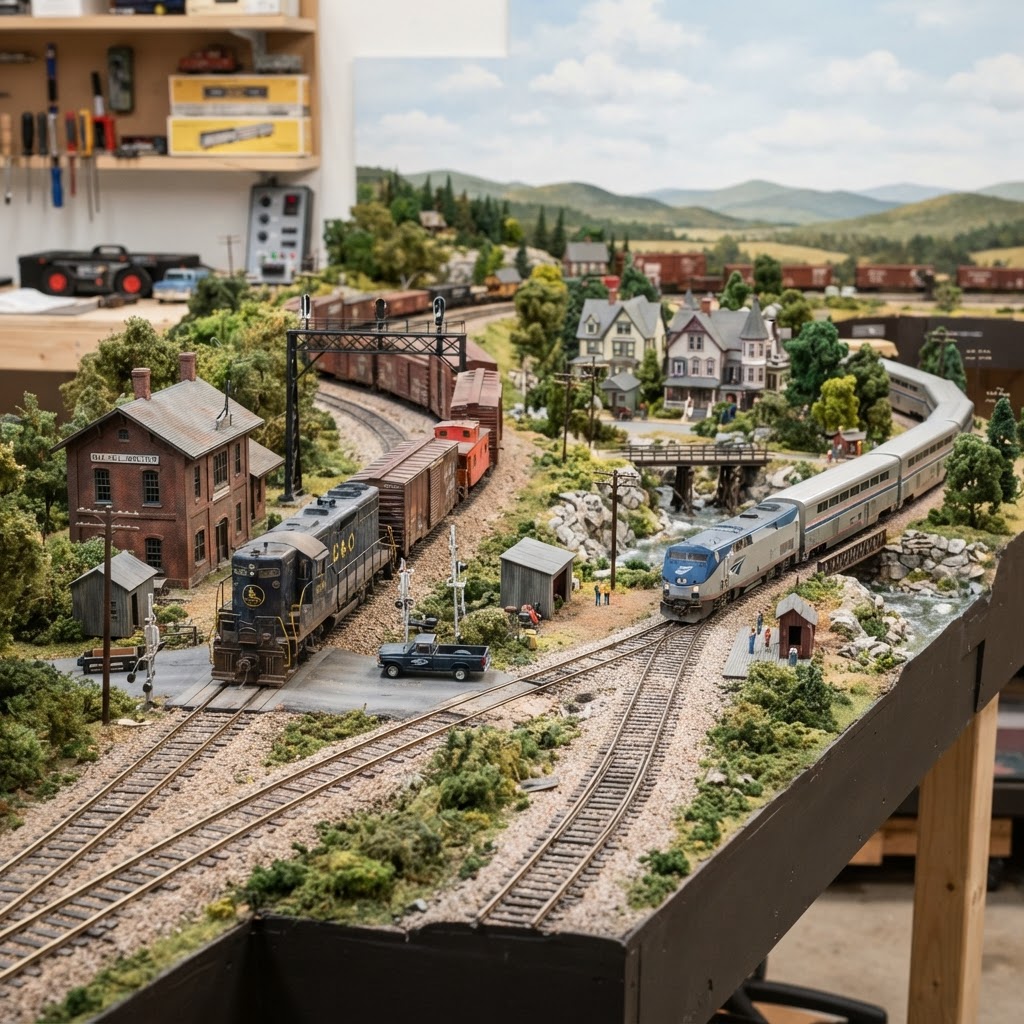
If you've ever stood in a hobby shop staring at rows of tiny locomotives wondering where to begin, you're not alone. One of the most common questions new hobbyists ask is about HO scale vs N scale for beginners — and it's a genuinely important decision that can shape your entire experience in the hobby. Choose the right scale and you'll be enjoying smooth-running trains on a beautifully detailed layout in no time. Choose the wrong one, and you might find yourself frustrated with limitations you didn't anticipate.
Both HO and N scale are the two most popular model railroad scales in the world, and for good reason. They strike a balance between detail, affordability, and practicality that other scales simply can't match. But they serve different types of modelers, different spaces, and different goals. This guide breaks down everything you need to know to make a confident, informed decision — from handling difficulty and cost to layout space requirements and the availability of locomotives, rolling stock, and accessories.
Whether you're setting up your first layout in a spare bedroom or trying to fit a railroad into a studio apartment, understanding the core differences between these two scales will save you time, money, and a lot of second-guessing. Let's dig in.
Understanding the Basics: What Do HO and N Scale Actually Mean?
Before comparing the two, it helps to understand what "scale" means in model railroading. Scale refers to the ratio between the model and its real-world prototype. A smaller ratio means a bigger model; a larger ratio means a smaller one.
- HO Scale — 1:87 ratio. This is the most widely used scale in the hobby worldwide. An HO locomotive is roughly half the size of an O scale model but significantly more detailed than the smaller alternatives.
- N Scale — 1:160 ratio. N scale models are roughly half the size of HO models, making them ideal for tight spaces but harder to handle and detail.
To put it visually: if an HO locomotive is about the size of your hand, an N scale locomotive is closer to the size of your thumb. That size difference has cascading effects on everything from ease of use to layout design.
HO Scale: The Beginner's Most Popular Choice
Why HO Scale Dominates the Hobby
HO scale has been the most popular model railroad scale for decades, and it's not hard to see why. The size is forgiving — large enough to handle comfortably, small enough to build impressive layouts without needing an entire room. For most beginners, HO offers the sweetest spot between manageability and detail.
When you're starting out, you'll find the widest selection of locomotives, freight cars, passenger cars, structures, scenery materials, and accessories in HO. Manufacturers like Athearn, Atlas, Bachmann, Kato, and Walthers have extensive HO catalogs, meaning you'll rarely struggle to find what you need. If you're curious about the difference between product lines, check out our breakdown of Athearn Genesis vs Standard Line: Is the Premium Upgrade Worth It? to understand how quality tiers work in HO before you spend.
HO Scale Space Requirements
A basic HO layout with a simple loop of track requires a minimum of about 4x8 feet — the size of a standard sheet of plywood. That's workable for most garages, basements, or dedicated hobby rooms, but it can feel tight if you're dealing with smaller living situations.
The good news is that HO layouts are scalable. You can start with a modest 4x8 oval and expand outward as your interest and space allow. Many of the best starter train sets for new hobbyists come in HO and include everything you need to run trains on day one — track, locomotive, a few cars, and a power pack.
Handling and Detail in HO
One of HO scale's biggest advantages for beginners is how easy it is to handle. Couplers are easy to attach, track is easy to lay, and decoders for Digital Command Control (DCC) are large enough to install without needing microscopic tools or magnifying glasses.
Speaking of DCC, HO is an excellent scale for exploring digital control. There are more decoder options available in HO than in any other scale. If you're interested in adding sound to your locomotives, our guide to the best DCC sound decoders for realistic locomotive audio is a great starting point. For those who want to dive into full digital control, our best DCC systems for beginners article covers everything you need to know.
HO Scale Cost Considerations
HO scale models vary widely in price. Entry-level locomotives from Bachmann or Life-Like can cost as little as $40–$80, while high-end DCC-equipped models from Athearn Genesis or Broadway Limited can run $150–$300+. Track is affordable, scenery materials are plentiful, and the second-hand market is enormous — great for picking up bargains at train shows or online.
N Scale: Big Railroading in a Small Footprint
Why N Scale Appeals to Space-Conscious Modelers
N scale's greatest superpower is its compact size. Because N scale models are roughly half the size of HO, you can fit an equivalent amount of railroad into half the floor space. That 4x8 minimum for HO? In N scale, you can run a respectable layout on a 2x4 coffee table — or build an expansive, mainline-style railroad in the space an HO modeler would need for something modest.
If you're living in an apartment, condo, or any home where dedicated hobby space is at a premium, N scale might be the practical winner for you. We've written an entire guide on the best scale for small spaces that explores this in depth and is worth reading alongside this comparison.
N Scale Selection and Availability
N scale has come a long way from its early days of limited selection and fragile mechanisms. Today, manufacturers like Kato, Atlas, Bachmann, and Micro-Trains produce high-quality N scale equipment that rivals HO in detail and reliability. If you're looking to build a diesel fleet, our top 10 best N scale diesel locomotives guide highlights some outstanding options.
That said, the selection in N scale — while impressive — still doesn't match HO. Certain road names, car types, and era-specific models are simply harder to find in N scale. If you model a specific prototype railroad or era, you may find HO gives you more options.
The Handling Challenge: N Scale's Biggest Hurdle for Beginners
Here's the honest truth: N scale is harder to handle. The locomotives are small, the couplers are tiny, the track is delicate, and installing DCC decoders can feel like surgery. If you have larger hands, limited patience for fine motor tasks, or vision challenges, N scale will test your patience — especially in the early stages.
Track cleaning is also more critical in N scale. Because the rail is smaller, even minor oxidation or debris can cause stalling and derailments. Investing in a quality track cleaning car becomes almost mandatory rather than optional in N scale. You'll want to keep your track in top condition from day one.
N Scale and DCC
DCC is absolutely doable in N scale, but decoder installation is more demanding. Many N scale locomotives come DCC-ready with a plug-in socket, which helps significantly. For those getting started with digital control in N scale, our best DCC starter sets guide and best DCC controllers articles can help you identify the right system for your needs.
N Scale Cost Considerations
N scale locomotives and rolling stock are generally priced similarly to HO — sometimes slightly less for entry-level items, sometimes the same for premium models. However, the accessories, structures, and scenery materials in N scale are sometimes pricier per item because of the precision manufacturing required. Track cleaning supplies, fine ballast, and small-scale details add up. Budget similarly to HO, but don't assume you'll save significantly just because the models are smaller.
HO vs N Scale: A Side-by-Side Comparison
| Factor | HO Scale | N Scale | |---|---|---| | Scale Ratio | 1:87 | 1:160 | | Minimum Layout Size | ~4x8 feet | ~2x4 feet | | Ease of Handling | Easier | More challenging | | Product Selection | Largest in hobby | Second largest | | DCC Decoder Installation | Moderate | Difficult | | Detail Level | Excellent | Very good | | Typical Entry Cost | $40–$150 (loco) | $35–$130 (loco) | | Best For | Most beginners | Space-limited modelers |
Which Scale Should You Actually Choose?
Choose HO Scale If…
- You have at least a 4x6 or 4x8 space available for your layout
- You want the widest possible selection of locomotives, cars, and accessories
- You're new to DCC and want the easiest decoder installation experience
- You plan to scratch-build structures or do detailed weathering work
- You want a robust, forgiving platform to learn on
Choose N Scale If…
- Space is genuinely your biggest constraint
- You dream of modeling long mainline runs and sweeping scenery in a compact area
- You're comfortable with fine detail work and don't mind the handling challenge
- You want to model big, expansive railroads without needing a basement
No matter which scale you choose, exploring our roundup of top model train brands for beginners will help you identify manufacturers known for quality, reliability, and strong beginner support. And for product recommendations across both scales, our recommended products page is a great starting point.
Frequently Asked Questions
Is HO scale easier for beginners than N scale?
Generally, yes. HO scale models are larger and easier to handle, couplers are simpler to work with, and DCC decoder installation is more straightforward. The wider product selection also means beginners have more entry-level options to choose from. That said, if space is a significant limitation, N scale may still be the better practical choice even with its steeper handling curve.
Can I switch from one scale to another later?
You can, but switching scales means replacing essentially everything — locomotives, rolling stock, track, and most structures won't transfer between scales. Many modelers do switch (usually from HO to N for space reasons or vice versa), but it's best to choose your scale thoughtfully upfront to avoid the expense of starting over.
Is N scale cheaper than HO scale?
Not significantly. While individual N scale models are sometimes slightly less expensive at entry level, the overall cost of building a layout in N scale is roughly comparable to HO. Specialty items, structures, and detail parts in N scale can sometimes cost more due to manufacturing precision requirements.
What's the best starter set for HO or N scale beginners?
Both scales have excellent starter sets from brands like Bachmann, Kato, and Atlas. Our comprehensive guide to the best starter train sets for new hobbyists covers top-rated options in both scales so you can compare before you buy.
Do both HO and N scale support DCC?
Yes, both scales fully support Digital Command Control. HO is generally easier to get into DCC with, as decoders are larger and easier to install. N scale DCC is very capable but requires more precision. If you're ready to explore DCC, our best DCC starter sets guide and best DCC controllers guide cover both scales in detail.
Conclusion
When it comes to HO scale vs N scale for beginners, there's no universally "right" answer — but there is a right answer for you. HO scale wins on ease of handling, product selection, and beginner-friendliness across the board. N scale wins decisively on compact footprint and the ability to model sweeping railroads in tight spaces. Assess your available space honestly, think about your comfort with fine detail work, and consider where you want the hobby to take you.
Most beginners who go with HO scale are delighted by how quickly they can get trains running and how much support exists for the scale. Most beginners who choose N scale for space reasons find that once they get past the handling curve, the hobby opens up in exciting ways they hadn't imagined.
Whichever you choose, the important thing is to start. The model railroad hobby rewards patience, creativity, and a willingness to keep learning. Explore more of our beginner guides here on Model Train Insider to keep building your knowledge — from choosing your first DCC system to laying track and building scenery, we've got you covered every step of the way.
Affiliate Disclosure: Some links in this article are affiliate links. We may earn a commission at no extra cost to you.
Enjoying this guide?
Browse our favorite recommended products.
James Mitchell
Model Train Enthusiast & Writer
James has been building layouts and collecting trains for over 15 years. He started Model Train Insider to help newcomers navigate the hobby with practical, no-nonsense advice drawn from hands-on experience.
Stay on Track
Get beginner guides, brand reviews, and layout tips delivered to your inbox. No spam—just trains.
Free forever. Unsubscribe anytime.
Related Articles
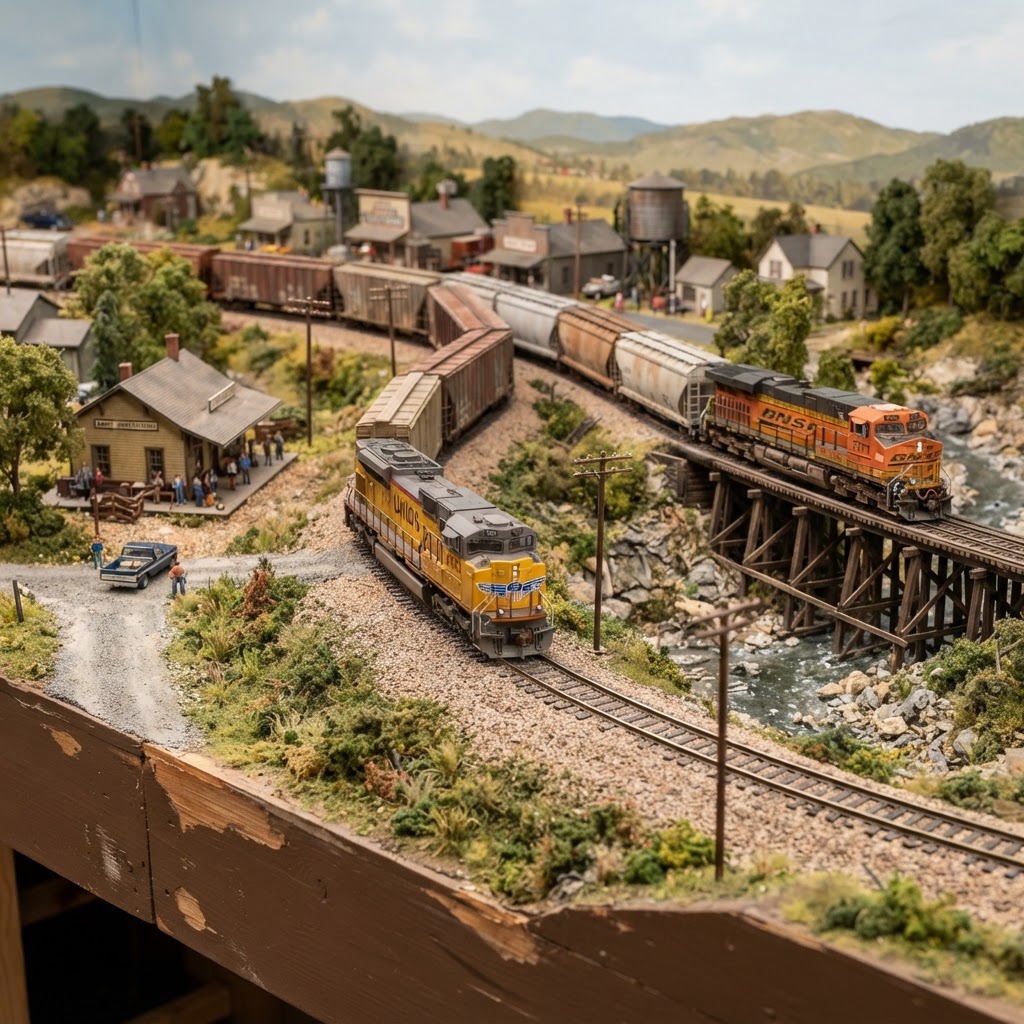
5 Best Starter DCC Controllers for New Model Railroad Hobbyists
Looking for the best starter DCC controller? We evaluate the top 5 entry-level systems to help you easily control your model train layout with precision.
Read more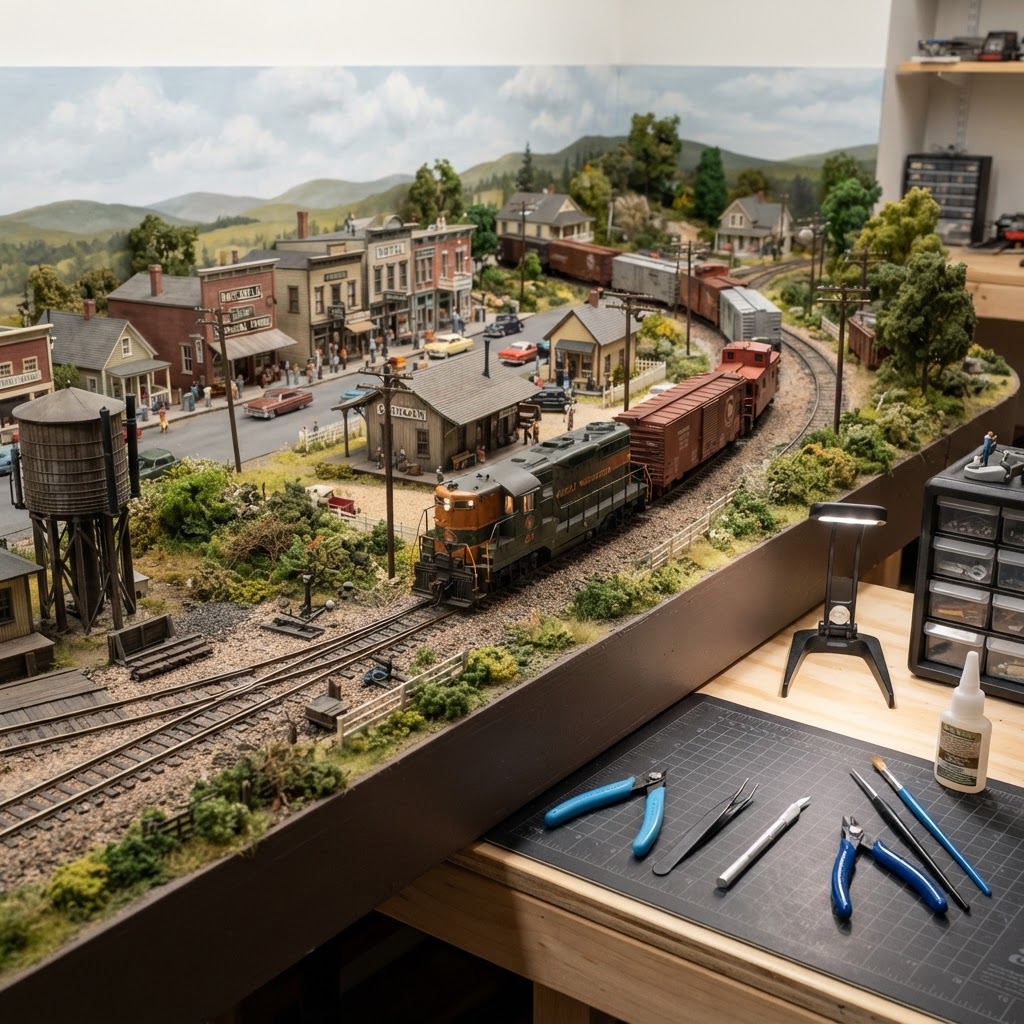
10 Essential Tools for Model Railroading: The Ultimate Starter Toolkit
Building a layout? Discover the 10 best tools for model railroading that every beginner needs to achieve professional results and precise detailing.
Read more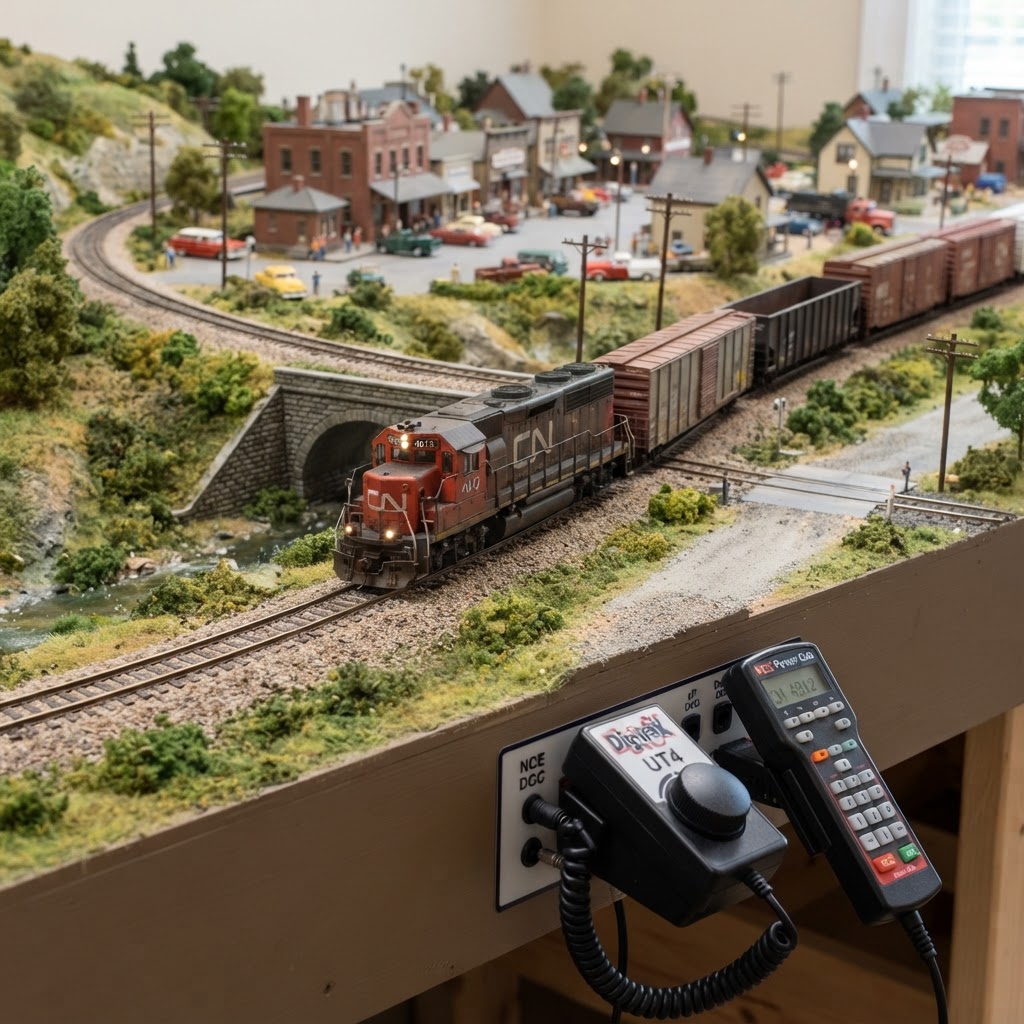
Best Starter DCC Controllers Reviewed: Top Picks for New Model Railroaders
Looking to upgrade your layout? We review the best starter DCC controllers to help beginners take full control of their model trains with ease and precision.
Read more